Marcus had been drinking a fifth of vodka every night for six months when his wife in Boise issued the ultimatum. He expected a thirty-day rehab bill that would empty their savings. Instead, his primary care doctor sent him to a clinic on State Street that ran an outpatient detox program three blocks from his house. A nurse practitioner did intake on a Monday morning, calculated his CIWA score, handed him a five-day taper of gabapentin and a pillbox, and scheduled him for daily check-ins. He slept in his own bed. His wife went to work. His twelve-year-old never knew his father was in detox at all. By Friday, Marcus walked into his first IOP session sober for the first time in two years, having spent about $1,400 instead of the $9,000 the inpatient facility had quoted him.
His story is more typical than people realize. Roughly forty percent of alcohol withdrawal cases and a growing share of opioid tapers can be managed safely without admission, provided the patient meets specific medical and social criteria. The savings, the dignity, and the disruption avoided are real, but so are the risks when a clinic skips the screening that decides who belongs in this setting and who does not.
What ASAM Levels 1-WM and 2-WM Actually Mean
The American Society of Addiction Medicine organizes withdrawal management into five levels of intensity. Level 1-WM is the lightest: ambulatory detox without extended on-site monitoring, basically a doctor’s office visit, a prescription, and follow-up phone calls. Level 2-WM adds extended on-site nursing, often four to eight hours per day at a clinic, before the patient goes home overnight. Both happen outside the hospital. Both are, technically, an outpatient detox program, though the staffing and observation differ substantially.
Level 3.2-WM, by contrast, is residential and requires a bed. Level 3.7-WM is medically monitored inpatient. Level 4-WM is hospital ICU territory. The distinction matters because insurance authorizations, daily costs, and clinical safety all hinge on which level a patient genuinely needs, not what the family fears or what the marketing brochure describes.
Who Qualifies for Outpatient Withdrawal Management
Five criteria gate the door. First, the withdrawal severity is mild to moderate. For alcohol that means a Clinical Institute Withdrawal Assessment score below ten on intake and no history of severe symptoms. Second, the patient is medically stable: no uncontrolled diabetes, no active cardiac disease, no liver failure, no recent seizure of any cause. Third, the home environment is reliable. There is a sober adult who can monitor for confusion, agitation, or escalation, and the medications can be locked away from a curious child. Fourth, there is no history of delirium tremens, withdrawal seizures, or withdrawal-related psychosis in any prior episode. Fifth, the patient can attend the appointments, has a phone, and is willing to call the clinic if symptoms change.
Miss any of those and the conversation should pivot. Patients with a benzodiazepine dependence on top of alcohol, polysubstance use, untreated psychosis, suicidal intent, or unstable housing are not candidates. The clinician who waves them through anyway is gambling with someone’s life to fill an outpatient slot.
Substances That Detox Well Outside the Hospital
Mild alcohol use disorder with a low CIWA, no seizure history, and a stable home is the classic outpatient case. Patients receive a tapering benzodiazepine schedule or an anticonvulsant like gabapentin, plus thiamine, folate, and a multivitamin. Opioid withdrawal also fits well, particularly when buprenorphine induction is the plan. Buprenorphine actually shortens and softens withdrawal so dramatically that home induction has become the dominant approach in many states.
For more on which opioids respond best to ambulatory detox, see our companion piece on opioid detox protocols for codeine and hydrocodone. Cannabis withdrawal, despite the controversy over whether it is even a “real” medical syndrome, is generally outpatient by default; the symptoms are uncomfortable but never life-threatening, and supportive medication is usually enough. Mild stimulant withdrawal, despite the depression and exhaustion, is also typically managed outpatient because there is no medication that prevents a stimulant withdrawal seizure (because there is no such thing).
Substances That Demand Inpatient Care

Severe alcohol use disorder is the obvious one. A CIWA above fifteen, prior delirium tremens, prior withdrawal seizures, or daily intake above a fifth of liquor for more than a few weeks should buy a hospital bed. Benzodiazepine dependence is the other red zone. Long-acting benzo tapers can take months and the seizure risk is real even in mild cases; clinicians who attempt this outside a structured setting often find themselves in a tragedy. Polysubstance dependence, especially alcohol plus benzo plus opioid, is essentially never appropriate for outpatient. The interactions between withdrawal syndromes are unpredictable.
The decision tree we walk through with families looks at this in detail in our guide on outpatient versus inpatient detox, which compares CIWA cutoffs, COWS thresholds, and the clinical red flags that should always prompt admission.
How a Typical Day Looks
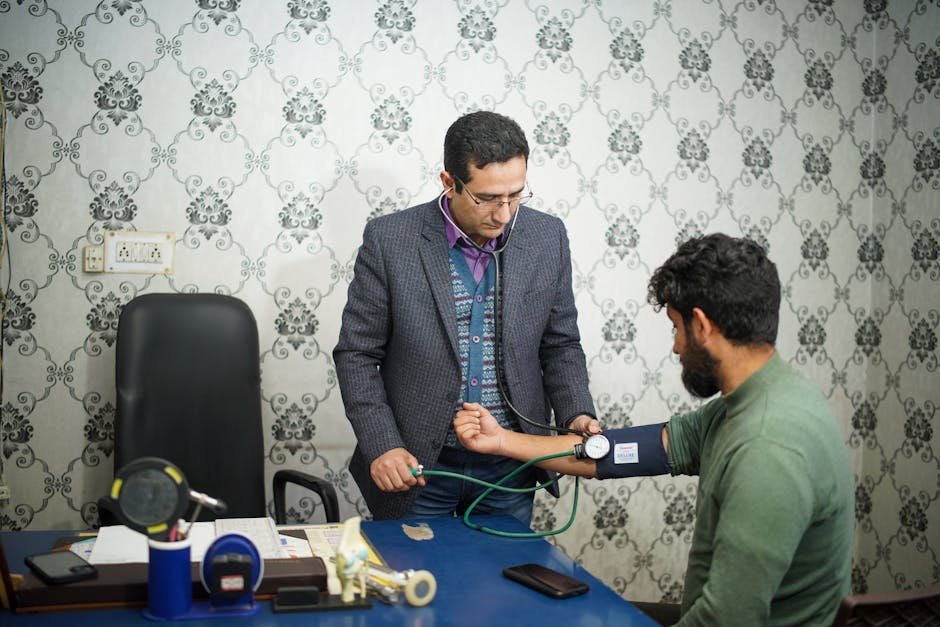
The home medication kit arrives the day of intake. It usually contains a numbered pill organizer, a written taper schedule, anti-nausea medication, sleep support like trazodone or hydroxyzine, and a CIWA self-assessment sheet so the patient or family can rate symptoms morning and night. A registered nurse calls or video-visits each morning to review the prior day’s symptoms, scan for missed doses, and check vital signs through a home blood pressure cuff if one was issued. Some programs schedule one in-person visit at days two and four for blood draws and a face-to-face assessment.
The family role is real. A sober adult counts pills, watches for confusion or worsening tremor, and knows the trigger for an emergency room call: a CIWA above twelve, persistent vomiting, fever above 100.4, hallucinations of any type, or a seizure. Patients who live alone with no family support often do not qualify even when their substance use otherwise fits the outpatient profile.
Cost: Outpatient Versus Inpatient
An outpatient detox program typically bills $300 to $700 per day depending on whether it is Level 1-WM or 2-WM. A five-day alcohol taper, all in, lands somewhere between $1,500 and $3,500. Inpatient withdrawal management, by contrast, runs $1,500 to $2,500 per day at most facilities and considerably more at high-end residential. A five-to-seven-day inpatient stay can cost $10,000 to $20,000 before any post-detox treatment begins.
Insurance coverage tracks medical necessity, not preference. Commercial plans, Medicare, and most state Medicaid programs cover ambulatory withdrawal management when a clinician documents that the patient meets ASAM Level 1-WM or 2-WM criteria. The catch is that documentation must explain why the patient does not need a higher level. Vague intake notes get denied; specific CIWA scores, COWS scores, and risk-factor lists get approved. Our piece on medical alcohol detox walks through the documentation language that survives utilization review.
When Outpatient Becomes Inpatient: Escalation Criteria
About one in eight outpatient detox cases needs to be moved to a higher level of care during the episode. Programs that run them well make this routine, not catastrophic. Escalation triggers are defined on intake: CIWA above twelve at any check-in, hallucinations or paranoia of any kind, persistent vomiting that prevents the patient from holding down medication, seizure activity, suicidal ideation that emerges during the taper, or family report that the home environment has destabilized.
The clinic should have a relationship with at least one detox unit and one medical hospital and be able to facilitate the transfer in under four hours. If the program you are considering cannot describe its escalation pathway in plain language, that is itself a reason to look elsewhere.
Telehealth Detox: A Real Option Now
Since 2020, hybrid telehealth detox has become legitimate practice in most states. The patient does video check-ins twice daily with a nurse, fills prescriptions at a local pharmacy, and visits the clinic in person on day one and day five. Buprenorphine induction by telehealth is now permitted under federal SAMHSA rules in most circumstances, which has put rural patients within reach of outpatient detox program services that previously did not exist within a hundred miles.
The trade-off is intensity of monitoring. A patient with marginal social support, a borderline CIWA, or any complicating medical history is still better served by an in-person 2-WM program. Telehealth works best for the cleaner cases: stable opioid users transitioning to buprenorphine, light-to-moderate alcohol use disorder with strong family backup, post-acute symptom management after a brief residential stay.
Choosing a Program: What to Ask
The interview a family does on the phone often determines outcome. Ask whether the program is licensed for ASAM Level 1-WM, 2-WM, or both. Ask what the medical director’s specialty is and whether a physician is on-site daily. Ask the criteria for accepting a patient, and listen for whether they include a home assessment. Ask the escalation pathway and whether the clinic has a contracted hospital. Ask the daily cost, the typical length of stay, and what happens if symptoms drag past day seven. A program that answers crisply is usually well-run; a program that pivots to brochure language or a “let’s get you on the phone with admissions” pitch is usually not.
Frequently Asked Questions
How long does outpatient alcohol detox take?
For mild-to-moderate cases, the medication taper runs three to seven days. Sleep, mood, and craving usually improve over the following two to four weeks, which is why most programs roll directly into intensive outpatient treatment after the medical phase ends.
Will I get medication for cravings during outpatient detox?
Yes, increasingly so. Naltrexone, acamprosate, or disulfiram for alcohol, and buprenorphine or naltrexone for opioids, can begin during the detox episode rather than weeks later. Starting medication for addiction treatment early roughly doubles the odds of staying engaged in care.
Can I work during outpatient detox?
Most patients take five to seven days off, particularly during alcohol or benzo tapers, because of fatigue, cognitive slowing, and the sedating effect of withdrawal medications. After day three or four many patients can do desk work from home, but operating heavy machinery or driving long distances is not advisable until the taper is complete.
What happens if I have a seizure at home?
Call 911 immediately. The first seizure ends outpatient detox; the patient gets transferred to a hospital for inpatient withdrawal management. This is rare in properly screened cases but it is the reason intake screening is so strict.
Is outpatient detox covered by Medicaid?
In every state, yes, though the specific covered services and benefit caps vary. Most state Medicaid plans cover ASAM Level 1-WM and 2-WM, including the medications. Some states require prior authorization for buprenorphine induction; most do not.
The Bottom Line
An outpatient detox program is the right setting for the right patient, and a quietly dangerous setting for the wrong one. The screening is what matters. A program that takes two hours on intake, calls the family, calculates a CIWA, and asks about prior withdrawal episodes is doing the work. A program that promises a same-day start without those steps is selling a bed they want to fill, not a treatment plan that fits. Patients who land in the right level the first time recover faster, lose less work, and avoid the cascading complications that send people to ICUs.
For evidence-based clinical criteria, see SAMHSA’s treatment locator and TIP-45. For the full ASAM withdrawal management criteria, the American Society of Addiction Medicine publishes the standards every accredited program in the country uses to make these calls.
Crisis Support
If you or someone you love is in withdrawal-related crisis, having a seizure, or expressing suicidal thoughts, call or text 988 to reach the Suicide and Crisis Lifeline. For a medical emergency, call 911. SAMHSA’s National Helpline at 1-800-662-HELP (4357) is free, confidential, and available 24/7 to connect you with treatment options in your area.
This article is for informational purposes only and does not constitute medical advice. Withdrawal management decisions should always be made with a licensed clinician who can evaluate your specific medical and substance-use history. Do not stop alcohol, benzodiazepines, or opioids abruptly without medical supervision.