Tasha Reynolds walked into the storefront on Park Street in Hartford on a Tuesday afternoon because her car had broken down and the bus stop was right outside. She had been out of inpatient treatment for five weeks. Her insurance had paid for twenty-eight days, then run out. Her counselor had handed her a list of meetings on her last day. She had attended one. She was not ready for an aftercare program. She was not ready to drive an hour to her old therapist. She wanted to sit somewhere warm and not have to explain herself. The Hartford recovery community center had a coffee pot, a couch, and a peer recovery coach named Marlon who had been clean from heroin for six years and who that day did not ask her a single question. He poured the coffee. He nodded toward the couch. Three weeks later, Tasha was running their Wednesday women’s check-in. Six months later, she had a part-time job at the center. Two years later, she was still in recovery, and she had never been a patient there. That is the entire point of the model.
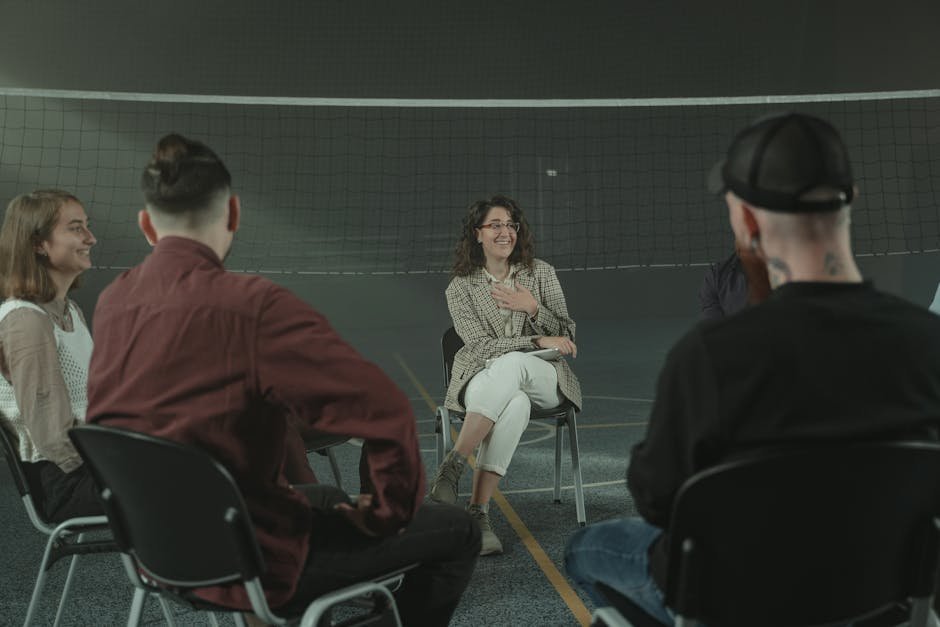
What a Recovery Community Center Actually Is
A recovery community center is a peer-staffed, community-based hub that offers recovery support services. It is not a treatment center. There is no clinical program, no therapist on staff in most cases, no medical director, no insurance billing. The work is done by people who are themselves in recovery, often credentialed as Certified Peer Recovery Specialists by their state. The services are free. Anyone in or seeking recovery can walk in and use them, regardless of pathway, substance, length of sobriety, or treatment history.
RCCs exist in the gap that clinical care cannot fill. Treatment ends. Insurance runs out. Therapy is once a week. The hours between Tuesday and Tuesday are when relapse happens. RCCs occupy those hours. They are open evenings and weekends. They are walkable in many cities. They are run by people who have been where the visitor is, and who do not have a billable hour to protect. The atmosphere is closer to a community center or a public library than to a clinic.
The Faces and Voices of Recovery Network
The recovery community organization movement, known by the acronym RCO, was born in the early 2000s when Faces and Voices of Recovery began organizing the field nationally. The original idea was to give people in recovery a public voice that was not the anonymity of twelve-step rooms or the medicalized language of treatment. By the late 2010s, the movement had grown into a national network of more than 150 recovery community centers, all loosely connected through Faces and Voices and through a parallel network called the Association of Recovery Community Organizations.
Connecticut Community for Addiction Recovery, often shortened to CCAR, is the model many newer RCCs have copied. CCAR pioneered the recovery coach training that is now used in dozens of states. It standardized telephone recovery support. It documented outcomes that gave funders the evidence base to pay for this work. CCAR’s manual is, in many ways, the operating system of the modern recovery community center.
Services Typically Offered
The menu varies by center, but the core services are remarkably consistent. One-on-one recovery coaching, where a peer specialist meets with a person in recovery weekly or biweekly to set goals, troubleshoot barriers, and provide accountability. Telephone recovery support, where the coach calls the participant on a set schedule to check in, often weekly for the first six months. Family support meetings for the spouses, parents, and adult children of people in recovery. All-recovery meetings that welcome any pathway, twelve-step or otherwise, religious or secular, abstinence-based or harm-reduction-friendly.

Beyond the meetings, RCCs typically offer recovery housing referrals, employment assistance through partnerships with local workforce boards, and warm handoffs to clinical treatment when a participant decides they need it. Some run sober social events on weekends. Some offer naloxone distribution. Some run a job-readiness curriculum. The richer ones have small libraries, computer labs, and shower facilities for participants experiencing homelessness. For people transitioning out of acute care, our guide to peer respite houses covers a related model that fills a similar gap on the mental health side.
How RCCs Differ From Treatment Centers
The most important distinction is clinical scope. A treatment center diagnoses, prescribes, and bills. An RCC supports, connects, and accompanies. A treatment center has a clinical director, a medical model, an electronic health record, a utilization review process, and a discharge planner. An RCC has a coffee pot, a coach, a phone, and a couch. Both matter. They do not substitute for each other.
The second distinction is duration. Treatment ends. Recovery does not. A patient might be in treatment for thirty days, ninety days, six months. A participant in an RCC may use the center for years. The relationship with the recovery coach often outlasts every clinical relationship in a person’s recovery. For the long-term continuum that RCCs anchor, see our aftercare and continuing care guide, which maps how clinical and peer supports interact across years rather than months.
The Funding Picture
For two decades, RCCs scraped by on a patchwork of small SAMHSA grants, philanthropic dollars, in-kind donations, and the occasional state contract. Then opioid settlement money started flowing in 2022 and 2023. Most states have committed a portion of their settlement allocations to recovery support services, and a meaningful share of that has gone to expanding RCC networks. Some states now operate hub-and-spoke models with twenty or more centers funded as a coordinated system. SAMHSA’s Community Mental Health Services and Substance Abuse Block Grants are also a foundational funding stream.
Philanthropy still plays a meaningful role. Local foundations, recovery-focused giving circles, and small individual donations keep many RCCs solvent between grant cycles. The lean operating model means an RCC running on a budget under $400,000 a year can serve hundreds of participants, which is why funders increasingly see them as among the highest-leverage investments in the behavioral health field.
Eligibility: Who Can Walk In
Almost everyone, almost always, free. Most centers do not require proof of insurance, proof of treatment history, sobriety time, or a referral. A few ask for basic demographic intake to satisfy grant reporting. Family members are welcome at most centers, including those who themselves have never used substances. Some centers serve specific populations more deeply: women, LGBTQ+ participants, justice-involved individuals returning from incarceration, young people in recovery. Most welcome anyone.
The pathway-neutrality is genuine. People who are abstinence-based and people on medication for opioid use disorder, people who attend AA and people who attend SMART Recovery, people of religious recovery and people who reject the spiritual framing of twelve-step meetings, people who have been clean for fifteen years and people who walked in still smelling of last night’s drink, all of them are accepted. The single rule at most RCCs is non-violence. Active intoxication on the premises is sometimes addressed by a brief conversation rather than a hard ejection.
Finding an RCC Near You

Faces and Voices of Recovery maintains a national directory at facesandvoicesofrecovery.org. The directory is searchable by state and includes contact information, hours, and a brief description of each center’s services. State behavioral health authorities also maintain lists; in most states the single state agency for substance use treatment now publishes an RCC map alongside its treatment locator. SAMHSA’s findtreatment.gov includes peer support facilities as a filter category, though the data is uneven.
Local search often finds centers the national directories miss, particularly small, neighborhood-based RCCs operating out of churches or community centers. Hospital social workers, drug court coordinators, and probation officers usually know the local landscape better than any directory. The peer-staffing model means the staff at a recovery community center are themselves the best source of referrals to other RCCs in the same region.
The Outcomes Evidence
Peer recovery support services have a smaller evidence base than clinical interventions, but the studies that exist are favorable. CCAR’s outcomes data shows that participants in recovery coaching are roughly twice as likely to remain in recovery at twelve months compared with comparable populations without coaching. ED-based peer recovery specialists, particularly for opioid use disorder, have demonstrated reductions in overdose readmission. RCC engagement is associated with improved employment, stable housing, and reduced criminal-justice involvement.
The methodological challenge is that RCC participants are self-selected and outcomes studies struggle to isolate the RCC effect from the participant’s own initiative. The honest summary is that RCCs probably help, the cost per participant is low, and the qualitative effects on community-level recovery culture appear substantial even where quantitative effects are modest. For a deeper dive into the credentialing of the people who staff these centers, see our piece on peer support specialists.
What an RCC Visit Looks Like
A first visit is usually undirected. Someone greets you at the door, asks if you would like coffee, points to the couch. You may be invited to fill out a brief intake form, or not. A peer recovery specialist may sit down with you and ask what brought you in, or may simply let you sit. There is no pressure to commit to a meeting, a coach, or a program. People who come back for a second visit usually have something specific they want help with: a court date, a job application, a fight with a partner, a craving they cannot explain. The coaching relationship grows from there. Some participants come once. Some come daily for years. Both are equally legitimate uses of the space.
Frequently Asked Questions
Do I have to be sober to enter a recovery community center?
No. Most RCCs welcome people who are still using, ambivalent about change, or recently relapsed. The rule about active intoxication on the premises varies; in most centers a coach will pull the person aside and offer a ride home rather than reject them.
How is an RCC different from AA?
AA is a self-help fellowship with a specific spiritual program. An RCC is a physical hub that hosts AA meetings, SMART meetings, religious recovery meetings, secular meetings, and one-on-one peer coaching. AA is one possible activity at an RCC; the RCC itself is pathway-neutral.
Can my family come with me?
Almost always, yes. Most centers run dedicated family support meetings and welcome family members at all-recovery meetings. Some run children’s programming for younger kids whose parent is a regular participant.
Do RCCs accept insurance?
Most do not bill insurance because their services are not clinical. Funding comes from grants, settlement money, and donations. The participant pays nothing, and there is no insurance authorization process to navigate.
Can someone on Suboxone use an RCC?
Yes. The RCC movement has been explicit about welcoming people on medication for opioid use disorder. The peer-coaching field has worked hard to dismantle the older twelve-step bias against MAT, and most RCCs are now medication-friendly by design.
The Bottom Line
A recovery community center is the closest thing American behavioral health has to a piece of public infrastructure for recovery. It is free, low-barrier, peer-staffed, and pathway-neutral. It fills the time between clinical appointments, the months after insurance runs out, the years when treatment is no longer needed but the work of recovery still is. The model is uneven across the country: some states have funded a dense network, others have almost none. But where RCCs exist, they tend to outlive treatment programs, weather funding storms better than clinics, and produce stories like Tasha’s that no clinical chart ever captures. If you have one nearby, walk in. If you do not, ask your state behavioral health authority why.
For the national directory and movement resources, visit Faces and Voices of Recovery. For state-level funding maps and grant opportunities for new centers, SAMHSA publishes an annual report on the state of the recovery support services field that is the best public document available.
Crisis Support
If you or someone you know is in mental health or substance-use crisis, call or text 988 to reach the Suicide and Crisis Lifeline. SAMHSA’s National Helpline at 1-800-662-HELP (4357) is free, confidential, and available 24/7 to connect you with treatment options and recovery support resources nationwide.
This article is for informational purposes only and does not constitute medical advice. Recovery community centers offer non-clinical peer support and are not a substitute for medical or behavioral health treatment when treatment is indicated.