The Moment You Realize You Cannot Wait Any Longer
There is a specific kind of exhaustion that comes from pretending to be fine. You attend meetings. You answer phone calls. You make dinner. But underneath the surface, something has been quietly unraveling for weeks or months.
Then one night, you cannot sleep. Again. Your chest feels tight. Your thoughts loop through the same worries without resolution. And for the first time, you wonder if this is just stress or something that actually needs professional attention.
You reach for your phone and search for mental health providers near me. The results appear instantly. Dozens of names, clinics, and platforms. But now you face a harder question than whether to seek help.
What kind of help do you actually need right now?
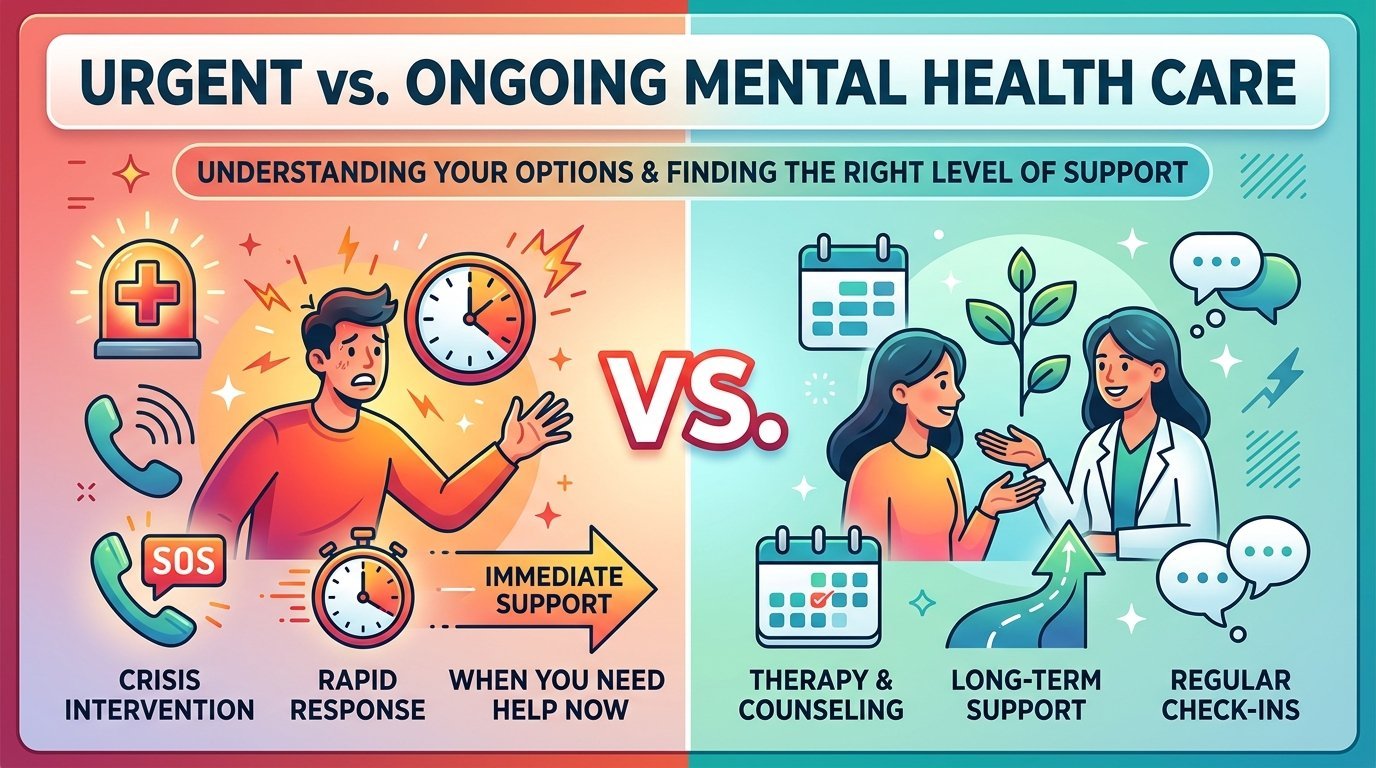
The gap between urgent distress and ongoing treatment confuses countless Americans. Showing up to an emergency room with anxiety that has built over months is usually inappropriate. Waiting three weeks for a therapy appointment while having thoughts of self-harm is dangerous. Understanding where your situation falls on this spectrum is the first step toward effective mental health care.
This guide walks through the full range of mental health care options available in the United States today. You will learn when to seek immediate crisis services, when to start with outpatient therapy, and how telehealth and private mental health care fit into both scenarios. Most importantly, you will leave with a clear framework for matching your current symptoms to the right level of care.
The Spectrum of Mental Health Care: Where Do Your Needs Fall?
Mental health care is not a single service. It is a spectrum ranging from same-day crisis intervention to long-term maintenance therapy. Understanding where you fall on this spectrum prevents both overreacting to mild symptoms and underreacting to serious ones.
Level One: Crisis and Emergency Services
For immediate danger or severe, sudden impairment
Crisis services are for situations where safety is at risk. This includes active suicidal thoughts with intent, psychosis involving danger to self or others, or sudden inability to care for basic needs due to mental health symptoms.
These services include:
- 988 Suicide and Crisis Lifeline (24/7, free, confidential)
- Mobile crisis teams (available in many counties)
- Psychiatric emergency rooms
- Crisis stabilization units (short-term, usually under 72 hours)
Level Two: Urgent but Not Emergency Care
For moderate distress that cannot wait weeks but does not require hospitalization
Many patients fall into this gap. They are not actively suicidal, but they are struggling significantly. A three-week wait for a standard therapy appointment feels intolerable. For these situations, several options exist:
- Walk-in psychiatric clinics
- Same-day behavioral health appointments at community health centers
- Telehealth platforms with next-day availability
- Intensive outpatient programs as a bridge to lower-level care
Level Three: Standard Outpatient Care
For ongoing management of mild to moderate conditions
This is what most people imagine when they search for mental health providers near me. Weekly or biweekly sessions with a therapist, monthly medication management with a psychiatrist, or a combination of both. This level works well for:
- Mild to moderate depression or anxiety
- Life transitions and relationship difficulties
- Maintenance of stable chronic conditions
- Grief and loss
Level Four: Intensive and Specialized Care
For complex conditions not responding to standard treatment
Some patients require more than weekly therapy. This includes those with treatment-resistant depression, borderline personality disorder requiring dialectical behavior therapy, or eating disorders needing multidisciplinary care.
Options include:
- Intensive outpatient programs (9-15 hours weekly)
- Partial hospitalization programs (20-30 hours weekly)
- Specialized treatment programs for specific diagnoses
When Urgent Mental Health Care Is the Right Choice
Many Americans hesitate to seek urgent mental health care because they do not want to “waste resources” or seem dramatic. This hesitation causes preventable suffering.
Signs That Urgent Care Is Appropriate
You should seek same-day or next-day mental health care if you experience:
- Suicidal thoughts, even without a specific plan
- Thoughts of harming someone else
- Hearing voices that tell you to hurt yourself or others
- Inability to eat, drink, or sleep for multiple days
- Suddenly feeling intensely hopeless or agitated
- Self-harm behavior (cutting, burning, etc.)
- Disorientation or confusion about where you are or what day it is
Do not wait for these symptoms to worsen. Urgent mental health services exist precisely for these situations.
Where to Go for Urgent Mental Health Care
Emergency Rooms: Every ER in the United States can provide psychiatric crisis stabilization. Tell the triage nurse you are experiencing a mental health crisis. You will receive a medical evaluation to rule out physical causes, then a psychiatric assessment. ERs are appropriate for active crisis but not for mild or moderate symptoms.
Psychiatric Urgent Care: Some metropolitan areas have walk-in psychiatric urgent care centers. These function like urgent care for physical health but for mental health. Search for “psychiatric urgent care near me” or check with your county behavioral health department.
988 Suicide and Crisis Lifeline: Call or text 988 for 24/7 crisis support. This is not a replacement for in-person care in active emergencies, but trained crisis counselors can help you determine the right level of care and connect you to local resources.
Crisis Stabilization Units: Many states now fund short-term crisis stabilization units where you can stay for a few days rather than being hospitalized for weeks. These are lower-cost alternatives to inpatient psychiatric hospitalization for moderate crises.
Ongoing Outpatient Care: What to Expect When There Is No Crisis
For the majority of people seeking mental health care, the situation is not an emergency. You have been struggling for a while. The symptoms are persistent but not immediately dangerous. This describes chronic depression, generalized anxiety that has worsened over time, or the gradual realization that you have been masking deeper issues.
Ongoing outpatient care works differently than urgent care. It requires patience with the process of finding the right provider and realistic expectations about how quickly symptoms improve.
The Typical Timeline for Starting Ongoing Care
- Week one: You search for mental health providers near me and contact several offices. Many will not call back immediately. This is frustrating but normal.
- Week two to three: You secure an initial intake appointment. Intake sessions are longer (90 minutes typically) and focus on assessment rather than treatment.
- Week three to four: You begin regular sessions. Your therapist or psychiatrist recommends a frequency. Most start weekly.
- Month two to three: You notice initial changes if the treatment is working. Therapy and medication both take time. Be skeptical of anyone promising rapid transformation.
What Ongoing Care Costs with Different Insurance Statuses
The financial picture for ongoing care differs dramatically from urgent care. Urgent care is often covered at higher rates because insurers recognize emergency necessity. Ongoing care faces more barriers.
| Insurance/Financial Status | Typical Cost Per Session | Wait Time for First Appointment |
|---|---|---|
| In-network with UnitedHealthcare or other major plan after deductible met | 20−40 copay | 3 – 8 weeks |
| In-network with high deductible not yet met | 80−150 (full negotiated rate) | 3 – 8 weeks |
| Out-of-network with PPO plan | 50−120 after reimbursement | 1 – 3 weeks |
| No insurance, private pay | 120−250 | 1 – 4 weeks |
| Sliding scale or Open Path Collective | 40−70 | 2 – 6 weeks |
| Community mental health center | 0−50 based on income | 4 – 12 weeks |
The inverse relationship between cost and wait time is clear. Private mental health care costs more but gets you in faster. Public options cost less but require more patience.
Private Mental Health Care vs. Insurance-Based Care: A Detailed Comparison
Choosing between private mental health care and in-network care involves more than comparing copays. Each path has distinct advantages and trade-offs.
The Case for Private Mental Health Care
Private providers do not accept insurance. You pay their full fee upfront. In return, you receive:
Shorter wait times: Private therapists typically have openings within one to three weeks rather than two to three months.
Longer sessions: Insurance often pressures clinicians to use 45-minute sessions. Private providers can offer 60 or 90 minutes when clinically appropriate.
No diagnosis requirement: Insurance requires a formal diagnosis for reimbursement. Some patients prefer not to have a permanent diagnosis on their medical record. Private pay avoids this.
Greater provider choice: Many experienced therapists eventually stop accepting insurance due to low reimbursement rates and administrative burden. Private pay gives you access to this group.
Privacy protection: Insurance claims create a permanent record of your diagnosis and treatment. Private pay does not.
The Case for Insurance-Based Mental Health Care
Using insurance for mental health care also offers real advantages:
Lower per-session cost: After meeting your deductible, you pay only a copay. For weekly therapy over a year, this saves thousands of dollars compared to private pay.
Integrated care: In-network providers communicate with your primary care doctor and other specialists through shared medical records.
Coverage for higher levels of care: If you need intensive outpatient programs or hospitalization, insurance is essential. Private pay for these services costs tens of thousands of dollars.
Protection of the Mental Health Parity Act: Insurance plans cannot arbitrarily limit your sessions. Private providers can terminate care at any time.
Making the Decision
Start with insurance if you have good coverage and can tolerate some wait time. Switch to private pay if you need immediate care, want a specific therapist who does not accept insurance, or prefer not to have a mental health diagnosis on your medical record.
Many patients use a hybrid approach. They see a private therapist for weekly talk therapy and use insurance for medication management with a psychiatrist. This combines the strengths of both systems.
Telehealth vs. In-Person Mental Health Care: Outcomes, Costs, and Preferences
The pandemic permanently changed how Americans access mental health care. Telehealth is no longer a temporary accommodation. It is a mainstream option with distinct advantages and limitations.
When Telehealth Works Well
Research consistently shows that telehealth produces equivalent outcomes to in-person care for:
- Depression
- Generalized anxiety
- Social anxiety
- Panic disorder
- PTSD (with some exceptions for trauma processing requiring physical presence)
- Medication management
For these conditions, there is no clinical downside to choosing telehealth. Patient satisfaction rates are equally high.
When In-Person Care Is Preferable
Some situations benefit from or require in-person attendance:
- Eating disorders requiring weight monitoring
- Conditions where non-verbal cues are critical (some autism spectrum care)
- Children under age ten (depending on the child’s attention and comfort)
- Couples therapy where physical presence affects communication patterns
- Patients without private space for telehealth sessions
Comparing Costs: Telehealth vs. In-Person
Telehealth consistently costs less, especially for patients without insurance or with high deductibles. A telehealth platform like Teladoc or Amwell charges 70to120 per session. In-person private mental health care in the same city might charge 150to250.
For patients with insurance, telehealth copays are often identical or slightly lower than in-person copays.
Finding UnitedHealthcare Therapists Who Offer Telehealth
UnitedHealthcare therapists and providers in other major networks increasingly offer telehealth as a permanent option. When searching insurer directories, filter for “telehealth” or “virtual visits.” Many clinicians who previously maintained physical offices now practice entirely remotely.
If you find a therapist you want to see but they do not appear in your insurer’s telehealth directory, call and ask. Some providers offer telehealth but have not updated their directory listings.
Intensive Outpatient Programs: The Middle Ground Between Urgent and Ongoing Care
Intensive outpatient programs (IOPs) represent a level of care many patients do not know exists. IOPs bridge the gap between weekly therapy and hospitalization.
What an IOP Looks Like
Typically, IOPs include:
- Nine to fifteen hours of treatment per week
- Three to five days of programming weekly
- Group therapy as the primary modality
- Individual therapy once weekly
- Medication management with a psychiatrist
- Skills training for distress tolerance, emotion regulation, and interpersonal effectiveness
Patients return home each evening. IOPs work for people who need more support than weekly therapy but do not require 24-hour supervision.
Who Benefits From IOPs
IOPs are appropriate for:
- Patients stepping down from inpatient or partial hospitalization
- Patients who have tried weekly therapy without sufficient improvement
- Those with moderate suicidal ideation but no active plan
- People struggling to maintain basic functioning (work, self-care, relationships)
- Patients with co-occurring substance use and mental health conditions
Insurance Coverage for IOPs
Most insurance plans cover IOPs at the same rate as other outpatient services. However, IOPs require prior authorization. Your therapist or psychiatrist must document medical necessity. UnitedHealthcare, Cigna, Aetna, and Blue Cross all cover IOPs when clinically indicated.
The cost of IOPs without insurance is prohibitive, typically 300to500 per day. With insurance, daily copays range from 50to150 depending on your plan.
Partial Hospitalization Programs: The Most Intensive Non-Residential Care
Partial hospitalization programs (PHPs) sit just below inpatient care on the intensity spectrum.
What a PHP Looks Like
PHPs provide:
- Twenty to thirty hours of treatment weekly
- Daily attendance, typically five to six hours per day
- Breakfast and lunch often provided
- Multiple groups daily
- Daily individual therapy or check-ins
- Daily medication management
- Case management for housing, employment, or benefits
Patients return home each evening or stay in supervised transitional housing.
Who Benefits From PHPs
PHPs work for:
- Patients who no longer need 24-hour medical monitoring but cannot manage six hours alone
- Those with significant functional impairment (cannot work or attend school)
- Patients with active suicidal ideation but no plan or intent
- People discharged from inpatient hospitalization who need a structured step-down
Accessing PHPs
PHPs require referral from a psychiatrist or emergency room. You cannot directly admit yourself. Insurance coverage is similar to IOPs, but daily copays are typically higher given the increased service intensity.
Long-Term Maintenance: What Comes After Stabilization
Once your acute symptoms stabilize, the work shifts from crisis resolution to long-term maintenance. This phase is less dramatic but equally important.
Reducing Session Frequency
Most patients do not need weekly therapy forever. As you improve, you and your therapist will gradually reduce frequency:
- Stabilization phase: Weekly sessions for 2-4 months
- Consolidation phase: Every other week for 3-6 months
- Maintenance phase: Monthly or as-needed check-ins
Some patients benefit from indefinite monthly sessions. Others discharge completely and return only during future difficult periods.
Managing Medication Long-Term
If you take psychiatric medication, maintenance means regular check-ins with your prescriber. Stable patients on effective regimens might need appointments every three months. Those on controlled substances or mood stabilizers requiring blood monitoring might need monthly visits.
Preventing Relapse
Long-term maintenance includes developing a relapse prevention plan. This plan documents:
- Your early warning signs (subtle changes that precede deterioration)
- Coping strategies that have worked before
- Trusted supports who can help you recognize warning signs
- When to increase session frequency or seek higher levels of care
Review this plan annually with your provider. Update it as your symptoms and circumstances change.
Frequently Asked Questions About Navigating Mental Health Care Levels
How do I know if my situation is urgent or can wait for regular therapy?
Ask yourself: Am I safe right now? If you have any doubt about your safety, seek urgent care. If you are safe but struggling significantly, call your insurance’s nurse line or a telehealth platform for a same-day assessment. They can help you determine the appropriate level of care.
Can I see a therapist without a diagnosis?
Only if you pay privately. Insurance requires a diagnosis for reimbursement. Private pay therapists can work with you without assigning a formal diagnosis if that is your preference.
What if I start with urgent care but need ongoing care afterward?
Urgent care services will provide referrals to ongoing providers. Crisis stabilization units and psychiatric ERs have social workers whose job is connecting you to follow-up care. Do not leave urgent care without a specific plan for ongoing treatment.
How do I find UnitedHealthcare therapists for ongoing care?
Use the UHC provider portal as described earlier, but also call the behavioral health number on your insurance card. UHC has dedicated care navigators who can search for in-network providers with current openings. This saves you from calling twenty offices yourself.
Is telehealth as effective for intensive programs like IOPs?
Some IOPs and PHPs offer hybrid or fully remote options. Research is still emerging, but early data suggests telehealth IOPs work well for motivated patients with private space and reliable internet. In-person remains standard for higher-acuity patients.
A Final Word on Finding the Right Level of Care
The search for mental health providers near me is rarely a single event. Most people need different levels of care at different times. What starts as urgent crisis care may transition to weekly therapy, then to monthly maintenance, then back to weekly care during a difficult life transition.
This flexibility is normal. It is not a sign of treatment failure. Mental health, like physical health, fluctuates. The goal is not to find one perfect provider and see them unchanged for years. The goal is to match your current needs to the appropriate level of care, and to adjust that match as your needs change.
If you are reading this and realizing you have been waiting too long, stop waiting. Pick one action from this guide. Call your insurance. Send an email to three therapists. Dial 988 for a confidential conversation about what you are experiencing.
The right level of care for you exists. Your only job right now is to reach for it.