Maya was 15 and had been quietly losing weight since the previous October. Her parents in suburban Atlanta first noticed in November, when her ninth-grade school photos came back and her mother saw the hollows in her cheeks she had been hiding under bulky sweaters at the dinner table. By February she had missed 23 days of school, her therapist had documented active suicidal ideation in two consecutive sessions, and the family pediatrician was talking about a possible inpatient admission at Children’s Healthcare of Atlanta. The pediatric psychiatrist who consulted on the case suggested instead that Maya start an adolescent partial hospital program at Skyland Trail’s teen track, six hours of programming a day, five days a week, with a school re-entry coordinator embedded in the team. Maya started the program on a Tuesday in late February. She continued her ninth-grade coursework through a hospital homebound arrangement coordinated with Fulton County Schools. Her parents joined a weekly multifamily group on Thursday evenings. Twelve weeks later she stepped down to an intensive outpatient program three afternoons a week, returned to her school building part-time, and started a new SSRI that her former pediatrician had been reluctant to prescribe. The family did not see the inside of an inpatient unit.

Adolescent day treatment programs (the umbrella category that includes both partial hospitalization and intensive outpatient programs for teens) have grown faster than any other level of pediatric mental health care since 2020. They sit clinically between weekly outpatient therapy and inpatient psychiatric admission, and they are increasingly the default first-line answer for teens with serious depression, anxiety, eating disorders, or self-harm whose acuity does not require a locked unit. This guide walks through how adolescent day treatment works, how it differs from adult versions, and how families navigate finding and paying for a program.
How adolescent IOP and PHP differ from adult versions
The clinical structure looks similar at first glance: PHP is six hours of programming five days a week, IOP is three hours three to five days a week, both run for four to sixteen weeks depending on clinical progress. The differences run deep into the programming itself.
Adolescent programs integrate school. Most teen day programs include daily academic time, either with on-staff teachers, a partnership with a hospital homebound program, or a coordinator who liaises with the home school district. The school integration is not optional. A 14-year-old who falls 10 weeks behind in algebra during treatment faces an academic problem that compounds the mental health problem. Strong programs treat school continuity as a clinical intervention, not an administrative detail.
Family therapy carries more weight. Adult programs typically include weekly multifamily groups; adolescent programs usually require weekly individual family therapy in addition to multifamily groups, and the family component is non-negotiable for continued enrollment in most programs. The clinical rationale is that the family system is the daily environment the adolescent returns to, and changes in that system are often the difference between sustained recovery and relapse. The developmental focus also differs: programming addresses identity formation, peer relationships, autonomy negotiation with parents, and risk-taking behavior in ways adult programs do not. Our child and adolescent therapy guide covers the developmental clinical framework in depth.
Summer-only programs versus year-round
Many adolescent day programs offer specific summer tracks, full-day programs running June through August that allow teens to engage in intensive treatment without missing school. The summer track works well for teens who have been white-knuckling through the academic year and need consolidation work, for teens stepping down from spring inpatient stays, and for teens whose parents cannot manage the school-coordination logistics of academic-year programming.
Year-round programs are essential for teens whose acuity emerges in October or February and cannot wait until June. The trade-off is academic disruption, which is real but manageable with hospital homebound services, online schooling, and IEP-driven accommodations. Some hospital-based programs have built dedicated school services with state-certified teachers and direct credit transfer to the home district; these are typically attached to academic medical centers and rarely available in community-based programs.
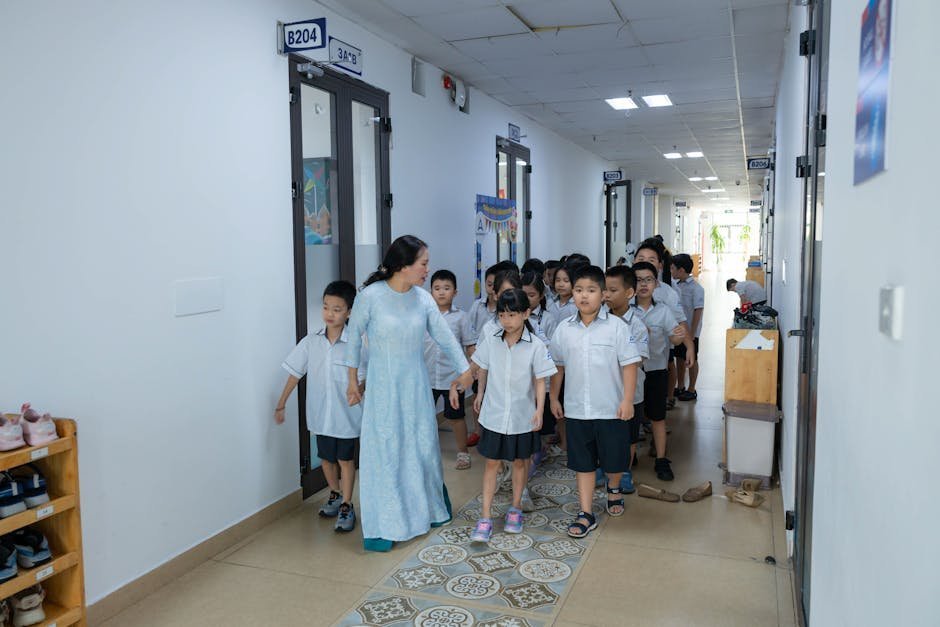
The school district interface: 504 and IEP
The school side of adolescent day treatment is governed by federal special education law and depends on accommodations under either Section 504 of the Rehabilitation Act (a 504 plan) or the Individuals with Disabilities Education Act (an Individualized Education Program or IEP). A 504 plan provides accommodations (extended time on tests, modified attendance policies, hospital homebound) without specialized instruction. An IEP provides specialized instruction with measurable goals and is more comprehensive but requires a longer eligibility process.
For a teen entering a day treatment program, the immediate practical question is hospital homebound (HHB) services, sometimes called homebound instruction. Most school districts will provide HHB with a physician’s letter documenting medical necessity and expected duration, typically 5 to 10 hours a week of one-on-one teacher instruction at the program site or via video. The letter from the program psychiatrist or the family’s outpatient psychiatrist drives this process; the school district cannot legally refuse HHB for documented psychiatric conditions when the form is properly completed.
Longer-term planning often shifts to a 504 plan or IEP for re-entry to the regular school building. Common accommodations include modified attendance policies, late starts after morning anxiety peaks, access to a school counselor’s office during the day, alternative testing environments, and reduced course loads. The American Academy of Child and Adolescent Psychiatry maintains family resources at aacap.org on navigating school accommodations during mental health treatment.
Academic continuity in practice
The academic continuity question is one parents almost universally underestimate at the start of treatment. A 12-week PHP enrollment that starts in mid-February ends in mid-May, two weeks before the end of the academic year. Without robust HHB services and program-side academic time, that teen has missed 12 weeks of math, science, English, history, and electives. Strong programs build academic time into every day; weak programs treat it as a self-directed homework period with minimal teacher support.
- Daily 60- to 120-minute academic block with on-site teacher support
- Direct communication between program and home-district guidance counselor
- Hospital homebound services for at least one core subject at the program location
- Negotiated incomplete grades or pass/fail conversion for affected semester
- Re-entry plan with specific accommodations for the first 30 days back at home school
Programs with strong school integration often produce better long-term outcomes than programs with stronger purely-clinical reputations, because the academic recovery removes a significant ongoing stressor that would otherwise undermine the clinical work. Our adolescent levels of mental health care guide walks through where day treatment fits in the broader treatment ladder.
Finding programs: where the good ones live
Hospital-based adolescent PHPs at academic medical centers tend to be the most comprehensive programs. Children’s Hospital of Philadelphia (CHOP), Children’s National in DC, Stanford’s Lucile Packard, Boston Children’s, Children’s Hospital Colorado, and Texas Children’s all run substantial adolescent day treatment programs with dedicated academic staff, child psychiatrists, and integration with their inpatient and outpatient services. Skyland Trail in Atlanta runs a teen track. Rogers Behavioral Health operates adolescent PHP and IOP programs in 12 states. McLean’s adolescent program in Belmont, Massachusetts is the academic flagship for the field.
Community-based programs are more variable. Psychology Today’s directory allows filtering by adolescent age range, level of care, and insurance acceptance, and is the most-used referral tool for outpatient and lower-level care. The American Academy of Child and Adolescent Psychiatry physician finder is more reliable for prescribing clinicians than for program-level care. SAMHSA’s treatment locator at samhsa.gov covers community mental health centers but is incomplete for hospital-based and private specialty programs.

Insurance authorization challenges
Adolescent PHP and IOP face the same authorization challenges as adult versions, with one important difference: pediatric medical-necessity criteria are slightly more permissive at most commercial payers because of the developmental and family-system considerations that make under-treatment particularly costly long-term. Authorization for adolescent PHP commonly runs 4 to 6 weeks initial with concurrent review every 1 to 2 weeks. IOP authorization commonly runs 12 to 16 weeks.
The most common denial reason is “stable for lower level of care” when the family and clinical team disagree about whether weekly outpatient therapy is sufficient. The defense is documentation of specific risk factors that justify the higher level: ongoing suicidal ideation, recent self-harm, school refusal at clinically meaningful frequency, eating disorder behaviors, or family functioning that does not support outpatient-level care. Mental health parity law applies to pediatric care, and externally reviewed appeals have a meaningful success rate when the clinical documentation is solid.
Length of stay: 8 to 16 weeks typical
Adolescent PHP enrollment typically runs 4 to 8 weeks before step-down to IOP, and IOP commonly runs 8 to 12 weeks. Total day-treatment exposure runs 12 to 20 weeks for most teens. Eating disorder programs often run longer because nutritional rehabilitation has a slower clinical timeline than mood or anxiety stabilization. Substance use programs for adolescents follow a parallel structure but with additional MAT considerations for the small subset of teens with opioid use disorder.
Step-up to inpatient is uncommon (under 10 percent of admissions in most programs) and typically happens early in the enrollment when acuity proves higher than initial assessment suggested. The more common transition is between PHP and IOP, and the same warm-handoff principles that apply in adult treatment apply with double weight in adolescent care: family meetings before transition, school coordinator involvement, peer continuity where possible, and clear documentation of the discharge medication regimen. Our adolescent residential treatment guide covers the higher-acuity step-up if day treatment is not enough.
Telehealth adolescent IOP after the pandemic
Telehealth-based adolescent IOP exploded in 2020 and 2021, and by 2026 has settled into a meaningful but smaller role than at the peak. Charlie Health, Equip (eating disorder specialty), Embark Behavioral Health, and several hospital-based programs run virtual adolescent IOP with 9 to 12 hours per week of video group programming. The model works best for teens with mild-to-moderate acuity, stable home environments, and self-directed engagement; it works less well for teens with significant home instability, severe acuity, or limited motivation.
The advantages are real: no commute, broader geographic access, easier school integration in some cases, and access to specialty providers (eating disorder, gender-related mental health, OCD) that may not exist within driving distance. The disadvantages are also real: less peer cohesion, harder clinical observation of subtle changes in presentation, and the practical challenge of group programming in a home with siblings, parents, or roommates. Most experienced clinicians treat virtual IOP as a viable second-choice when in-person is impractical, not a first-choice substitute.
Parent involvement requirements
Adolescent day programs uniformly require active parent involvement, and parents who anticipate dropping their teen off and picking them up six hours later usually struggle with the program structure. Typical requirements include weekly individual family therapy (90 minutes), weekly multifamily group (90 minutes), parent education evenings (monthly), and frequent informal contact with the case manager.
The total parent time investment runs 4 to 8 hours a week in most programs. Programs that do not require this level of family involvement are usually programs to avoid; the clinical evidence consistently shows that adolescent treatment outcomes are tied to family engagement, and programs that do not insist on it are typically optimizing for parent convenience rather than clinical effectiveness. The day-to-day reality of adolescent intensive programming is more demanding for parents than for the teens themselves in many cases.
Frequently asked questions
Will my teen fall behind in school during day treatment?
With strong school integration and hospital homebound services, most teens stay reasonably current. Without it, falling 8 to 16 weeks behind is realistic. The school component of any program you consider should be a primary evaluation criterion, not an afterthought.
Can my teen refuse treatment?
Legally, until age 14 to 18 (varies by state) parents have decision-making authority for psychiatric care. Practically, treatment outcomes depend on at least minimal engagement from the teen, and forced enrollment in day treatment without any buy-in often produces poor results. Strong programs spend significant intake time building motivation and addressing initial reluctance.
What if my teen needs medication my pediatrician won’t prescribe?
Day treatment programs include child psychiatrist evaluation and prescribing as part of the standard service. Medication started in PHP or IOP is typically transitioned to a community psychiatrist (or pediatrician with consultation support) at discharge. The program psychiatrist’s documentation can also support requests to your pediatrician for ongoing prescribing.
How much does adolescent day treatment cost?
With insurance coverage, family out-of-pocket costs for a 12-week PHP-to-IOP enrollment typically run $2,000 to $8,000 depending on plan structure. Self-pay rates run $30,000 to $60,000 for the same enrollment. Most hospital-based programs offer financial assistance or sliding-scale pricing for families demonstrating need.
Will day treatment go on my teen’s permanent record?
Mental health treatment is protected health information and does not appear on academic records, college applications, or employment background checks in any standard form. Insurance records are protected by HIPAA. Disclosure is the patient’s choice (and the parent’s, while the teen is a minor), and most colleges, scholarship committees, and employers cannot legally ask about psychiatric history.
The bottom line
Adolescent day treatment is the most under-recognized level of care in U.S. pediatric mental health, and it is increasingly the right answer for teens whose outpatient therapy is not enough but whose acuity does not require inpatient admission. The right program integrates school continuity, requires meaningful family involvement, includes child psychiatrist medication management, and has clear pathways for both step-up and step-down. The wrong program treats academic time as homework period, treats parents as secondary, and discharges teens to an outpatient referral with no warm handoff. The difference is large, and the families who do the most homework on program structure (rather than reputation alone) tend to make the best matches. For most adolescents, 12 to 20 weeks of well-run day treatment is more clinically valuable than the equivalent length of inpatient or residential care, at a fraction of the disruption to the rest of the family system.
If you or your teen is in crisis, call or text 988 to reach the Suicide and Crisis Lifeline. Specialized adolescent crisis lines and chat services are available through the same number, and trained counselors can help connect families to local crisis services regardless of insurance.
This article is for general information only and does not replace medical or psychiatric advice. Adolescent treatment recommendations should be based on comprehensive evaluation by a qualified child and adolescent mental health professional, and program availability, school district policies, and insurance rules vary substantially; verify current options with your treating clinicians, school district, and insurance plan before making care decisions.