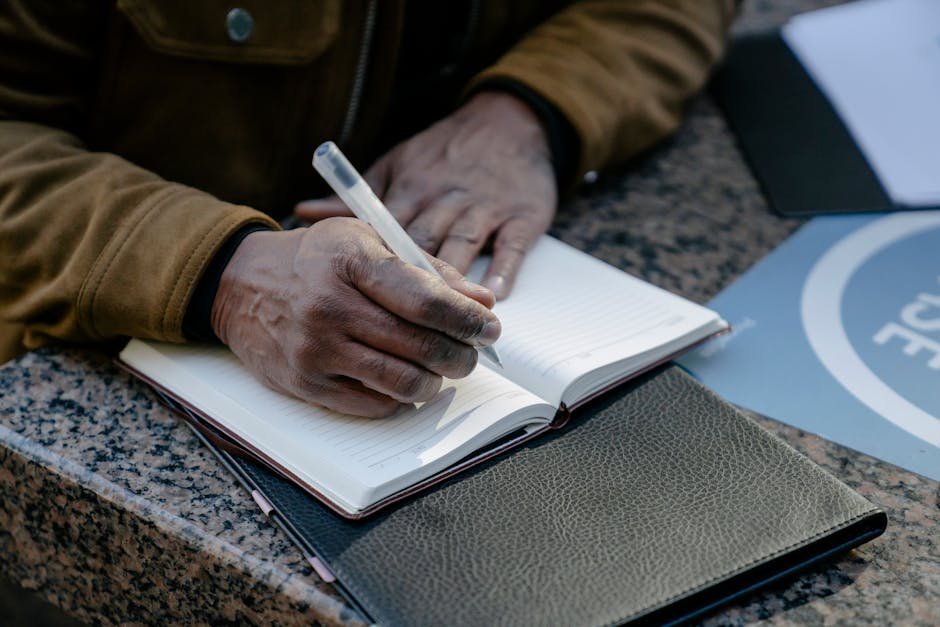
Eleanor Park, a 34-year-old graphic designer in Minneapolis, started keeping a notebook on her nightstand the week she finally admitted to her therapist that her anxiety had quietly tripled since the start of the year. Her therapist did not prescribe a complicated protocol. She simply asked Eleanor to write for fifteen minutes before bed, four nights in a row, about the harder feelings she had carried that day. Eleanor expected the exercise to feel performative, the way bullet journals on social media often look. Instead, by the third night, she noticed something specific. The words she put on the page were sharper and more honest than the ones she said out loud, even in therapy. By the seventh night she had filled twenty-two pages and had stopped waking up at 3 a.m. with a racing chest. She did not become a wellness influencer. She just kept a battered cloth-bound notebook in her bag and used it on commutes, in waiting rooms, and during the slow part of Sunday afternoons when her thoughts usually started to spiral. Journaling for mental health, Eleanor will tell you now, is not magic. It is the cheapest, most underrated mental health tool she has ever tried.
Eleanor’s experience is not unusual, and it is not placebo. Decades of research, going back to social psychologist James Pennebaker’s expressive writing studies in the 1980s, suggest that putting feelings on paper changes how the brain consolidates emotional memory. The trick is knowing which kind of writing works for which kind of distress, and where the practice ends and clinical care begins. This guide walks through the most studied formats, the apps that try to replicate them, and the honest limits of writing your way toward a steadier mind.
The Pennebaker Protocol: Writing Through Hard Things
James Pennebaker’s expressive writing protocol is the most replicated journaling intervention in clinical psychology. The instructions are almost embarrassingly simple. Sit somewhere private. Set a timer for fifteen to twenty minutes. Write continuously about your deepest thoughts and feelings around a difficult or traumatic event. Do not stop to fix grammar. Do not censor. Repeat for four consecutive days. Pennebaker’s original research, and dozens of follow-up trials, found measurable improvements in immune markers, sleep quality, doctor visits, and depressive symptoms in the weeks after the four-day intervention.
The protocol works best for people processing a discrete event with a beginning and end, such as a breakup, a job loss, a medical scare, or a public failure. It works less well, and sometimes makes things worse, for people in the acute phase of severe trauma or those with active suicidal thinking. The reason is mechanistic. Expressive writing forces a person to construct a narrative, which means imposing structure on chaos. For someone whose nervous system is already overwhelmed, that structure can feel like a flood. If you are working through complex trauma, please read our guide on healing from adult childhood trauma before you commit to four straight nights of memory work alone.
Gratitude Journaling: What Emmons Actually Found
Robert Emmons and Michael McCullough ran the trial that turned gratitude journaling into a wellness industry. Participants who wrote down five things they were grateful for, once a week for ten weeks, reported higher life satisfaction, more optimism, fewer physical complaints, and even more time spent exercising than control groups who logged hassles or neutral events. The effect was real and replicable, but the social media version of the practice has wandered far from what the research actually showed.
Gratitude journaling works when it is specific, embodied, and not performed for an audience. Writing “I am grateful for my family” once a day in the same words is gratitude in the sense that a postcard is travel. Writing “I am grateful that my mother called yesterday and told me, in her voice, that she is proud of how I handled the move” is gratitude in the sense the studies measured. Frequency matters less than people assume. A weekly entry produced larger effects than a daily one in some follow-up trials, possibly because daily logging triggers habituation. If gratitude lists feel hollow, try once a week with three highly specific items rather than five generic ones every morning.

Bullet Journaling for ADHD and Executive Function
Ryder Carroll developed the bullet journal, or BuJo, partly as a coping system for his own ADHD. The method’s appeal to people with executive-function challenges is structural. By forcing the writer to migrate unfinished tasks forward by hand each day, week, and month, the system creates friction around items that do not actually matter, while elevating the ones that do. The hand-copying step is the secret ingredient. Digital task managers let stale items rot quietly. A paper system makes you confront them.
Adults with ADHD often report that bullet journaling reduces the chronic background hum of “what was I supposed to do” anxiety. Habit trackers in the same notebook can quietly catch patterns the brain misses, such as the relationship between sleep length and afternoon irritability or between caffeine timing and evening overwhelm. The risk is well known to anyone who has scrolled BuJo content online. The system can become a perfectionist art project that consumes more bandwidth than the problems it was designed to solve. The minimalist version, in a plain notebook with a single pen, is the version that has the best chance of lasting.
Morning Pages: The Julia Cameron Approach
Julia Cameron’s “Morning Pages,” from her 1992 book The Artist’s Way, are three handwritten pages of stream-of-consciousness writing first thing in the morning. The pages are not meant to be read, edited, or shared. They are meant to be a brain dump, a way of clearing the mental cache before the rest of the day starts. Cameron’s framing is creative rather than clinical, but the practice overlaps with what therapists call “thought downloading” or “worry exposure.”
Morning Pages have not been formally trialed at the level of Pennebaker’s protocol, but their popularity among people in creative recovery, twelve-step programs, and trauma therapy is striking. The likely mechanism is simple. Three pages of writing takes most adults around thirty minutes. That is enough time for the conscious mind to exhaust its top-of-mind worries and wander toward whatever sits underneath. People who try Morning Pages for thirty days often describe it as cheaper, slower talk therapy.
Apps and Digital Journaling: Where the Evidence Stops
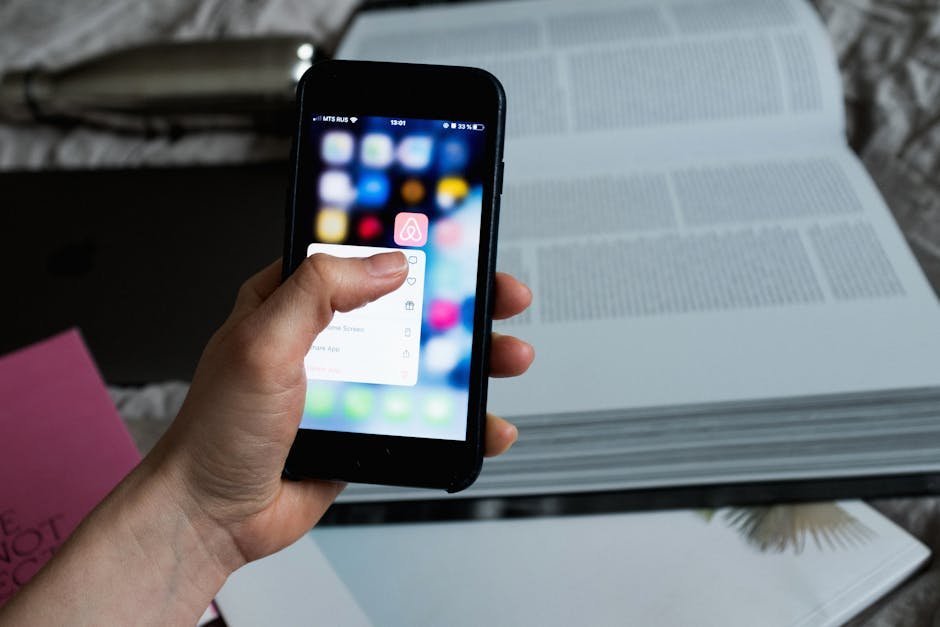
Day One, Stoic, Reflectly, Journey, and Daylio are the most-downloaded journaling apps on iOS and Android. They lower the barrier to entry, particularly for people whose handwriting is slow or painful. The trade-off is that almost none of the foundational journaling research used keyboards or phones. Pennebaker, Emmons, and Cameron all studied longhand. A few small studies suggest typed journaling produces similar mood benefits, but the slower pace of handwriting is hypothesised to deepen processing in ways tapping does not.
For people who will not use a paper notebook, an app is better than nothing. The features that matter most are private encryption, the ability to write without prompts when you want to, and an export option so your data is not held hostage. The features that matter least are AI mood analysis and gamified streaks, which often turn the practice into another performance metric.
What Makes Journaling Work, According to Research
Across forty years of research, the journaling formats that produce mental health benefits share four ingredients.
- Writing about feelings, not just facts. A diary entry that records what happened produces fewer benefits than one that explores how the writer felt about it.
- Movement toward meaning. Studies that tracked language use found writers improved most when they shifted from raw description toward causal words like “because,” “realised,” and “understand.”
- Privacy. Audience changes the writing. Journals written for an imagined reader, a future memoir, or a therapist’s eyes produce smaller benefits than ones written purely for the self.
- Time-bounded sessions. Open-ended writing sessions invite rumination. Fifteen to thirty minutes appears to be the productive window.
Notice what is not on the list. Notebook quality, pen brand, time of day, and aesthetic layout do not predict outcomes. The practice is mechanical, not artistic.
When Journaling Backfires
Journaling can amplify rumination. People with anxious or depressive temperaments sometimes use the page to rehearse worries rather than process them. If you finish a session feeling more activated than when you started, more frequently than not, the practice is feeding rumination rather than reducing it. The fix is structure. Switch from free-form writing to prompted writing. Try cognitive behavioural worksheets, “what is the evidence” thought records, or three specific gratitudes. Set a hard timer.
Trauma survivors face a different risk. Writing about the worst moments of one’s life without a therapist’s containment can trigger flashbacks, dissociation, or sleep disruption. Pennebaker himself has been clear that the four-day protocol is not a substitute for trauma therapy. Journaling for mental health sits beside therapy, not in place of it, for anyone with a trauma history. Combining writing with the broader strategies in our recovery toolkit guide tends to work better than journaling alone.
Starting Protocols You Can Actually Use This Week
If you have never journaled, start with the lowest-friction option that matches your goal.
- For acute stress about a specific event: the Pennebaker four-day protocol, fifteen minutes per night, paper preferred.
- For low-grade chronic anxiety: three specific gratitudes once a week, every Sunday evening.
- For ADHD overwhelm: a minimalist bullet journal with daily log, weekly migration, and one habit tracker.
- For creative block or vague unhappiness: Morning Pages for thirty consecutive days.
- For people in active therapy: a simple feelings log noting one emotion per day on a 1-10 scale, brought to sessions.
Pair any of these with the mindfulness meditation practices we have covered elsewhere if you want a complementary, non-writing tool. According to a National Institutes of Health review of expressive writing trials, the strongest effects show up when journaling is one part of a broader self-care routine, not a standalone intervention.
Frequently Asked Questions
How long should I journal each day?
Fifteen to thirty minutes is the productive range. Sessions under five minutes rarely move past surface description. Sessions over an hour invite rumination. A timer helps.
Is typing as good as handwriting?
The evidence base used handwriting, and several small studies suggest the slower pace deepens processing. For people who will not write by hand, typed journaling still beats no journaling. Choose the format you will actually keep doing.
Should I show my journal to my therapist?
The research suggests the benefits come from writing for yourself, not for an audience. Bringing brief summaries or specific entries to a session is fine. Handing over the full notebook tends to reduce the practice’s value.
Can journaling replace therapy?
For mild stress and life transitions, journaling can be enough. For depression that lasts more than two weeks, trauma symptoms, suicidal thinking, or severe anxiety, journaling supports therapy rather than replacing it.
What if writing makes me feel worse?
Stop free-form writing and switch to structured prompts. If activation continues, set the practice down for a few weeks and consider working with a therapist who can help process whatever the page is surfacing.
The Bottom Line
Journaling is the rare mental health tool that costs almost nothing, has decades of replicated research, and is genuinely accessible. The catch is that the version of journaling that works is rarely the version that performs well on social media. It is short, private, often handwritten, and almost always boring to look at. The American Psychological Association’s guidance on expressive writing echoes the same point. The notebook does not need to be beautiful. It just needs to be opened.
If you are in crisis, in the United States call or text 988 to reach the Suicide and Crisis Lifeline. The 988 Lifeline provides free, confidential support 24/7 for people in distress and for those worried about someone else.
This article is for educational purposes only and does not constitute medical advice. Journaling is not a substitute for diagnosis or treatment from a qualified mental health professional. If you are experiencing depression, anxiety, trauma symptoms, or suicidal thoughts, please consult a licensed clinician.