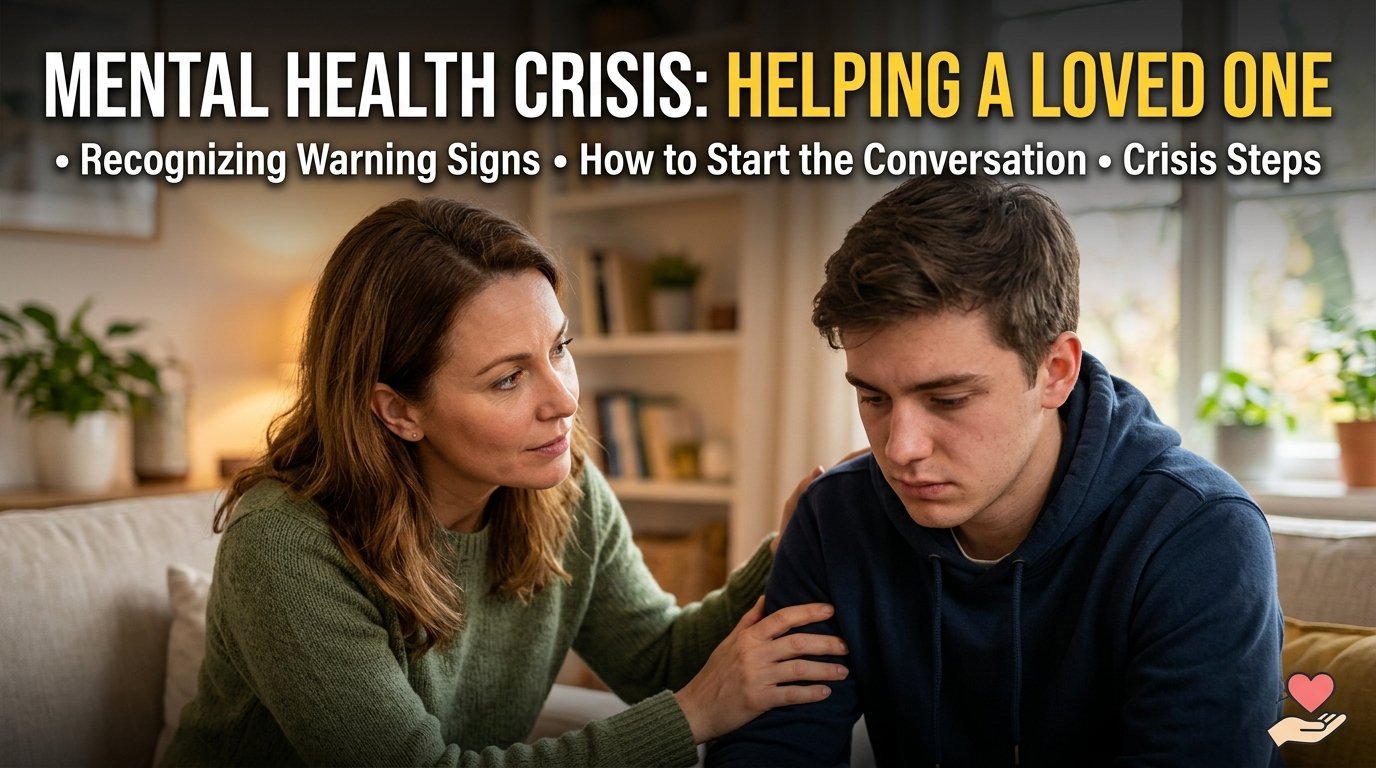
Recognising the Moment Before a Crisis Becomes One
Most family members of people with serious mental health conditions describe the same feeling about the days leading up to a major crisis: they could see something was wrong, but they could not name what it was, and by the time they understood what they were watching, the situation had already escalated. The skill of recognising a mental health care emergency in someone you love is one of the most useful and least taught capacities in modern American family life.
This guide describes the warning signs that distinguish ordinary distress from a developing crisis, the conversations that work and the ones that backfire, and the first concrete steps to take when the situation crosses the line. The aim is to give families a vocabulary and a playbook that they can use in real time, when the cost of hesitation is highest.
The Categories of Warning Signs
Mental health emergencies do not arrive out of nowhere for most patients. They build over days or weeks, with observable changes in behaviour, mood, and self-care. The clinical literature groups warning signs into four broad categories: changes in mood and affect, changes in behaviour and routines, changes in cognition and speech, and changes in self-care and physical presentation. A loved one usually shows shifts in two or more of these categories before a true crisis develops.
Mood and affect changes include sustained sadness or hopelessness, sudden irritability that seems out of proportion, abrupt swings between calm and agitation, persistent anxiety with physical symptoms, or an unexpected calm in someone who had been distressed. The unexpected calm is particularly important. Many family members of suicide loss describe the patient becoming peaceful in the days before death, often misread as recovery. The peace was sometimes the experience of having decided.
Behavioural Changes That Signal Risk
Behavioural warning signs include withdrawal from people and activities the person used to engage with, increased use of alcohol or drugs, reckless or impulsive behaviour, giving away possessions, putting affairs in order, researching means of self-harm, and quietly saying goodbye in language that sounds final. Each of these alone may have benign explanations. Two or three together in a short period are clinical warning signs that warrant mental health care attention.
Substance use changes are particularly important. A person who has been managing depression with weekly therapy and starts drinking nightly is at meaningfully elevated risk. A person in early addiction recovery who returns to use is in a window of high relapse-related mortality. Substance use both worsens underlying mental health symptoms and reduces inhibition, two effects that compound rapidly during a crisis arc.
Cognitive and Speech Changes
Cognitive warning signs include difficulty concentrating, racing thoughts, paranoid or persecutory thinking, hearing voices that are not there, expressing beliefs that are clearly not based in reality, and speech that becomes pressured, disorganised, or unusually rapid. For a person with bipolar disorder, schizophrenia, schizoaffective disorder, or substance-induced psychosis, these signs can mark the beginning of a mood episode or a psychotic break that benefits from prompt intervention.
Speech content also matters. Statements about being a burden, about wanting the pain to stop, about not seeing a future, or about specific plans to harm oneself or others are direct verbal warning signs. The popular advice to ask directly about suicidal thoughts when you notice these signs is correct. Asking does not plant the idea. Research consistently shows that direct questions about suicide reduce risk rather than increase it. The question can be as simple as: are you thinking about ending your life.
Self-Care and Physical Changes
Changes in self-care, sleep, appetite, hygiene, and physical presentation are often the earliest warning signs that something is shifting. A person who has stopped showering, stopped eating, stopped sleeping, or stopped going outside is communicating something important. The communication is rarely intentional, and the person may not be able to explain what is happening, but the body is telling a story the family can read.
Watch also for unusual energy patterns. Manic and hypomanic episodes can present as a person sleeping only two or three hours a night while remaining energetic and productive, taking on multiple new projects, spending money impulsively, or engaging in risky sexual or financial behaviour. The high-energy presentation can look like recovery from a depression, and family members often celebrate the change before recognising it as another phase of the same condition.
The First Conversation
When you decide to raise the concern with your loved one, the structure of the conversation matters more than the exact words. Choose a private, calm setting. Sit down with them rather than standing. Speak from observation rather than diagnosis. Use phrases like “I have noticed that you have not been sleeping well and you have been quieter than usual” rather than “you are depressed and you need help.” The first phrase invites a conversation. The second often produces defensiveness.
Ask open questions. How are you feeling. What is going on for you right now. Is something specific weighing on you. The questions are not investigative. They are an invitation to share. Listen without interrupting, without correcting, and without immediately problem-solving. Many family members rush to fix what their loved one is sharing, which closes the conversation. Sit in the discomfort of hearing without acting for a few minutes.
If the response surfaces serious concerns, ask directly about safety. Are you having thoughts of harming yourself. Do you have a plan. Do you have access to means. The questions are uncomfortable. The discomfort is yours, not theirs. Most patients in distress are relieved to be asked.
First Steps When Concerns Are Confirmed
Once a concern is confirmed, the right next step depends on severity. If the person has active suicidal intent, has a plan, has means, or has already taken steps toward self-harm, the situation is an emergency. Call 988 or your local mobile crisis line for clinical guidance, or 911 if there is immediate medical danger. If the person is at elevated risk but not in immediate crisis, the right step is usually a same-day or next-day appointment with their existing mental health care provider, or an urgent intake with a community mental health center if they are not currently in treatment.
If means are present in the home, including firearms, large quantities of medications, or other lethal items, removing them or securing them temporarily is one of the most evidence-based interventions in mental health care. Means restriction reduces suicide deaths even when underlying symptoms persist, because the impulse window during which most attempts are made is short. Locking medications, storing firearms with a relative or at a range, and removing access to means buys time during which the crisis can pass and treatment can engage.
When Your Loved One Refuses Help
Many family members face the frustrating situation of recognising a developing crisis and being unable to convince their loved one to engage with treatment. The American legal framework around adult patients prioritises autonomy except in narrow situations of imminent harm to self or others. This means that absent immediate danger, you cannot force an adult into treatment.
What you can do is keep the door open. Continue showing up. Continue offering specific help, like driving to an appointment or sitting with them through a difficult moment. Use crisis services when imminent danger develops. In some states, civil commitment laws allow involuntary evaluation when criteria are met. In some states, assisted outpatient treatment programs allow court-ordered outpatient mental health care for patients with serious mental illness and a history of treatment non-engagement. Knowing your state’s specific laws helps when imminent crisis develops.
Caring for Yourself
Family members of people with serious mental health conditions develop their own elevated risk over time. Sustained vigilance, sleep disruption from worry, and the emotional weight of holding another person’s safety in your awareness produces measurable rates of depression, anxiety, and burnout in caregivers. Your own access to mental health care is part of the solution, not a luxury. NAMI’s family-to-family classes, individual therapy with a clinician familiar with caregiver dynamics, and peer support groups for family members all reduce the long-term load.
The work of recognising warning signs in someone you love is real labour. It is also essential. Your attention may be the difference between a developing crisis and a tragedy. Trust your observation. Speak directly. Use the resources that exist. The conversation you are dreading is often the one that opens the door to recovery.
If you or someone you know is in crisis, call or text 988 to reach the Suicide and Crisis Lifeline twenty-four hours a day in the United States. For active danger, call 911.