Renata, a 58-year-old librarian in Madison, Wisconsin, lost her mother to pancreatic cancer in late 2024 after a six-month decline. She had inherited boxes of photographs, hospital wristbands, recipe cards in her mother’s handwriting, and a yellow scarf that still smelled faintly of her perfume. For three months she could not open the boxes. Her grief therapist suggested she set aside one Saturday morning a month to make a single page of a memory book, with no expectation that it be artful or finished, just a page. The first page took four hours and ended with her crying over a sixth-grade school photograph. The second page came easier. By the end of 2025 she had a forty-page book that included her mother’s last grocery list, a pressed leaf from the hospital courtyard, and the scarf cut into small squares stitched onto the cover. Her grief was not finished. What had changed was that there was now an object in her living room that held her mother in a form she could open, sit with, and close again. Renata’s experience is closer to the formal field of expressive arts therapy and creative bereavement than the suburban scrapbooking craze of the 1990s and 2000s, though the line between them is fuzzier than either tradition admits.
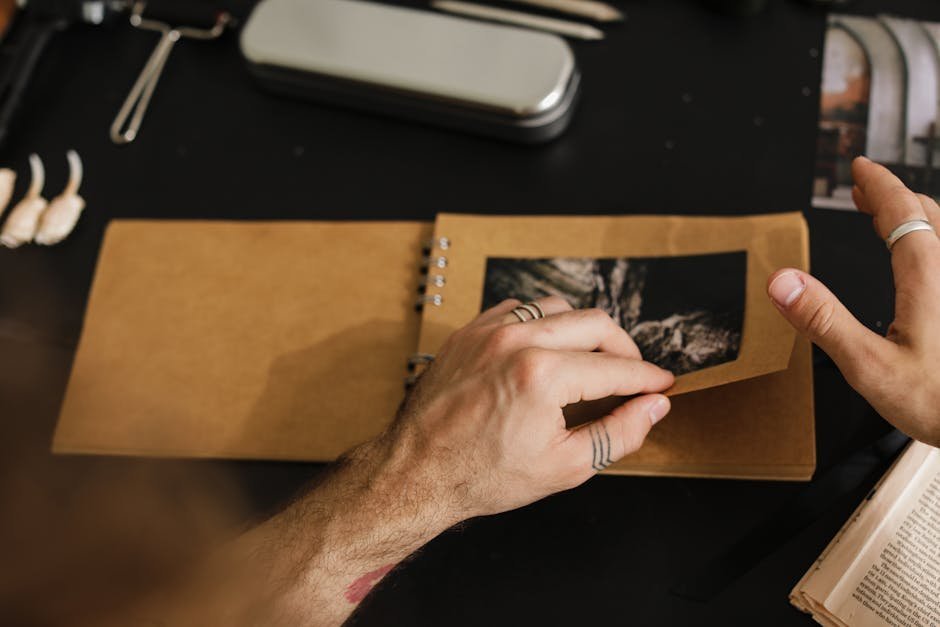
Scrapbooking mental health sits at an unusual intersection of craft, expressive arts therapy, life review, and grief work. The activity that thousands of American families know as a hobby has serious clinical applications in dementia care, bereavement support, anxiety management, and identity work after major life transitions. This article covers the formal therapeutic frameworks, the specific practices for dementia and grief, the distinction from regular journaling, and where to find groups and platforms.
Scrapbooking as expressive arts therapy
Expressive arts therapy is an integrative discipline that uses multiple art forms, including visual art, writing, music, and movement, in clinical and community contexts. Scrapbooking and memory-book work fall under the visual-art and narrative branches of this field. The International Expressive Arts Therapy Association credentials practitioners, and registered expressive arts therapists work in hospitals, hospices, schools, and private practice across the United States.
The mechanism of scrapbooking as therapy combines several elements. The selection of photographs and ephemera is itself a curatorial act of meaning-making. The physical handling of paper, scissors, glue, and embellishments engages the body and the senses. The arrangement on the page involves aesthetic decisions that bring unconscious material into form. The narrative that often accompanies the page (captions, dates, context) externalizes memory and integrates fragmented experience. Therapists treat the resulting book as a transitional object that holds emotional content in a way the client can revisit at their own pace.
Dementia memory books and life review
Memory books are a specific application of scrapbooking in dementia care. The book typically includes large, clearly labeled photographs of family members, significant places, and life events, along with brief, simple captions. The book serves as an anchor when memory falters: a person with moderate Alzheimer’s disease who cannot recall their grandchild’s name can sometimes recognize the child’s photograph and engage warmly when handed the book. Care partners use the book as a tool for connection, conversation, and reorientation during difficult moments.
Validation therapy, developed by Naomi Feil in the 1960s and 1970s, emphasizes meeting people with dementia in the emotional reality they currently inhabit rather than correcting their disorientation. Memory books support this approach by providing emotional touchstones rather than testing recall. Life review, formalized by psychiatrist Robert Butler in 1963, is the structured process of reviewing one’s life narrative in late adulthood, particularly in the context of approaching death. Memory books often function as life review artifacts, even when not explicitly framed that way. Families experiencing caregiver burnout in dementia sometimes find that creating a memory book together changes the caregiving relationship for the better, even when the person with dementia cannot fully participate in its making.
Grief scrapbooking and creative bereavement
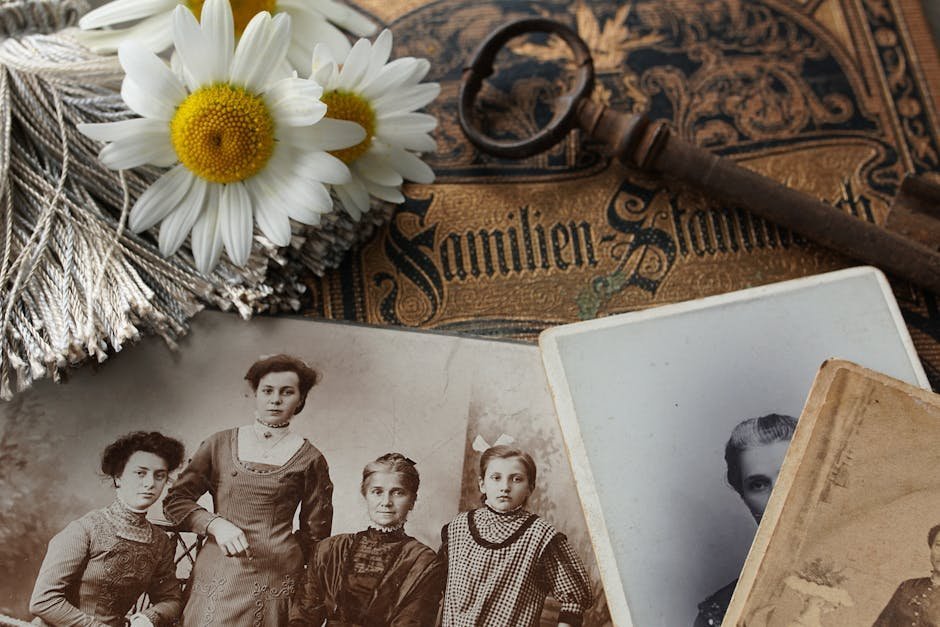
Creative bereavement is a small but established field within grief studies. Australian researcher Karleen Forwood and colleagues have published on creative arts in bereavement, describing how meaning-making through artistic activity supports adjustment after loss without forcing closure. Their qualitative work, indexed through National Library of Medicine databases, suggests that bereaved adults who engage in creative practices including memory-book work, writing, and other arts report greater meaning, continued connection to the deceased, and lower rates of complicated grief.
Grief scrapbooking is not the same as making a tribute book to “process and move on.” The contemporary grief literature, particularly the work of George Bonanno and Robert Neimeyer, emphasizes continuing bonds rather than detachment. A grief scrapbook can be a vehicle for continuing bond: a place to hold the relationship with the person who has died as it evolves over years, with new pages added on anniversaries, when news would have been shared with them, when the bereaved person’s life changes in ways the deceased would have wanted to know about. People also use this practice after pet loss, complementing what they may explore through pet loss grief work, which the broader culture often dismisses but which can be profound.
Distinguishing from regular journaling
Scrapbooking is a visually-led practice, while journaling is a verbally-led practice. The distinction matters because they engage different cognitive and emotional systems. Verbal journaling, particularly the structured forms studied by James Pennebaker, has documented benefits for trauma processing, immune function, and mood. Visual scrapbooking engages right-hemisphere processing, sensory memory, and aesthetic decision-making in ways that words alone do not.
For people who find verbal journaling difficult, including some trauma survivors who become flooded by writing about events, scrapbooking can provide a less direct entry into emotional material. The image holds what the word cannot yet say. For people whose verbal capacity is impaired by dementia, stroke, or autism, visual practices may be the primary accessible mode. Many practitioners use both: a scrapbook page with a few sentences of caption, a journal with an occasional pasted-in photograph or ticket stub, hybrid forms that the rigid distinction between practices does not capture. Combining a memory practice with broader journaling for mental health can produce a layered, sustainable routine.
Digital scrapbooking platforms and hybrid approaches
Digital scrapbooking has matured into a substantial subculture. Platforms like Project Life by Becky Higgins, the Project365 photo-a-day movement, and apps like Chatbooks, Mixbook, and Shutterfly enable hybrid analog-digital workflows. Some practitioners scan ephemera and arrange digitally before printing a finished book; some keep the entire practice digital; some prefer fully analog physical books. The choice depends partly on hand mobility, vision, available space for materials, and personal preference.
Digital tools open access for people with limited mobility, hand tremor, or visual impairment. Voice-activated description, text-to-speech captions, and high-contrast templates make digital scrapbooking accessible where physical paper handling is not. The trade-off is that a printed digital book lacks the tactile quality of pasted ephemera, original handwriting, and the texture of a fabric scrap. Many people whose grief or memory work feels especially weighty prefer the physical artifact for that reason; others find digital workflows enable them to actually finish a project rather than abandoning a half-done analog book.
Finding groups and community
Scrapbooking communities exist in essentially every U.S. city. Specialty stores, when they survive, host crops (multi-hour scrapbooking sessions), classes, and supply swaps. National retailers like Hobby Lobby and Michaels host similar events. Online communities through Facebook groups, Pinterest, and dedicated scrapbooking forums exchange page ideas, technique tutorials, and emotional support. For people with specific applications, like dementia memory books or pediatric loss memory books, niche communities and nonprofits offer guidance.
Hospice organizations often run grief scrapbooking groups as part of their bereavement programs, free to community members regardless of whether the deceased used hospice services. Library systems sometimes host memory book workshops, particularly around veterans’ stories, immigrant family histories, and senior life review. Faith communities run memory book ministries. For people who find their grief or memory work more complex than what a community group can hold, working with an expressive arts therapist or a credentialed grief counselor adds clinical structure. Some people find pairing memory work with peer-led grief settings useful for understanding their own emotional bandwidth.
When the practice becomes too much
Memory work is not always benign. For some people, particularly in the early acute phase of grief, sustained engagement with photographs and objects of the deceased can intensify rather than ease distress. Trauma survivors working with images of harmful events without therapeutic support can become flooded. Dementia caregivers preparing memory books while still grieving the gradual loss of the person can find the work emotionally exhausting in ways that compound rather than relieve their burden.
Signs that the practice is hurting rather than helping include sleep disruption after sessions, intrusive replay of difficult memories triggered by the work, increased anxiety or depression in the days following a long session, and avoidance of the project alternating with compulsive engagement. If these patterns appear, the right response is usually to pause, work with a clinician, and return to the practice when nervous-system regulation is steadier. Slow, brief sessions with breaks for grounding are often more sustainable than ambitious all-day pushes.
Frequently asked questions
Do I need to be artistic to scrapbook for mental health?
No. The therapeutic value comes from the act of meaning-making, not from aesthetic quality. Pages can be simple: one photograph, one caption, one date. Many practitioners deliberately avoid elaborate decoration to keep the focus on the emotional content.
How soon after a loss should I start a grief scrapbook?
There is no universal timeline. Some people start within weeks; others need months or years before they can engage with photographs. Following one’s own pace and emotional bandwidth is more important than meeting any external schedule. A grief counselor can help if it is unclear whether starting will help or harm.
Can a person with dementia help make their own memory book?
Often yes, particularly in earlier stages. Choosing photographs, telling stories about them, and arranging them on pages can be deeply meaningful. As the disease progresses, family members usually take on more of the assembly while still consulting the person where possible.
Is digital or physical scrapbooking better?
Neither is universally better. Physical books offer tactile depth and original ephemera; digital books are more accessible, easier to share, and easier to finish. Many people use a hybrid approach.
How much does it cost to start?
A basic memory book can cost under twenty dollars, with a blank album, a glue stick, scissors, and existing photographs. Elaborate scrapbooking can become expensive, but the therapeutic benefit is not correlated with supply spending.
The bottom line
Memory books and scrapbooks occupy a quietly powerful place in mental health practice. The hobby that suburban America associated with cropping parties and patterned papers connects to serious clinical traditions in expressive arts therapy, dementia care, and creative bereavement. Whether through a forty-page grief book made over a year, a simple dementia memory book assembled in a weekend, or an ongoing record of a child’s growth, the practice rewards patience, intentionality, and self-compassion. Scrapbooking mental health work is not a substitute for clinical care when distress is severe, but as an adjunct to therapy and grief support, it offers a tangible artifact that holds memory and meaning in a form that can be returned to for years.
If you are in crisis or thinking about harming yourself, call or text 988 to reach the 988 Suicide and Crisis Lifeline, available around the clock in the United States.
For research and clinical guidance, see the National Institutes of Health and the American Psychological Association.
This article is for general educational purposes and is not medical advice. Speak with a qualified clinician about your specific health situation.