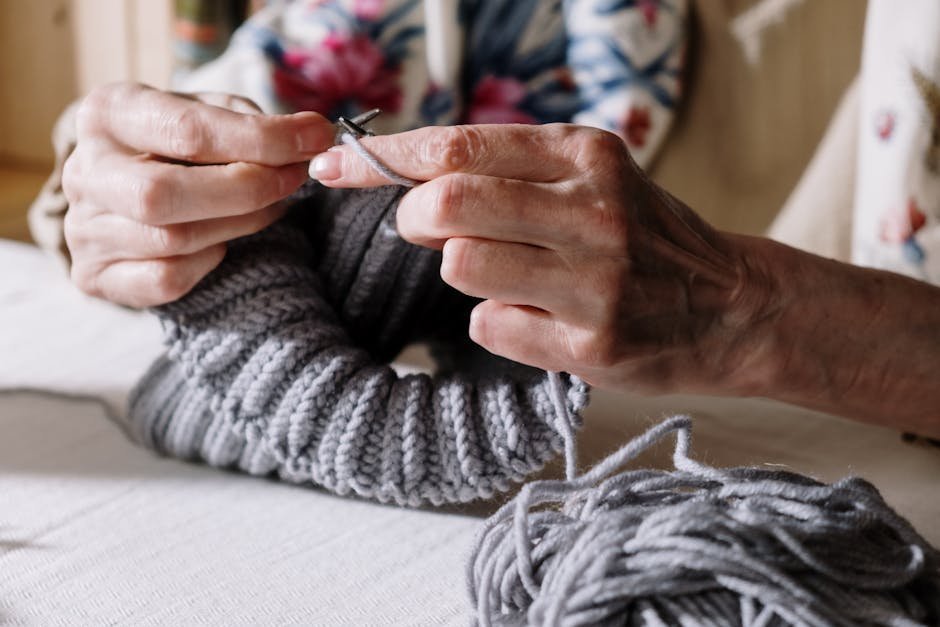
Marcus Reyes, a 41-year-old emergency-room nurse in Tucson, picked up knitting after his second pandemic burnout. He chose it almost at random. A coworker brought a half-finished baby blanket to a debrief and Marcus, who had spent the previous month doomscrolling between shifts, asked her where she had bought the yarn. Six months later he had finished four scarves, two hats that did not quite fit anyone, and one lopsided cardigan. He had also, almost by accident, stopped checking his phone in the parking lot before walking into his apartment. He still had hard days. He still cried in his car after pediatric codes. But the slow, repetitive click of bamboo needles, two hundred stitches per row, had quietly become the half hour every evening when his nervous system finally exhaled. Hobbies for anxiety are not a wellness gimmick, Marcus learned. They are a structural intervention for a brain that has forgotten how to be bored, and the research backs him up. This guide walks through what the science actually shows about craft, flow, and why your grandmother’s knitting circle was, in clinical terms, treating something real.
Csikszentmihalyi’s Flow State and the Anxious Brain
Mihaly Csikszentmihalyi spent four decades studying what he called “flow,” the absorbed mental state where time disappears and self-consciousness fades. His research, conducted with surgeons, climbers, painters, factory workers, and chess players, found that flow had a consistent fingerprint. It required clear goals, immediate feedback, and a balance between skill and challenge that nudged just past the edge of comfort. Crucially, flow correlated with higher long-term wellbeing across professions, ages, and cultures.
For people with anxiety, the relevance is direct. Anxiety, in neurological terms, is a state of high arousal pointed at the future. Flow is high engagement pointed at the present. The two states share an arousal level but compete for the same cognitive bandwidth. You cannot easily worry about a 2 p.m. meeting while your hands are counting stitches in a complicated cable pattern. The hobby is not “distracting” you. It is occupying the exact mental real estate that anxiety needs to operate.
Knitting, Crochet, and the Stitchlinks Research
Stitchlinks, a Bath-based nonprofit founded by physiotherapist Betsan Corkhill, has produced some of the most cited research on craft and mental health. A survey of more than three thousand knitters found that 81 percent reported feeling happier after knitting, 54 percent reported reduced anxiety, and a smaller group described knitting as actively helpful for depression management. The benefits scaled with frequency. Knitters who picked up needles three or more times a week reported the strongest effects.
The mechanism appears to combine the bilateral rhythmic movement, the predictable feedback of stitch counting, and the meditative quality of sustained attention on a single task. Researchers have noted overlap with mindfulness meditation in measured outcomes, though knitting requires no instruction or sitting still. For people who find seated meditation hostile, craft can deliver similar nervous-system benefits with movement instead of stillness. Our guide on mindfulness meditation covers the seated alternative if you want to compare.
Watercolour, Painting, and Visual Art for Anxiety
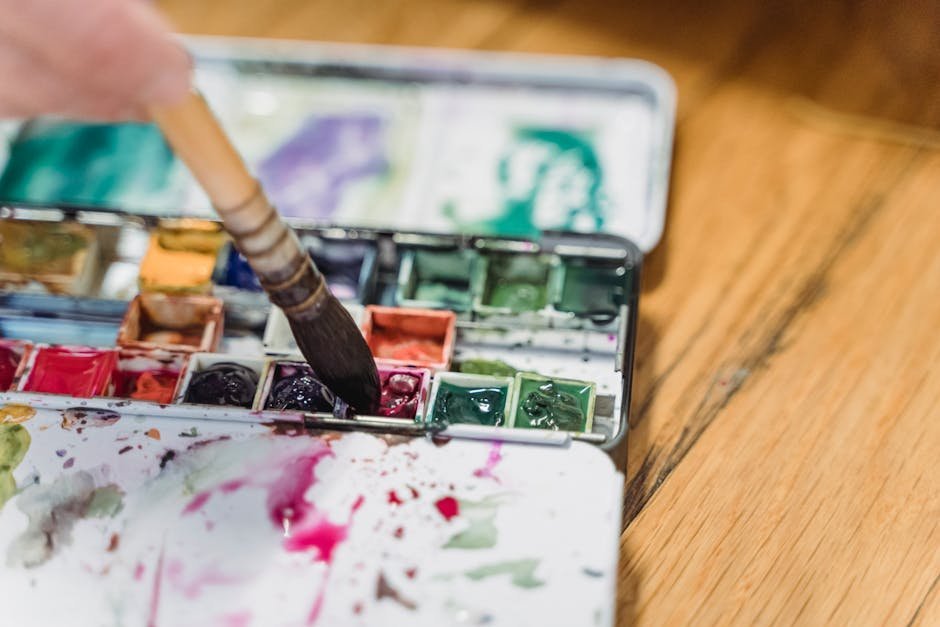
A 2016 study in the journal Art Therapy found that 45 minutes of art-making reduced cortisol levels in 75 percent of participants, regardless of prior artistic experience. The effect size was modest but consistent, and it did not depend on the participant producing anything skilled. Doodling, finger painting, and collage all produced measurable cortisol drops. This matters because the most common barrier to taking up painting for anxiety is the assumption that one must be “good” first.
Watercolour, in particular, has a specific quality that suits anxious temperaments. The medium does not allow precise control. Water bleeds where it wants. The painter’s job is to suggest, then surrender. People who try to micromanage anxiety often find watercolour either deeply frustrating or deeply liberating, with little in between. The frustration itself is often diagnostic. Learning to let pigment move is, in miniature, the same skill as letting an intrusive thought pass.
Gardening Therapy and the Thrive Research
Thrive, a UK charity, has run social and therapeutic horticulture programmes since 1979 and has accumulated decades of outcome data. Their findings parallel academic studies from the University of Essex and the National Institutes of Health. Thirty minutes of gardening reduces cortisol more reliably than thirty minutes of indoor reading. Gardening combines mild physical exertion, sunlight exposure, exposure to soil microbes that may modulate immune and mood pathways, and the goal-directed care of living things. It is also one of the few hobbies that produces visible weekly progress without demanding skill.
For apartment dwellers, the entry point can be as small as three pots on a windowsill. Herbs are forgiving. Tomatoes give beginners a quick win. Indoor plants are imperfect substitutes but still deliver some of the calming effect through visual contact with green and through the rhythm of weekly watering. The clinical version, called horticultural therapy, is increasingly offered in psychiatric units and rehabilitation centres in the United States.
Woodworking, Pottery, and Tactile Crafts
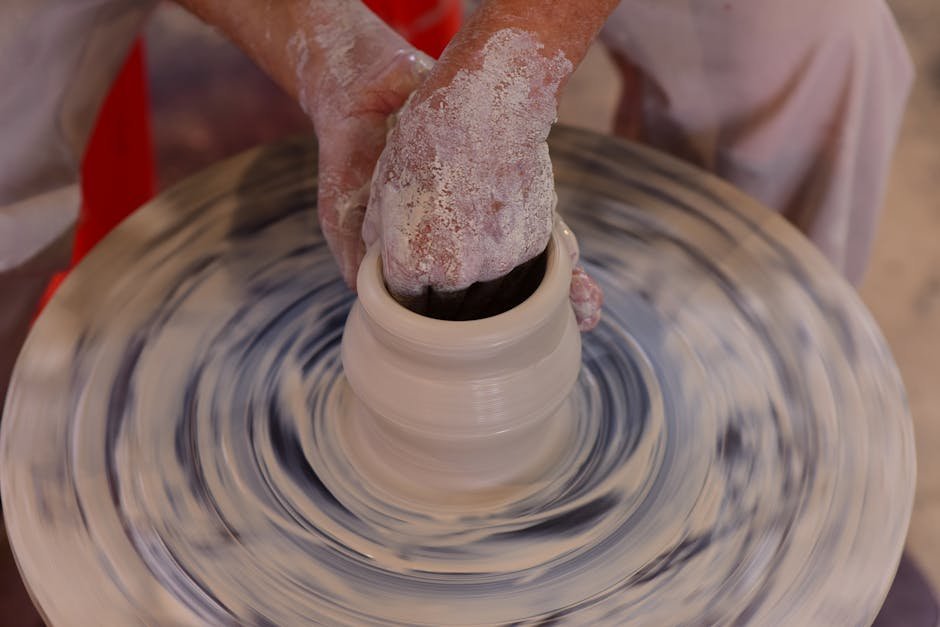
Tactile crafts share a feature that screen-based hobbies cannot replicate. They engage proprioception, the body’s sense of where it is in space, and they require the user to handle objects with weight, texture, and resistance. For people whose anxiety lives in the body, this matters. Holding a chisel, throwing a pot, or shaping a piece of leather pulls attention out of the head and into the hands.
Veterans’ programmes have used woodworking for trauma recovery for decades, partly because the work demands focused attention that competes with intrusive thoughts and partly because finished objects produce something that intrusive thoughts cannot, which is durable evidence that the user can build, repair, and complete. The same logic applies to civilians dealing with chronic anxiety. A finished cutting board is a small, useful argument against a worried mind.
Active Engagement Versus Passive Scrolling
The single most useful distinction in the hobby-and-anxiety literature is between active and passive engagement. Television, social media, and most video games sit on the passive end of the spectrum, even when they feel busy. They deliver stimulation without demanding skill development. Active hobbies, by contrast, require the brain to learn, fail, and adjust. The active category includes craft, instrument practice, sport, language learning, cooking from scratch, and most outdoor pursuits.
People often discover, after a careful audit, that what they call “relaxing” in the evenings is actually two hours of phone scrolling that leaves them more wired than they started. Hobbies for anxiety work specifically because they replace passive consumption with active production. The shift from scrolling to stitching, even for thirty minutes a night, often produces sleep improvements within two weeks. Adding gentle movement, as discussed in our piece on exercise and depression, compounds the effect.
The Knitting Circle as Community Medicine
Solo craft is good. Group craft is, for many people, better. The knitting circle, the quilting bee, the maker space, and the community garden plot all combine the cognitive benefits of skill practice with the protective effect of weak social ties. Sociologist Mark Granovetter’s research on weak ties suggests that loose, regular contact with people outside your closest circle predicts wellbeing nearly as strongly as deep friendship. Hobbies are one of the last reliable settings in adult life where weak ties form naturally.
For older adults, retirees, and people who work from home, this matters more than the craft itself. A weekly knitting circle gives the week a structural anchor, an exit from the house, a small social rehearsal that does not demand the intensity of close friendship. Our guide to friendship and community in adulthood covers the loneliness research in more depth.
Finding Hobby Groups in Your City
Most cities in the United States have more hobby infrastructure than residents realise. The barrier is usually search behaviour, not availability.
- Public libraries often host free knitting nights, writing groups, and beginner craft circles. Branch event calendars are the most underused resource on this list.
- Maker spaces, sometimes called fab labs or hackerspaces, offer membership access to woodworking tools, sewing machines, and pottery wheels for a monthly fee. Many run free open-house evenings.
- Community colleges and parks-and-recreation departments run low-cost short courses in painting, ceramics, and gardening that double as social entry points.
- Meetup.com and Facebook groups still cover most niche hobbies in mid-sized US cities, despite their usability problems.
- Yarn shops, art-supply stores, and local hardware stores often pin notices for clubs that never advertise online.
The first visit is the hardest. Most groups are kinder and less skilled than newcomers fear. According to the National Institutes of Health, the protective effect of group hobby participation tracks more closely with attendance frequency than with skill level. Showing up imperfectly is the entire intervention.
Frequently Asked Questions
Which hobby is best for anxiety?
The hobby you will actually do regularly. Knitting, gardening, and watercolour have the strongest published evidence, but the comparison is between someone doing one of them and someone doing none. Frequency beats format.
How quickly will a hobby reduce my anxiety?
Cortisol drops can show up after a single 45-minute session. Self-reported anxiety reductions usually appear after two to four weeks of regular practice. Sleep improvements often follow within a fortnight.
Do I need to be good at the hobby?
No. The cortisol-reducing effects of art-making appear in beginners as readily as in experts. Skill matters for flow, but flow can be reached at any skill level if the challenge is matched to your current ability.
Can hobbies replace therapy or medication?
For mild, situational anxiety, hobbies can be enough on their own. For panic disorder, generalized anxiety disorder, or anxiety co-occurring with depression, hobbies sit alongside therapy and any prescribed treatment, not in place of them.
What if I cannot afford craft supplies?
Public libraries lend tools and supplies in many cities. Community gardens are free or nearly free. Walking, sketching, and writing require almost nothing. Cost is a smaller barrier than newcomers expect.
The Bottom Line
Craft is not a wellness aesthetic. It is a structural intervention with measurable effects on cortisol, sleep, and self-reported anxiety, supported by decades of research from Csikszentmihalyi to Stitchlinks to Thrive. The American Psychological Association’s guidance on stress management consistently lists hobby engagement among the practices with strong evidence. The version that works is active rather than passive, repeated rather than one-off, and almost always less elegant than the social media version. Pick something with your hands. Do it for thirty minutes. See what your nervous system says by week three.
If you are in crisis, in the United States call or text 988 to reach the Suicide and Crisis Lifeline. The 988 Lifeline provides free, confidential support 24/7 for people in distress and for those worried about someone else.
This article is for educational purposes only and does not constitute medical advice. Hobbies and crafts are not a substitute for diagnosis or treatment from a qualified mental health professional. If you are experiencing severe anxiety, panic attacks, or co-occurring depression, please consult a licensed clinician.