Tasha Williams had been carrying the weight of her promotion in a quiet way. A 34-year-old senior project manager in Atlanta, she had been the first Black woman in her division to make director, and the recognition came with sleepless nights, a tight chest, and a feeling she could not name. Her primary care doctor offered an SSRI in five minutes. Tasha did not want a pill. She wanted someone who would understand why she could not call her cousin without feeling guilty for being tired, or why her grandmother in Macon had taught her that crying was for after church. She typed black therapist near me into her phone late one Tuesday night and scrolled past nine pages of results before she found Dr. Lena Carter, a Black female psychologist with a small practice in Decatur. Their first call lasted forty minutes. Tasha exhaled when Dr. Carter asked, gently, who had ever told her she was allowed to rest. Stories like Tasha’s are common, and the search itself reveals a hard truth about the American mental health system.
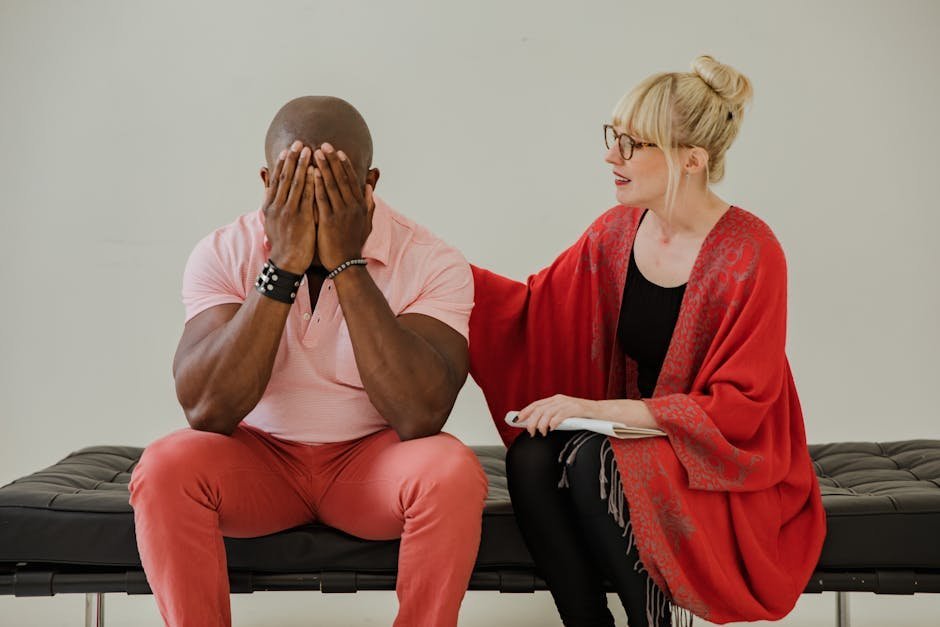
The Black mental health workforce shortage
When patients search for a black therapist near me, they run into a structural shortage that has not budged much in twenty years. Only about 4 percent of US psychologists identify as Black, according to the American Psychological Association’s most recent workforce surveys. Black Americans make up roughly 14 percent of the population. The gap is sharper at the doctoral and psychiatry level, where representation drops below 3 percent in some specialties. The result is long waitlists, geographic deserts, and patients who travel hours or move to telehealth to find culturally aligned care.
The pipeline has been slow to widen for several reasons. Doctoral training is expensive. Mentorship for Black students in psychology programs has historically been thin. Many Black students who do enter the field choose research, education, or community work over private practice. The pandemic accelerated retirements. Demand, meanwhile, has surged since 2020. The math is not subtle.
Directories built by and for the Black community
The directories that consistently outperform mainstream search engines for Black mental health are mission-built. Therapy for Black Girls, founded by Dr. Joy Harden Bradford in Atlanta, is the largest. The companion podcast has been downloaded millions of times and has driven a generation of Black women into therapy for the first time. Therapy for Black Men, founded by Vladimire Calixte, fills a parallel gap and accepts insurance reimbursement support through its scholarship arm. Black Female Therapists curates a tightly vetted national list. The Loveland Foundation, founded by Rachel Cargle, funds therapy sessions for Black women and girls through a vouchered partnership with select directories.
Inclusive Therapists and Melanin and Mental Health offer broader BIPOC filters and are useful when you want clinicians of color who may not be Black but bring strong cultural humility and shared experience navigating racism in healthcare. We discuss the underlying skill set in detail in our guide to cultural competence in therapy.
Historical context patients carry into the room
Black patients do not arrive at therapy as blank pages. They arrive carrying a history of medical betrayal that includes the Tuskegee syphilis study, the unconsented harvest of Henrietta Lacks’s cells, gynecological experiments on enslaved women, and decades of misdiagnosis of psychotic disorders in Black men at rates several times higher than in white men with the same symptoms. A clinician who waves this history away or treats it as past tense will not earn trust. The history is not academic. It shapes how patients answer intake questions, what they share, and what they keep behind.
A therapist who understands structural racism in care will not require you to explain it to them. They will already know about disparities in pain management, the racial mistrust documented in research by Dr. David Williams and others, and the way trauma symptoms in Black patients have historically been mislabeled as personality disorders or oppositional behavior. That fluency frees the session to focus on you, not on educating your provider.

The Strong Black Woman schema and stress research
Many Black women who enter therapy carry a script known in clinical literature as the Strong Black Woman schema. The script rewards self-sacrifice, emotional containment, and being the family rock. It also predicts higher rates of anxiety, depression, hypertension, and emotional eating, according to research led by Dr. Cheryl Woods-Giscombé and colleagues. A clinician who knows this literature will not hand you a coping skills worksheet on session two. They will help you grieve the parts of your life this script has cost you, and rebuild a relationship with rest.
The biology of chronic racism stress is real. Allostatic load, the cumulative wear of chronic stress on the body, runs higher in Black Americans across income levels. Research from the National Institute on Minority Health and Health Disparities documents elevated cortisol patterns and accelerated cellular aging tied to racism exposure. A culturally informed therapist will not treat your body and your mind as separate tracks. They will ask about sleep, blood pressure, and tension headaches with the same care they ask about mood. For deeper background on how childhood and family experiences shape adult symptoms, see our companion piece on adult childhood trauma.
Therapy for Black men and the masculinity question
Black men face a particularly steep barrier. They are diagnosed with depression at lower rates than white men but die by suicide at rising rates, especially Black men ages 15 to 24. The gap is not a sign that Black men are healthier. It reflects underdiagnosis, misdiagnosis, and a cultural script that frames asking for help as weakness. Therapy for Black Men and similar networks have built screening protocols and outreach designed for men who would not otherwise pick up the phone.
A clinician working with Black men will often start somewhere other than feelings. Behavior, fatherhood, work conflict, or anger are common entry points. Over time, the conversation moves to grief, fear, and the cost of always being the protector. Group formats and barbershop-based mental health programs, including the Confess Project’s national network, have been remarkably effective in pulling Black men into care who would never walk into a clinic. The National Institute of Mental Health publishes research on these disparities at nimh.nih.gov.
Insurance, sliding-scale options, and BIPOC scholarships
Cost is a frequent barrier even when patients find a Black therapist with availability. Several pathways close the gap.
- Open Path Psychotherapy Collective offers therapy at $40 to $80 per session for members who pay a one-time lifetime fee, and includes Black clinicians on its directory.
- Loveland Foundation funds blocks of therapy sessions for Black women and girls.
- BEAM (Black Emotional and Mental Health Collective) connects patients with sliding-scale providers and runs healing circles.
- Employee Assistance Programs offer three to eight free sessions; many now include diversity filters in their referral software.
- Federally Qualified Health Centers serve patients regardless of insurance status and increasingly recruit Black behavioral health staff.
If you have commercial insurance, request the in-network list of Black therapists from your member services line. If the list is too thin, ask about a single-case agreement to see an out-of-network provider at in-network rates. Mental Health Parity and Addiction Equity Act enforcement has expanded what insurers must disclose. The American Psychological Association tracks parity and access updates at apa.org.
Telehealth platforms with diversity filters
Telehealth has been the most effective lever for closing the geographic gap in Black mental health care. A patient in rural Alabama can now work with a Black therapist licensed in Alabama who lives in Houston. Several platforms have added diversity filters that surface Black clinicians directly. Hurdle, founded by Kevin Dedner, was built specifically for culturally responsive care for people of color and partners with major employers and health plans. Talkspace, BetterHelp, and Headway include language and identity filters, though their pools vary by state. Ayana Therapy connects clients of color with culturally aligned therapists by matching algorithm.

Plan ahead for telehealth privacy. A bedroom or parked car often works better than a shared living space. A small white-noise machine outside the door reduces the chance of being overheard. If you live with family who would not understand therapy, telehealth is often what makes treatment possible at all. For an explainer on credential differences across providers, see our piece on therapist versus psychologist.
What to ask on a screening call
The screening call is short, but it tells you most of what you need to know. Ask about training in racial trauma. Ask whether the clinician has worked with Black patients in your specific situation, whether that is corporate burnout, postpartum, grief, or substance use. Ask how they handle religion, since many Black families have a strong church tie that should be respected, not dismissed. Ask about cancellation policies and after-hours communication, since the Strong Black Woman schema can make it hard to ask for what you need mid-treatment.
Pay attention to how they listen. A therapist who interrupts the screening call to explain their credentials at length is usually not the one. A therapist who lets you finish a sentence and asks a thoughtful question is the one. You are interviewing them, not the other way around.
Frequently asked questions
Do I have to see a Black therapist to get good care?
No. Some patients thrive with non-Black clinicians who have done the work. Others need racial concordance to feel safe enough to do the deepest work. There is no wrong answer. Trust your gut after one or two sessions.
How long is the typical waitlist for a Black therapist?
In major metro areas, two to four months is common. Telehealth shortens waits significantly. Asking about cancellations or new openings monthly often surfaces a slot.
Can my church partner with my therapist?
Many Black therapists are open to integrating faith and welcome a coordinated relationship with a pastor or spiritual director, with your written consent. Bring it up early.
What if I cannot afford weekly therapy?
Biweekly sessions, group therapy, and Loveland or BEAM-funded blocks are valid options. Consistency matters more than frequency in early stabilization.
Will my employer find out?
No. EAP records are confidential, and insurance claims do not name diagnosis to your employer. Employers see only utilization summaries that cannot identify individuals.
The bottom line
The search for a black therapist near me is shaped by a workforce shortage that is not your fault and is not going to fix itself in the next session. The directories built by Black mental health leaders, the telehealth platforms that erased state lines, and the funded scholarship programs together make care more reachable than it has ever been, but the path is still uneven. Be willing to interview multiple providers. Be willing to use telehealth even if you imagined an in-person office. Hold out for a clinician who knows the history you carry without asking you to teach it. The right therapist will not just listen. They will recognize you.
If you or someone you love is in crisis, call or text 988 to reach the Suicide and Crisis Lifeline. Crisis counselors are available around the clock at no cost.
This article is for educational purposes and does not replace medical or psychological advice from a licensed clinician. If you are struggling, please reach out to a qualified mental health professional in your area.