Priya was a software product manager in Seattle, two years into a job she once loved and now resented, when her therapist suggested she try a guided walk on Bainbridge Island. She protested politely. She had hiked plenty. The therapist clarified that this was different. It was a three-hour walk that covered less than half a mile, led by a woman certified through the Association of Nature and Forest Therapy. Priya almost did not go. The morning of, she sat in her car for ten minutes wondering whether to turn around. She stayed. Six invitations, slow stops, a tea ceremony at the end with leaves the guide had collected from the trail. By the third invitation, which asked her to notice what was in motion in the forest, Priya was crying without quite knowing why. She drove home that afternoon and slept for the first time in months without waking at three. She did not become a forest mystic. She became a person who had used forest bathing therapy as one good tool inside a larger mental health practice, and that turned out to be enough to matter.
Where shinrin-yoku came from
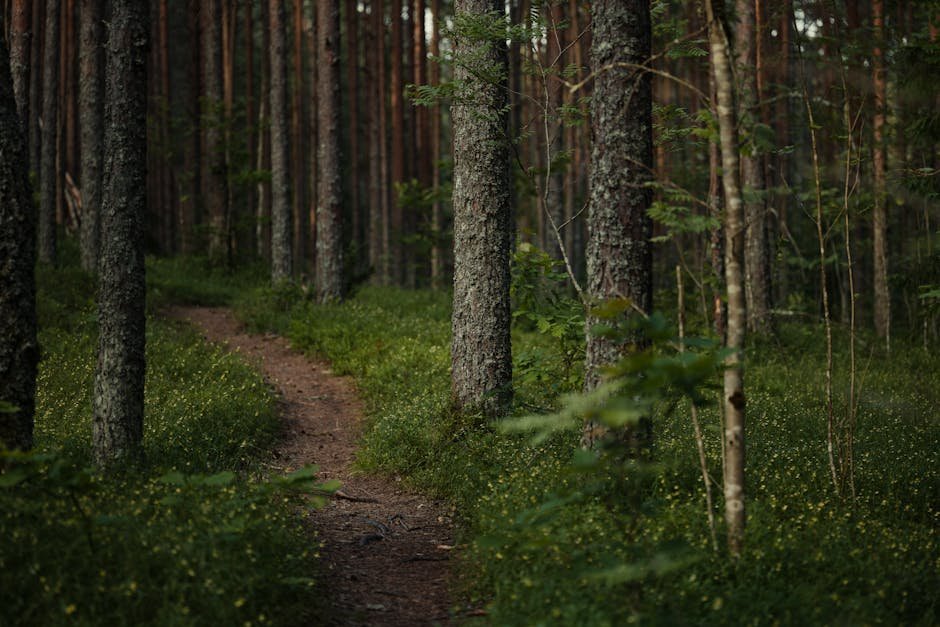
Shinrin-yoku, which translates literally as “forest bath,” was coined in 1982 by the Japanese Ministry of Agriculture, Forestry and Fisheries. It was not a folk tradition. It was a deliberate public health initiative, pitched against rising urban stress and a national interest in preserving forests by giving citizens a reason to use them. The Forestry Agency designated official shinrin-yoku trails. Researchers at Nippon Medical School, led by Dr. Qing Li, began studying the physiological effects, and over four decades the literature grew into something the West has only recently caught up with. Forest bathing therapy is the Western adaptation of that practice, and it tends to be more guided, more clinical-adjacent, and more secular than its Japanese origin.
The practice is not complicated. The participant moves slowly through a forested space, often guided by a trained facilitator, with attention drawn to sensory experience: smell, sound, light, texture, the feel of bark, the sound of moving water. There is usually no destination, no pace metric, and no fitness goal. Most sessions run two to three hours and cover less ground than a typical short hike.
What the research actually shows
Studies over the past two decades have tracked physiological markers before and after forest bathing sessions. Salivary cortisol drops measurably, often within an hour. Heart rate variability shifts toward parasympathetic dominance. Blood pressure decreases in adults with mild hypertension. Natural killer cell activity, a marker of immune function, increases following multi-day forest exposures, an effect attributed in part to phytoncides, the volatile organic compounds emitted by trees. Mood scales (POMS, in most studies) show reduced anxiety, fatigue, and depression scores. The effects are modest, real, and accessible without prescription.
What the research does not claim is that forest bathing replaces psychiatric care, treats severe depression alone, or cures complex conditions. It is an adjunct, well-suited to mild-to-moderate stress, anxiety, burnout, and as a complement to ongoing therapy. The National Institutes of Health summarises some of the cross-disciplinary research at nih.gov. For people working through anxiety with multiple modalities, our piece on attachment-based therapy for adults covers how nature-based work can integrate with relational therapy.
How forest bathing differs from a hike
The fastest way to misunderstand forest bathing is to picture a brisk hike with a different name. They are not the same activity. A hike has a destination, often a pace, frequently a fitness component, and produces sympathetic nervous system activation through aerobic exertion. Forest bathing has no destination, intentionally slow movement, no measurable goal, and is designed to shift the parasympathetic system toward rest and digest. Many people who already hike regularly find their first forest bathing session disorienting because their bodies are accustomed to using nature as a workout setting.
That does not mean hiking lacks benefits. It does. They are different benefits. Forest bathing is a complementary practice that suits people who specifically need to downregulate. Both can fit in the same week. Burnout patients, in particular, often discover that they have been using exercise as another performance arena and that they do not actually know how to be in nature without a goal.
What an ANFT-certified guide actually does
The Association of Nature and Forest Therapy (ANFT), founded in 2012 by Amos Clifford, is the largest US-based certification body for guides. ANFT certification involves a six-month training that includes a one-week intensive, supervised practice, and a structured set of “invitations,” which are the prompts a guide offers to participants during a walk. Typical invitations include “Pleasures of presence” (an opening attention practice), “What is in motion?” (mid-walk sensory deepening), and “Sit spot” (a 20-minute solo). The closing tea ceremony, drawn from Japanese tradition, is common to most ANFT-style walks.
A guide is not a therapist. They are a facilitator. Many participants find the structure useful precisely because it removes the temptation to self-direct. The guide also handles logistics, weather contingencies, and the group dynamics that arise when strangers spend three hours moving slowly together in a forest. Walks typically run from $40 to $90 in the US, lower than therapy session rates and accessible without insurance.
US programs and finding a guide
The Forest Therapy Society of America maintains a US-focused directory and certifies guides through standards aligned with ANFT. Individual ANFT-certified guides operate in most US metro areas, particularly the Pacific Northwest, the Northeast, the Bay Area, the Great Lakes region, and a growing presence in the Mountain West. Many state and regional park systems now host scheduled forest bathing walks through partnerships with certified guides. Some hospital systems, including parts of Kaiser Permanente in California, the Cleveland Clinic, and several VA medical centres, have piloted nature therapy referral programs for stress and mood disorders.
For those without nearby certified guides, structured solo practice using a guided audio (the ANFT and Forest Therapy Hub both publish recordings) is a reasonable starting point. The National Park Service maintains a directory of accessible park sites at nps.gov, useful for matching practice to a quiet local site. For those whose mental health work also includes nutritional and lifestyle layers, our overview of lifestyle-based mental health interventions covers the broader category.
Urban green space as the practical alternative
Most US adults do not live within easy reach of a deep forest. The good news is that the research on green space exposure does not require old-growth timber to show effects. Urban parks, community gardens, tree-lined streets, and even green walls in interior spaces produce smaller but measurable shifts in markers of stress and mood. The minimum dose, drawn from a 2019 study published in Scientific Reports involving 19,806 participants, is approximately 120 minutes per week of green space contact, distributed in any pattern. Two long Saturday sessions or six twenty-minute weekday walks both produce the threshold effect.
Practical urban adaptation: identify the greenest park within ten minutes of home or work. Schedule a recurring twenty-minute slow walk, phone on do-not-disturb. Notice five sensory inputs each visit. Avoid using the time to take calls, listen to podcasts, or work through problem lists. The point is not productivity. The point is parasympathetic time. Over six to eight weeks, most people notice sleep, irritability, and rumination shifting.
Park Rx and physician prescriptions
Park Rx America is a nonprofit founded by Dr. Robert Zarr that trains and supports physicians in writing prescriptions for time in nature. The model is straightforward. A physician identifies stress, anxiety, mild depression, or a chronic disease where activity in nature would help. The prescription names a specific local park, a frequency (e.g. three times per week, 30 minutes), and a follow-up timeline. The prescription is filed in the EHR and treated as a clinical recommendation, not a hobby suggestion. Patients receiving such prescriptions show higher adherence than those given general advice to “get outside more.”
Several hospital systems have built integrations. Washington DC, Vermont, parts of California, and a growing list of state-level Park Rx programs run through state health departments. Pediatricians have adopted park prescriptions for ADHD and anxiety in children at higher rates than adult primary care, partly because the developmental research on green space and child mental health is particularly strong.

Integrating forest bathing with therapy
Forest bathing alone will not resolve clinical depression, complex trauma, or untreated anxiety disorders. It pairs well with several specific modalities. Somatic experiencing therapists often suggest nature-based practice between sessions to reinforce nervous system regulation work. CBT clinicians may use forest exposure as behavioural activation for depression. Trauma-focused therapists sometimes use a sit spot practice as a portable resource for clients learning to track sensation. EMDR practitioners occasionally suggest grounding walks after intensive sessions.
What distinguishes integration from adjacency is whether the therapist and the nature practice are working from the same regulation map. A client doing weekly EMDR and weekly forest bathing experiences both as separate good things. A client whose therapist asks specifically about what they noticed during the walk, and uses that material in session, is doing integrated work. The integrated path tends to be more effective and easier to sustain.
Accessibility considerations
Forest bathing is not equally available to everyone. Mobility access varies enormously by trail. Some ANFT guides specialise in accessible walks on paved paths or work with adaptive equipment. The National Park Service has expanded its accessible trails registry. People in wheelchairs or with chronic pain can do effective practice on flat urban park paths, raised garden boardwalks, or even seated by a window with significant tree visibility, which itself produces measurable effects in some studies.
Cost is another barrier. Most US national parks charge entry fees, which add up. Most state and local parks remain free. Library nature passes, which several cities offer, can cover entry to paid sites. For parents wanting to introduce children to slower nature contact as a regulation tool, our piece on child mental health interventions covers age-appropriate adaptations. Forest bathing is also one of the few mental health practices that translates well to multigenerational family use, which makes it a quietly powerful family ritual.
Frequently asked questions
How often do I need to go for benefits?
The research suggests roughly 120 minutes per week of green space contact for measurable mood and stress effects. One guided session per quarter, plus regular short urban walks, is a reasonable rhythm.
Does insurance cover forest bathing?
Generally no, though some FSA and HSA plans accept it as wellness spending. Park Rx prescriptions in some integrated systems flag the activity in the EHR but do not produce reimbursement. Costs are usually out-of-pocket but lower than therapy.
Can I do this if I have allergies or fear of insects?
Yes. Discuss with the guide before booking. Many sites and seasons have low allergen and pest loads, and the slow pace minimises exertion-related allergy responses. Allergy medication and DEET are compatible.
Is this just mindfulness in a forest?
It overlaps with sensory mindfulness but adds the specific physiological effects of forest exposure (phytoncides, microbiome contact, reduced air pollution). The two practices reinforce each other.
What if I get bored or restless?
Common and expected. Most first-timers feel restless in the first hour. The practice trains tolerance for slowness, which is part of the therapeutic mechanism. Stay through one full session before deciding.
The bottom line
Forest bathing is a low-cost, low-barrier, evidence-supported practice for stress, mild anxiety, and burnout. It is not a replacement for psychiatric care, but it is a legitimate adjunct that pairs well with therapy and lifestyle work. Find a certified guide for the first session if you can. After that, urban green space and a regular rhythm carry most of the weight.
If you are in immediate emotional crisis or thinking about suicide, call or text 988 to reach the Suicide and Crisis Lifeline. Trained counsellors are available 24/7 and the call is free and confidential.
This article is for educational purposes only and does not constitute medical or psychological advice. Always consult a licensed mental health professional for the diagnosis and treatment of mental health conditions.