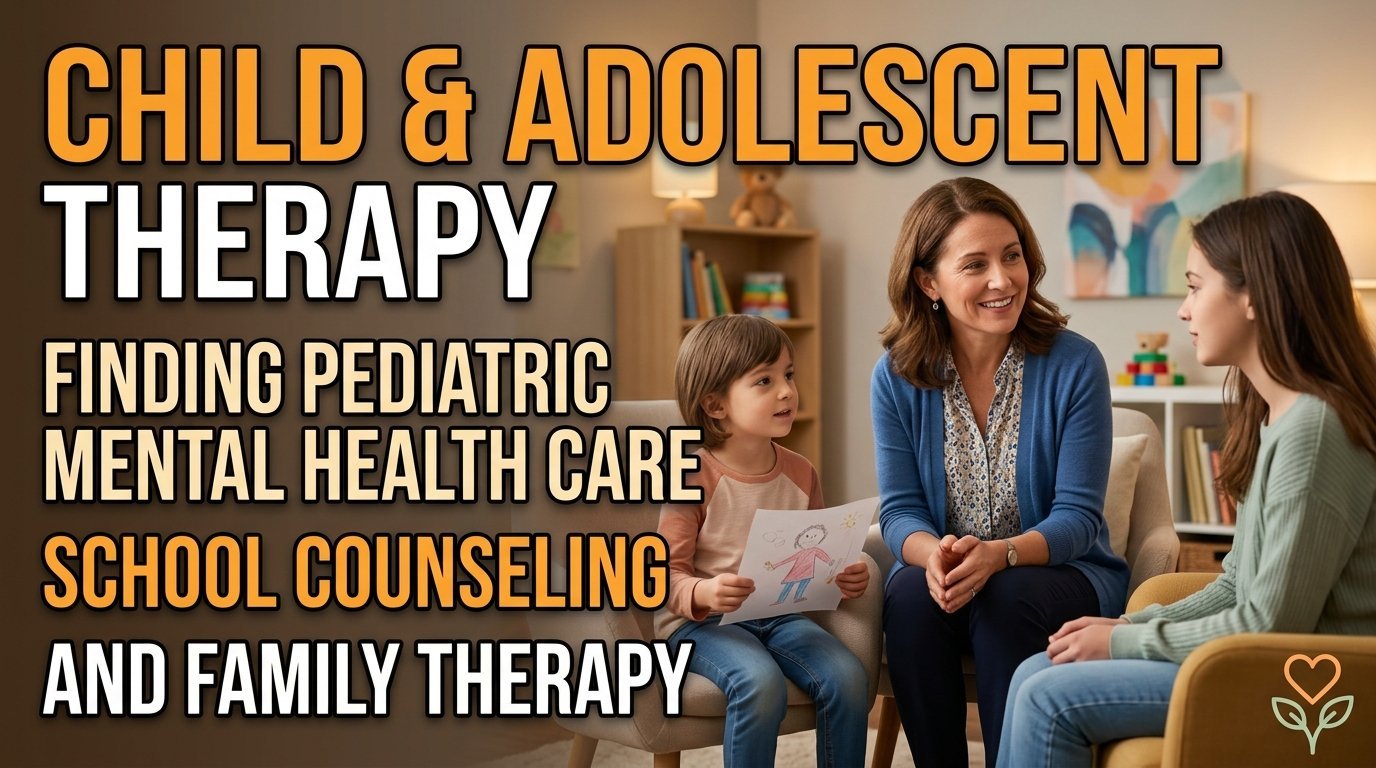
One in six American children aged 6 to 17 has a diagnosable mental health condition in any given year, but only about half receive treatment. The reasons range from cost and provider shortages to the simple difficulty of finding a therapist trained to work with children. Adult therapists who occasionally see kids are not the same thing as child and adolescent specialists—and parents who push through to find the right fit see far better outcomes.
This guide explains how pediatric mental health care actually works in the United States: the different professionals who treat children, what to look for in a child therapist, how school-based services fit in, and how insurance coverage typically applies.
Common Childhood Mental Health Concerns
Therapists, psychologists, and child psychiatrists treat conditions that include:
- Anxiety disorders (generalized anxiety, separation anxiety, social anxiety, phobias)
- Depression and bipolar spectrum disorders
- ADHD and learning differences
- Autism spectrum disorder
- Trauma and PTSD
- Obsessive-compulsive disorder and tic disorders
- Eating disorders
- Behavioral concerns—oppositional defiant disorder, conduct issues
- Adjustment to divorce, loss, or family change
- Selective mutism
- Self-harm and suicidal ideation
Younger children rarely articulate symptoms in adult terms—they show up as stomachaches, school refusal, sleep problems, irritability, or sudden behavior changes. A specialized child clinician knows how to translate.
Who Treats Children
Child Psychiatrists
MDs or DOs who completed an additional fellowship in child and adolescent psychiatry. They diagnose, prescribe medication, and coordinate complex cases. The U.S. has a severe shortage—roughly 8,500 practicing child psychiatrists for 70 million children—so wait times often run weeks or months.
Pediatric Psychologists
PhD or PsyD doctorate-level clinicians trained in evidence-based therapies for children. They cannot prescribe medication in most states. Pediatric psychologists are the first choice for psychological testing, ADHD evaluations, autism assessments, and complex therapy cases.
Licensed Child Therapists
Master’s-level clinicians—LCSWs, LMFTs, LPCs, LMHCs—with specialized training in child therapy. Often the most accessible point of entry for ongoing weekly sessions.
Developmental-Behavioral Pediatricians
Pediatricians with additional fellowship training to evaluate developmental delays, autism, ADHD, learning disorders, and behavioral concerns. Useful for diagnostic work-ups when symptoms are complex.
School Psychologists and Counselors
School-based providers offer screenings, brief counseling, IEP/504 evaluations, and referrals. They are not a substitute for ongoing clinical therapy, but they are free and immediate.
Evidence-Based Therapies for Kids and Teens
Look for therapists who use evidence-based approaches matched to the diagnosis:
- Cognitive Behavioral Therapy (CBT)—the gold standard for childhood anxiety and depression
- Trauma-Focused CBT (TF-CBT)—for trauma exposure, abuse, or PTSD
- Parent-Child Interaction Therapy (PCIT)—ages 2 to 7 with behavioral concerns; parents are coached live
- Exposure and Response Prevention (ERP)—the only therapy with strong evidence for childhood OCD
- Family-Based Treatment (FBT)—for adolescent eating disorders
- Dialectical Behavior Therapy for Adolescents (DBT-A)—for self-harm, emotion dysregulation, suicidal behavior
- Behavioral Parent Training—for ADHD and disruptive behavior
- Play therapy and child-centered play therapy—for younger children, particularly with grief or family stress
If a therapist describes their approach as “eclectic” with no specific evidence-based modality named, ask follow-up questions. For many childhood conditions, the modality matters as much as the rapport.
School-Based Mental Health Services
Public schools have a federal obligation under the Individuals with Disabilities Education Act (IDEA) to evaluate and serve children whose mental health interferes with learning. The two main pathways are:
- 504 Plan—accommodations such as extended time, frequent breaks, preferred seating, or counselor check-ins for students with a disability that limits a major life activity
- IEP (Individualized Education Program)—more comprehensive special education services, often including in-school counseling, behavioral support, social skills training, and small-group instruction
Request a special-education evaluation in writing. The district has 60 days (varies by state) to evaluate. Bring outside provider letters and any psychological testing to support the request. Schools cannot ignore a written referral, even if their initial response is informal pushback.
Insurance Coverage for Pediatric Mental Health
Pediatric mental health is an essential health benefit under the Affordable Care Act, meaning all ACA-compliant plans must cover it without lifetime or annual dollar limits. Coverage typically includes:
- Outpatient therapy and psychiatric medication management
- Psychological testing for diagnostic clarification
- Intensive Outpatient Programs (IOP) and Partial Hospitalization (PHP) for adolescents
- Inpatient psychiatric hospitalization
- Residential treatment under medical necessity criteria
- Applied Behavior Analysis (ABA) for autism in most states
Medicaid is the largest payer for child mental health services in the U.S. and often covers services that commercial plans do not, including in-home behavioral health, therapeutic foster care, and wraparound case management. The federal EPSDT standard requires Medicaid to cover any medically necessary service for children, even if not in the state plan.
How to Find a Child Therapist
Effective starting points include:
- Your insurance company’s online directory, filtered for child and adolescent specialty
- Your child’s pediatrician—ask for a warm referral
- Psychology Today’s directory with the “Children” or “Adolescents” filter
- Local university psychology training clinics—sliding-scale rates with closely supervised graduate clinicians
- Community mental health centers—Medicaid-friendly and often have pediatric specialists
- Child Mind Institute and Effective Child Therapy directories
- Your school counselor’s referral list
When you call, ask: “What ages do you specialize in? What conditions do you treat most often? What evidence-based approaches do you use? Do you involve parents in sessions?” Strong child clinicians will answer specifically and confidently.
Working With the Therapist as a Parent
Effective child therapy almost always involves parents. Expect to:
- Attend an initial parent-only intake session
- Receive parent coaching, behavioral strategies, or homework
- Sign confidentiality agreements—teen sessions are usually confidential except for safety, and your therapist will explain how that line works
- Coordinate with the school, pediatrician, and any prescribing psychiatrist
- Track progress between sessions and report shifts in mood, sleep, appetite, and behavior
Crisis Resources for Kids and Teens
If your child is in immediate danger, call 988 or go to the nearest emergency department. The Crisis Text Line (text HOME to 741741) is widely used by adolescents who do not want to call. Many cities now have mobile crisis teams that come to your home as an alternative to calling 911. Your county behavioral health office or 211 will know the local options.
A Final Note
The system for child and adolescent mental health care in America is fragmented, and finding the right combination of therapist, school accommodations, psychiatrist, and family support takes effort. But early intervention works. Children who receive evidence-based treatment for anxiety, depression, ADHD, OCD, and trauma have markedly better trajectories into adulthood. The investment of time you spend now will compound for decades.
This article is for informational purposes only and is not medical advice. If you are concerned about your child’s safety, contact a healthcare professional or call 988.