The Question You Have Been Afraid to Ask
You drink to calm your anxiety. Three beers and the racing thoughts slow down. A glass of wine and the tightness in your chest loosens. The alcohol works. That is the problem. It works so well that you have started to depend on it. Now you wake up at 3:00 AM with your heart pounding, sweating through the sheets, wondering whether you need a drink to fall back asleep.
Or maybe it is the other way around. The depression came first. The drinking was just how you coped. But now you cannot tell where one ends and the other begins. Is the sadness making you drink, or is the drinking making you sad? Your primary care doctor said to cut back. Your partner has hinted that they are worried. You have thought about searching for mental health providers near me, but you are not sure which problem to lead with.
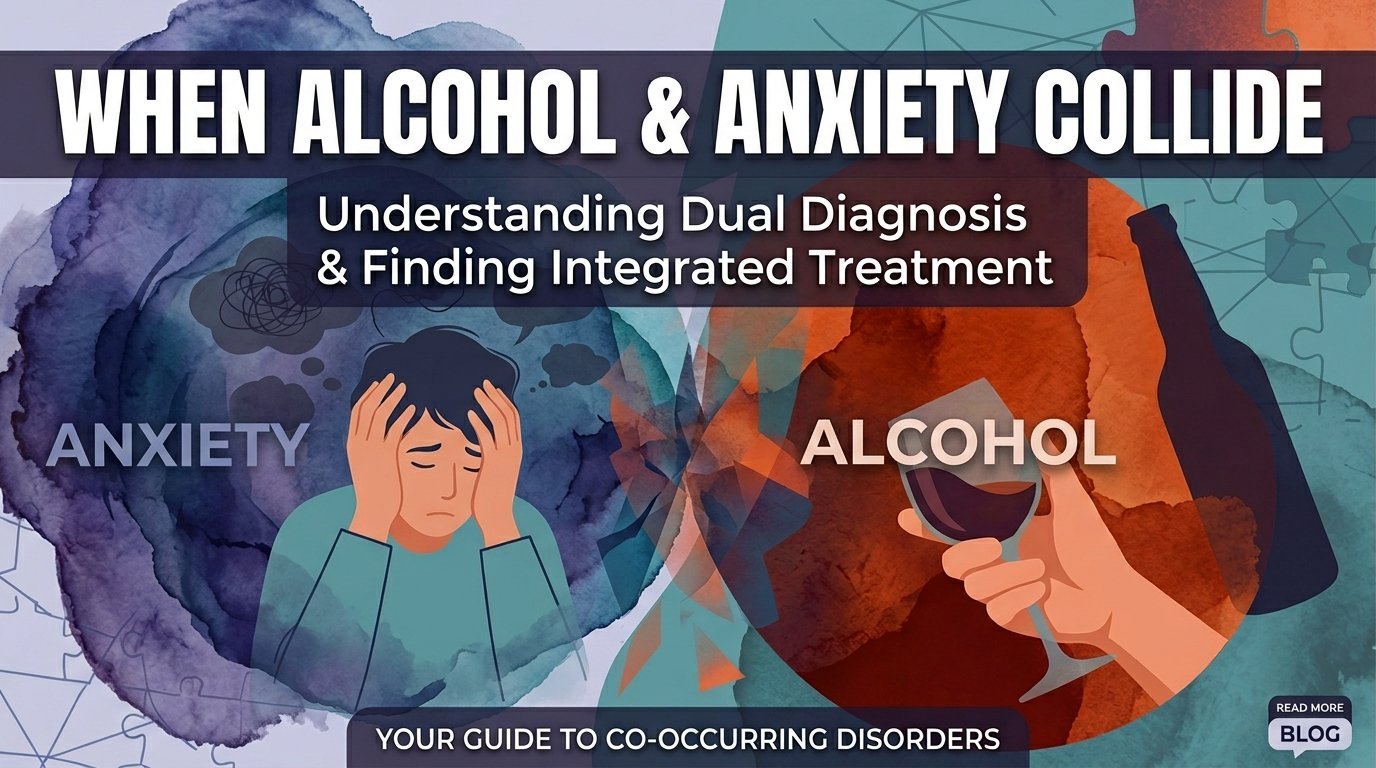
Here is the answer that changes everything: It does not matter which came first. What matters is that you have what professionals call a co-occurring disorder — a mental health condition and a substance use disorder happening at the same time. And you need treatment that addresses both, together, from the same provider.
This guide walks through everything you need to know about dual diagnosis. You will learn how common co-occurring disorders are, which mental health conditions most frequently pair with substance use, what integrated treatment actually looks like, how to find mental health providers near me who offer dual diagnosis care, and how insurance including UnitedHealthcare therapistsand addiction specialists covers this type of treatment. You will also learn how private mental health care can provide access to specialized dual diagnosis programs when insurance networks fall short.
No shame. No judgment. Just the information you need to get better.
The Chicken and the Egg: Understanding Co-Occurring Disorders
Dual diagnosis is the term used when someone has both a mental health disorder and a substance use disorder. The conditions are not separate problems that happen to coexist. They interact with and worsen each other.
How Common Are Co-Occurring Disorders?
The numbers are staggering and often misunderstood:
- Approximately 9.2 million adults in the United States have a co-occurring disorder
- Nearly half of all people with a substance use disorder also have a mental health condition
- About one-third of people with a mental health condition also have a substance use disorder
- People with co-occurring disorders are more likely to be hospitalized, become homeless, or attempt suicide than those with either condition alone
If you have been struggling with both, you are far from alone. You are actually in the majority of people with serious substance use issues.
Which Conditions Most Commonly Occur Together?
Anxiety disorders and alcohol use disorder: This is the most common dual diagnosis. Approximately 20 percent of people with social anxiety disorder and 15 percent of people with panic disorder also have alcohol use disorder. People drink to reduce anxiety temporarily, but alcohol withdrawal causes anxiety that is worse than the original symptoms. This creates a vicious cycle.
Depression and alcohol or cannabis use: About one-third of people with major depression also have a substance use disorder. Cannabis is increasingly common as a self-medication for depression, but regular cannabis use is associated with worsening depressive symptoms over time.
Bipolar disorder and substance use: Up to 60 percent of people with bipolar disorder have a substance use disorder at some point. During manic episodes, people may use stimulants, alcohol, or other substances impulsively. During depressive episodes, they may use alcohol or cannabis to escape.
PTSD and alcohol or opioids: Approximately one-quarter of people with PTSD also have a substance use disorder. Trauma survivors often use substances to numb intrusive memories and hyperarousal. This is especially common among veterans and survivors of abuse.
ADHD and stimulants or alcohol: Adults with untreated ADHD are at higher risk for substance use disorders, including misuse of stimulant medications prescribed for ADHD, cocaine, and alcohol.
Why Self-Medicating Always Fails
The theory of self-medication is simple: You use substances to relieve symptoms of a mental health condition. Alcohol reduces anxiety. Cannabis numbs depression. Stimulants improve focus.
The problem is that substances provide temporary relief followed by more severe symptoms. Alcohol withdrawal causes anxiety that is worse than the original anxiety. Cannabis withdrawal causes irritability, insomnia, and depression. Stimulant crashes cause fatigue and cognitive fog.
Over time, your brain adapts to the substance. You need more to get the same effect. The mental health symptoms worsen. The substance use increases. This is the cycle that traps so many people.
Breaking the cycle requires treating both conditions simultaneously. You cannot stop drinking if every time you try, your untreated panic disorder spikes to unbearable levels. You cannot treat your depression effectively if you are drinking heavily every night, because alcohol is a central nervous system depressant that directly counteracts antidepressants.
What Integrated Dual Diagnosis Treatment Actually Looks Like
Historically, mental health treatment and substance use treatment were completely separate. You went to one place for therapy and another for addiction counseling. The therapists did not talk to each other. You had to choose which problem to work on first.
Integrated treatment changes everything. One provider treats both conditions together.
The Core Principles of Integrated Treatment
One treatment team: Your therapist, psychiatrist, and any other providers work together. They share information (with your permission) and coordinate your care.
One treatment plan: Your goals address both mental health symptoms and substance use. You do not have to choose which problem to prioritize.
Same location: You receive both types of care in the same place. No driving across town to different appointments.
Non-judgmental approach: Integrated providers understand that substance use is often an attempt to manage mental health symptoms. They do not shame you or require abstinence before treating your depression.
What Happens in Dual Diagnosis Therapy
Dual diagnosis therapy combines evidence-based treatments for both conditions:
For substance use:
- Motivational interviewing to build readiness for change
- Relapse prevention planning
- Coping skills for cravings and triggers
- Psychoeducation about the biology of addiction
For mental health:
- Cognitive Behavioral Therapy adapted for co-occurring disorders
- Dialectical Behavior Therapy skills for emotion regulation
- Exposure therapy for PTSD or anxiety
- Medication management
Integrated modules:
- Identifying how substance use affects mental health symptoms
- Developing alternatives to self-medication
- Repairing relationships damaged by both conditions
- Building a sober social support network
Levels of Dual Diagnosis Care
Dual diagnosis treatment is available at multiple levels of intensity:
Outpatient dual diagnosis therapy: Weekly or biweekly sessions with a therapist trained in co-occurring disorders. Appropriate for mild to moderate cases where the person is stable and not in immediate danger.
Intensive Outpatient Program (IOP) for dual diagnosis: Nine to fifteen hours of treatment per week. Includes individual therapy, group therapy, and medication management. Appropriate for moderate to severe cases or people stepping down from higher levels of care.
Partial Hospitalization Program (PHP) for dual diagnosis: Twenty to thirty hours per week. Daily structured programming. Appropriate for severe cases requiring daily structure without 24-hour supervision.
Residential dual diagnosis treatment: Live-in treatment for twenty-eight to ninety days. Appropriate for people who cannot maintain sobriety or safety in outpatient settings.
Medically supervised detoxification: Three to seven days of medical monitoring during withdrawal from alcohol, benzodiazepines, or opioids. Required before starting other treatment for certain substances.
Medications for Co-Occurring Disorders
Medication plays an important role in dual diagnosis treatment. Different medications target different aspects:
For mental health symptoms:
- Antidepressants (SSRIs, SNRIs) for depression and anxiety
- Mood stabilizers (lithium, valproate, lamotrigine) for bipolar disorder
- Antipsychotics for bipolar disorder or psychotic symptoms
For substance use disorders:
- Naltrexone for alcohol or opioid use disorder (reduces cravings)
- Acamprosate for alcohol use disorder (reduces withdrawal symptoms)
- Disulfiram for alcohol use disorder (causes sickness if you drink)
- Buprenorphine or methadone for opioid use disorder
- Extended-release naltrexone (Vivitrol) monthly injection for alcohol or opioid use disorder
The key insight: Treating one condition makes treating the other more effective. A person whose depression is well-managed with an SSRI is more likely to succeed in alcohol treatment. A person who stops drinking heavily is more likely to respond to antidepressants.
Finding Dual Diagnosis Providers: What to Look For
Searching for mental health providers near me who treat co-occurring disorders requires specific strategies. Not every therapist who lists “addiction” or “depression” has training in integrated treatment.
Credentials and Training to Look For
Master’s level therapists (LCSW, LPC, LMFT) with CADC: A Certified Alcohol and Drug Counselor credential indicates specialized training in substance use disorders in addition to mental health training.
Psychiatrists with addiction certification: A psychiatrist who is board-certified in addiction medicine or addiction psychiatry has advanced training in treating both conditions.
Facilities licensed for dual diagnosis: In most states, treatment facilities can be licensed specifically for co-occurring disorders. Look for “integrated dual diagnosis treatment” on their website.
Accreditation: The Joint Commission and CARF (Commission on Accreditation of Rehabilitation Facilities) have specific standards for dual diagnosis programs. Look for these accreditations.
Questions to Ask Potential Providers
When calling a potential dual diagnosis provider, ask:
- Do you treat both mental health and substance use disorders in the same program?
- Do you use an integrated treatment model or do I need to see separate providers?
- Are you able to prescribe medications for both conditions?
- Do you require abstinence before starting mental health treatment? (The right answer is NO)
- How do you handle relapse during treatment? (The right answer is with compassion, not discharge)
What to Avoid
Sequential treatment: Programs that say “treat the addiction first, then we will address the depression” are not providing integrated care. This approach has high failure rates.
Abstinence requirements for mental health treatment: Some programs refuse to treat depression or anxiety until you have thirty or ninety days sober. This is not evidence-based and can be dangerous.
Shame-based approaches: Programs that call you an “addict” or require you to identify as “powerless” may not be appropriate for people whose primary issue is mental health with secondary self-medication. Evidence-based treatment is respectful and collaborative.
One-size-fits-all 12-step requirements: Twelve-step programs help many people. Requiring attendance as a condition of treatment is different. Integrated programs should offer multiple pathways to recovery.
How Insurance Covers Dual Diagnosis Treatment
Insurance coverage for co-occurring disorders is protected by the Mental Health Parity Act and the Affordable Care Act. Substance use disorder treatment must be covered at the same level as medical and surgical care.
What Most Plans Cover
Most PPO and HMO plans cover:
- Outpatient dual diagnosis therapy (copay typically 20−40 after deductible)
- Intensive outpatient programs (IOP) for co-occurring disorders
- Partial hospitalization programs (PHP)
- Residential treatment (varies widely; some plans have limited coverage)
- Medically supervised detoxification
- Medications for substance use disorders
- Medication management for mental health conditions
Prior Authorization and Medical Necessity
Higher levels of care (residential, PHP, IOP) almost always require prior authorization. Your provider must submit documentation showing that:
- You have a diagnosed co-occurring disorder
- Lower levels of care have been insufficient or are inappropriate
- The requested level of care is medically necessary
If your initial authorization is denied, appeal. Dual diagnosis denials are common but often reversible with proper documentation.
Finding In-Network Dual Diagnosis Providers
When searching for UnitedHealthcare therapists or other in-network providers who treat co-occurring disorders:
Step One: Call the behavioral health number on your insurance card.
Step Two: Tell the representative: “I have a co-occurring disorder (mental health and substance use). I need an in-network provider who offers integrated dual diagnosis treatment.”
Step Three: Ask for a list of providers who have self-identified as dual diagnosis specialists.
Step Four: Call each provider and verify they actually offer integrated treatment (not sequential).
Out-of-Network Options for Dual Diagnosis
Many excellent dual diagnosis programs do not accept insurance at all. If you find a program that looks right but is out-of-network, you have options:
Single-case agreement: Request a single-case agreement with your insurer. Document that no in-network dual diagnosis program has openings or that the out-of-network program has unique expertise you need.
Out-of-network reimbursement: If your plan has out-of-network benefits, pay upfront and file claims for reimbursement. For residential treatment, this can mean tens of thousands of dollars in reimbursement.
State-funded programs: Most states have publicly funded dual diagnosis treatment for people without insurance or with limited coverage. Waitlists are long, but care exists. Call your county behavioral health department.
The Role of Private Mental Health Care in Dual Diagnosis
Private mental health care for co-occurring disorders offers advantages and disadvantages compared to insurance-based care.
Advantages of Private Pay
Access to specialized programs: The best dual diagnosis residential programs and IOPs are often private pay only. They do not accept insurance because insurance reimbursement rates are too low.
No diagnosis restrictions: Insurance requires specific diagnoses for coverage. Private pay allows treatment for sub-threshold conditions or for people who do not want a formal substance use disorder diagnosis on their medical record.
Longer treatment: Insurance typically authorizes twenty-eight days for residential treatment. Private pay allows longer stays if clinically indicated.
Faster admission: No waiting for prior authorization. No appeals. No insurance company deciding what treatment you “need.”
Disadvantages of Private Pay
Cost: Residential dual diagnosis treatment costs 20,000to60,000 per month. Outpatient IOP costs 5,000to15,000 per month. This is not accessible for most people.
Financial risk: If you relapse or need extended treatment, there is no insurance safety net.
Limited regulation: Private pay programs are less regulated than insurance-based programs. Some are excellent. Some are predatory. Research carefully.
Making Private Pay More Affordable
If private pay is your only option for specialized dual diagnosis care, consider:
- Sliding scale: Some programs offer reduced rates based on income. Ask.
- Payment plans: Many programs will spread payments over months or years.
- Scholarships: Some non-profit treatment centers offer scholarships funded by donations.
- Crowdfunding: Platforms like GoFundMe have funded many treatment stays. It is uncomfortable to ask, but people want to help.
Supporting a Loved One With Co-Occurring Disorders
Watching someone you love struggle with both mental illness and substance use is agonizing. You want to help. You are afraid of enabling. You are exhausted.
What Helps
Learn about dual diagnosis: Understanding that the substance use is often an attempt to manage mental health symptoms changes how you see the behavior. It is not a moral failure. It is a dysfunctional coping strategy.
Encourage integrated treatment: Help them find mental health providers near me who treat both conditions. Offer to make phone calls. Offer to drive them to appointments. Offer to sit in the waiting room.
Set boundaries without shaming: “I love you. I will not give you money or let you stay here if you are using. But I will drive you to your therapist appointment tomorrow.”
Attend family therapy: Many dual diagnosis programs include family sessions. These help you understand your role in the system and learn healthier ways to support your loved one.
What Does Not Help
Enabling: Giving money, providing housing without accountability, lying to cover for them, calling in sick for them. Enabling allows the cycle to continue.
Confrontation and ultimatums: “Get clean or I am done” rarely works. It usually drives the person deeper into shame and substance use.
Ignoring the mental health piece: “Just stop drinking” is not helpful if the person is drinking to manage panic attacks. The panic attacks need treatment too.
Taking Care of Yourself
Supporting someone with a co-occurring disorder is draining. You cannot pour from an empty cup.
- Al-Anon or Nar-Anon: Support groups for family and friends of people with substance use disorders. Free, confidential, widely available.
- Your own therapist: You need a place to process your frustration, fear, and grief.
- Respite: It is okay to take breaks. It is okay to say “I cannot talk about this right now.”
- Accept what you cannot control: You cannot force someone into treatment. You cannot make them want to change. You can only control your own responses.
Frequently Asked Questions About Dual Diagnosis
Do I need to stop drinking before starting mental health treatment?
No. Evidence-based dual diagnosis treatment does not require abstinence before treating mental health symptoms. However, active heavy drinking will interfere with treatment. Your provider may recommend medical detoxification first.
Can I use cannabis and still treat my anxiety?
Regular cannabis use is associated with worsening anxiety over time. Most dual diagnosis providers will ask you to reduce or stop cannabis use to assess whether your anxiety improves. However, forced abstinence without addressing why you use cannabis is not effective.
What if I relapse during treatment?
In a good dual diagnosis program, relapse is treated as information, not a moral failure. Your provider will help you understand what triggered the relapse and adjust your treatment plan. You will not be discharged.
How do I find UnitedHealthcare therapists who treat co-occurring disorders?
Call the UHC behavioral health number and ask for providers who specialize in dual diagnosis. UHC has a network of providers with addiction credentials. Then call each provider to verify they offer integrated treatment.
How long does dual diagnosis treatment take?
There is no standard answer. Some people improve significantly in twelve weeks of IOP. Others need six months or a year of outpatient treatment. Residential programs typically last twenty-eight to ninety days. Recovery is a long-term process, not an event.
Final Thoughts: Both Problems, One Solution
The shame of co-occurring disorders is unique. You feel like you failed twice. You could not manage your mental health, and you could not control your substance use. Other people seem to handle one or the other. You cannot handle either.
This shame is a liar.
Having a co-occurring disorder does not mean you are weak or broken. It means you have a complex medical condition that requires comprehensive treatment. No one expects a person with diabetes and high blood pressure to treat only one condition. No one shames them for needing medication for both. You deserve the same compassion.
Integrated dual diagnosis treatment exists because thousands of people before you have walked this path. They have shown that treating both conditions together works better than treating them apart. They have built the programs that are waiting for you.
If you have been hiding the substance use from your therapist, stop hiding. Tell the truth. They cannot help you with what you do not share. If you have been hiding the mental health symptoms from your addiction counselor, stop hiding. They cannot help you stay sober if your untreated PTSD keeps pulling you back to the bottle.
You deserve to feel better. You deserve to wake up without the 3:00 AM panic. You deserve to socialize without needing a drink first. You deserve to treat your mental health without shame about how you have been coping.
Search for mental health providers near me who treat both. Make the call. Tell the truth. Start the treatment that addresses everything at once. You have been fighting two battles alone. It is time to let someone help you fight both.
Disclaimer: This article provides general educational information about dual diagnosis and co-occurring disorders. It does not constitute medical advice or a substitute for professional clinical assessment. If you are experiencing withdrawal symptoms including seizures, confusion, or severe vomiting, seek immediate medical attention. Alcohol and benzodiazepine withdrawal can be life-threatening. If you are having thoughts of suicide, call 988. Your life matters. Help is available.