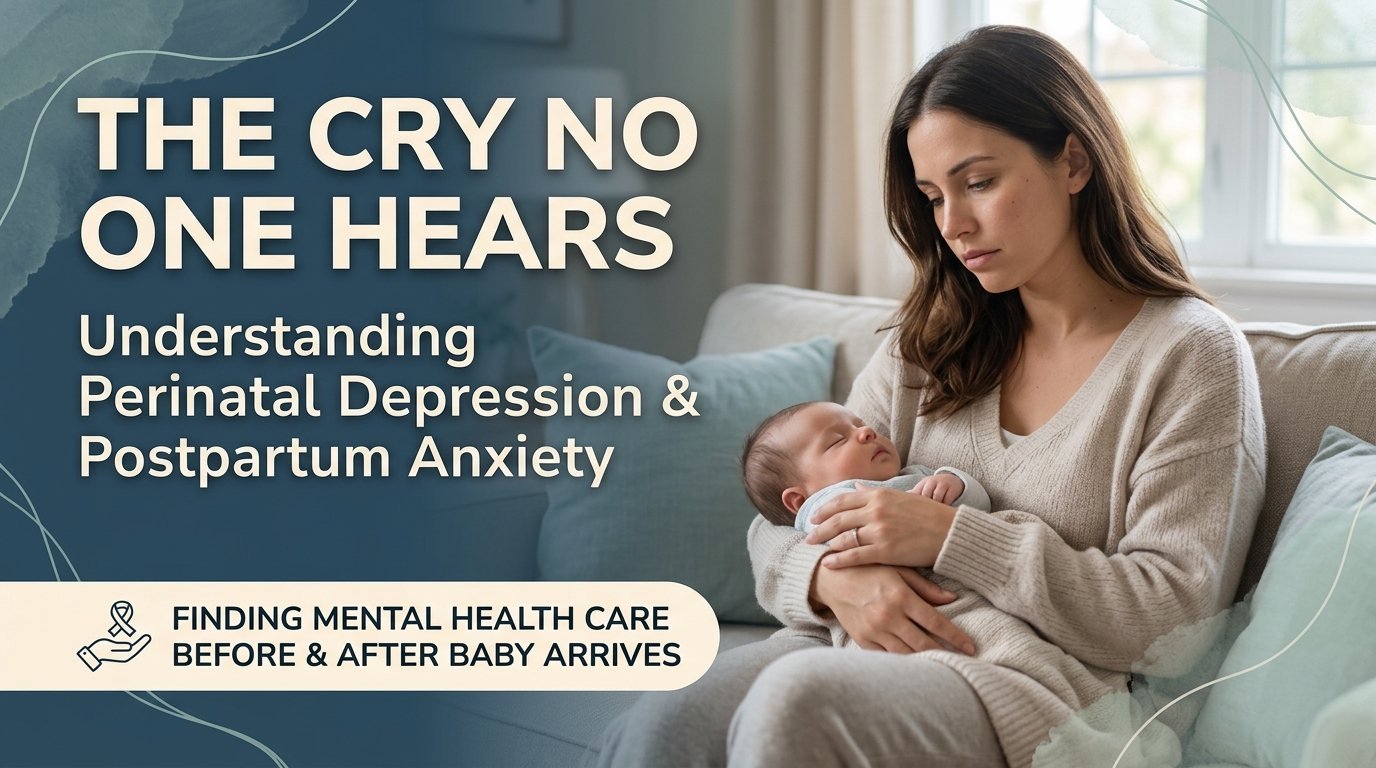
The Silence of the New Mother
You are supposed to be happy. That is what everyone keeps telling you. You have a beautiful, healthy baby. You waited for this. You planned for this. You should be glowing.
But you are not glowing. You are crying in the bathroom while your partner has family over to meet the baby. You are staring at the ceiling at 3:00 AM while the baby sleeps, unable to shut off the thoughts that tell you that you are failing, that you are a bad mother, that your baby would be better off without you.
Or maybe it is different for you. You are not sad at all. You are terrified. Every time the baby makes a sound, your heart races so fast you think you are having a heart attack. You check on the baby every ten minutes to make sure they are still breathing. You cannot sleep even when the baby sleeps because your mind will not stop generating catastrophic scenarios. You have had thoughts of hurting the baby that horrify you so much you cannot tell anyone.
Or perhaps you are farther along. You are still pregnant, but something is wrong. You do not feel connected to this pregnancy the way you thought you would. You dread the birth. You are not sure you want to be a mother at all. The guilt is eating you alive.
You have searched for mental health providers near me in secret, late at night, when no one can see your search history. You are terrified that if anyone finds out how you are feeling, they will take your baby away. They will think you are crazy. They will think you do not love your child.
Nothing could be further from the truth. The very fact that you are worried about being a good parent tells me you are a good parent. And the thoughts that scare you the most are actually a common symptom of a treatable condition.
This guide walks through everything you need to know about perinatal and postpartum mental health. You will learn the difference between baby blues, postpartum depression, postpartum anxiety, postpartum OCD, and the rare but serious condition of postpartum psychosis. You will learn how to find mental health providers near me who specialize in perinatal mental health, how insurance including UnitedHealthcare therapists covers these conditions, and how to talk to your partner and your doctor about what you are experiencing. You will also learn how private mental health care can provide faster access to specialized treatment when waitlists are too long.
No judgment. No “just be grateful.” Just the information you need to get help and get back to yourself.
The Spectrum of Perinatal Mental Health Conditions
Perinatal mental health refers to mental health conditions that occur during pregnancy (prenatal) or in the first year after birth (postpartum). These conditions are common, treatable, and almost never the mother’s fault.
Baby Blues: Not Pleasant, But Normal
The baby blues affect an estimated 50 to 80 percent of new mothers. Symptoms begin two to three days after birth, peak around day five, and resolve on their own within two weeks.
Symptoms of baby blues:
- Mood swings
- Crying spells for no clear reason
- Irritability
- Anxiety
- Difficulty sleeping (even when the baby sleeps)
- Feeling overwhelmed
What baby blues are NOT: Baby blues do not include suicidal thoughts, thoughts of harming the baby, loss of interest in the baby, or severe insomnia lasting more than a few hours per night. If you have these symptoms, you need treatment, not just support.
If your symptoms last more than two weeks, you do not have baby blues. You have a perinatal mood and anxiety disorder that requires treatment.
Postpartum Depression (PPD)
PPD affects approximately 1 in 7 new mothers. It can begin anytime during pregnancy or in the first year after birth. It is not the same as baby blues. It lasts longer, is more severe, and does not go away on its own.
Symptoms of PPD:
- Persistent sadness or depressed mood most of the day, nearly every day
- Loss of interest or pleasure in activities you used to enjoy (including spending time with the baby)
- Changes in appetite (eating too little or too much)
- Sleep disturbances beyond caring for the baby (can’t sleep when the baby sleeps)
- Fatigue or loss of energy that is more than normal new parent exhaustion
- Feelings of worthlessness, guilt, or inadequacy as a parent
- Difficulty concentrating or making decisions
- Thoughts of death or suicide
Important: PPD can look like irritability and anger rather than sadness. Some mothers with PPD are not tearful at all. They are rageful. They snap at their partner. They feel like screaming at the baby. This is still depression.
Postpartum Anxiety (PPA)
PPA is less discussed than PPD but equally common. Some studies suggest it affects up to 15 percent of new mothers. Some mothers have both PPD and PPA. Some have PPA alone.
Symptoms of PPA:
- Constant, excessive worrying about the baby’s health and safety
- Racing thoughts that you cannot control
- Physical symptoms: racing heart, shortness of breath, nausea, dizziness
- Restlessness and agitation
- Difficulty sleeping even when the baby sleeps (mind will not shut off)
- Avoidance of situations (won’t let anyone else hold the baby, won’t leave the house)
- Muscle tension and headaches
Mothers with PPA are often extremely high-functioning. They are the ones with the perfectly organized nursery, the color-coded feeding schedule, the spreadsheets for baby’s milestones. The anxiety drives them to do more, not less. They look fine from the outside while they are drowning on the inside.
Postpartum OCD
Postpartum OCD is one of the most misunderstood and terrifying perinatal conditions. It affects approximately 3 to 5 percent of new mothers. The hallmark symptom is intrusive, repetitive, distressing thoughts about harming the baby.
These thoughts are ego-dystonic — they go completely against who you are as a person. A mother with postpartum OCD might have a sudden, vivid image of dropping the baby down the stairs. Or a thought of stabbing the baby. Or a fear that she will suffocate the baby while breastfeeding.
These thoughts are not desires. They are not plans. They are the opposite of what the mother actually wants. She is horrified by them. She would rather die than harm her baby.
Compulsions (behaviors to reduce anxiety):
- Hiding knives or other dangerous objects
- Checking on the baby obsessively (every few minutes)
- Avoiding being alone with the baby
- Mentally reviewing what happened to make sure she did not harm the baby
- Seeking reassurance from partner or family (“You know I would never hurt the baby, right?”)
Critical fact: Women with postpartum OCD do not act on these thoughts. The thoughts are symptoms of a treatable condition, not indicators of risk. But the shame is so intense that most mothers never tell anyone. They suffer in silence, believing they are monsters.
Postpartum Psychosis
Postpartum psychosis is rare (affecting 1 to 2 per 1,000 births) but is a medical emergency. Symptoms usually begin within the first two weeks after birth, often within the first forty-eight to seventy-two hours.
Symptoms of postpartum psychosis:
- Confusion and disorientation
- Hallucinations (hearing voices, seeing things that are not there)
- Delusions (false beliefs, often about the baby — e.g., “the baby is possessed” or “the baby is not really mine”)
- Paranoia that people are trying to take the baby or harm the family
- Rapid mood swings
- Bizarre behavior that is out of character
- Thoughts of harming the baby or oneself
Postpartum psychosis requires immediate hospitalization. This is not something you can treat with weekly therapy. If you or someone you know has these symptoms, go to the emergency room immediately or call 911.
Why Perinatal Mental Health Conditions Are So Often Missed
Despite how common these conditions are, most mothers do not receive treatment. The barriers are many.
The Shame Barrier
The single biggest barrier is shame. Mothers are supposed to be happy. They are supposed to love being a mother. Admitting that you are struggling feels like admitting that you are failing at the most important job you will ever have.
The intrusive thoughts of postpartum OCD are especially shameful. Mothers who have these thoughts believe they are the only one. They believe something is deeply wrong with them. They believe their baby would be taken away if anyone found out.
Here is the truth that might save your life: These thoughts are a symptom. They are not your fault. They do not mean you are a danger to your baby. They mean you have a treatable medical condition, just like gestational diabetes or high blood pressure.
The Mistaken Belief That It Will Pass
Many mothers with PPD or PPA are told by family, friends, or even their doctors that they “just have the baby blues” and it will pass. Weeks turn into months. The symptoms get worse, not better. The mother loses precious time with her baby that she will never get back.
The rule is simple: If symptoms last more than two weeks, it is not baby blues. Seek help.
The Screening Gap
The American College of Obstetricians and Gynecologists recommends that all women be screened for depression and anxiety at least once during pregnancy and once postpartum. Many obstetricians do not screen. Many who do screen use only the Edinburgh Postnatal Depression Scale, which does not screen for anxiety, OCD, or psychosis.
You can ask for screening. You do not have to wait for your doctor to offer it.
The Belief That Symptoms Are Normal
New motherhood is hard. Everyone expects to be tired and overwhelmed. But there is a difference between normal new parent exhaustion and clinical depression or anxiety. Ask yourself:
- Are you able to feel joy and pleasure, or has everything gone flat?
- Do you feel connected to your baby, or do you feel numb or resentful?
- Can you sleep when the baby sleeps, or does your mind race?
- Are you able to eat regular meals, or have you lost your appetite?
- Do you have thoughts of hurting yourself or the baby?
If you answered yes to any of the concerning questions, you need an evaluation, not just a pep talk.
Finding Perinatal Mental Health Providers: What to Look For
Searching for mental health providers near me who specialize in perinatal mental health requires specific strategies.
The PMH-C Credential
The gold standard credential is PMH-C (Perinatal Mental Health Certification) from Postpartum Support International. Therapists with this credential have completed specialized training and passed an exam in perinatal mental health. They understand the unique issues of pregnancy and postpartum, including medication safety during breastfeeding, the impact of birth trauma, and the specific presentation of perinatal OCD.
To find PMH-C certified providers, visit the Postpartum Support International provider directory at postpartum.org.
What to Ask Potential Providers
When calling potential perinatal mental health providers, ask:
- Do you have training in perinatal mental health? Are you PMH-C certified?
- Do you treat pregnant and postpartum women exclusively or as part of your practice?
- Are you comfortable treating postpartum OCD, including intrusive thoughts?
- Do you coordinate care with obstetricians, midwives, and pediatricians?
- Do you offer telehealth? (Essential for new mothers who cannot leave the house)
Where to Search
Postpartum Support International (PSI): The best resource. PSI maintains a directory of perinatal mental health providers by state. PSI also offers free weekly support groups for mothers with perinatal mood and anxiety disorders.
Psychology Today: Filter by “Perinatal” or “Pregnancy” and “Postpartum” under specialties. Then verify that the provider actually has training, not just an interest.
Your obstetrician or midwife: Many OB practices have a list of trusted perinatal mental health providers. Ask at your next appointment.
Your baby’s pediatrician: Pediatricians see new mothers frequently in the first few months. Many have relationships with perinatal mental health providers.
How Insurance Covers Perinatal Mental Health Care
Perinatal mental health conditions are covered by insurance under the Mental Health Parity Act. Additionally, the mothers, and “Momnibus” bills have increased attention on perinatal mental health coverage.
What Most Plans Cover
Most PPO and HMO plans cover:
- Outpatient therapy for perinatal depression, anxiety, or OCD
- Psychiatric medication management during pregnancy and postpartum
- Intensive outpatient programs (IOPs) for perinatal mental health (available in some areas)
- Partial hospitalization programs (PHPs)
Special considerations:
- Some plans have better coverage for pregnancy-related conditions. Call and ask.
- Medications during pregnancy and breastfeeding are covered under the pharmacy benefit.
Finding In-Network Perinatal Providers
When searching for UnitedHealthcare therapists or other in-network providers who specialize in perinatal mental health:
Step One: Call the behavioral health number on your insurance card.
Step Two: Tell the representative: “I am pregnant or postpartum and need a therapist who specializes in perinatal mental health, including postpartum depression and anxiety.”
Step Three: Ask for providers who have self-identified this specialty.
Step Four: Cross-reference with the PSI provider directory.
The PSI Helpline
If you cannot find a provider or are in crisis, call the Postpartum Support International helpline at 1-800-944-4773. This is not a crisis line (that is 988). It is a warm line where trained volunteers can help you find resources in your area.
Treatment Options for Perinatal Mental Health Conditions
Perinatal mental health conditions are highly treatable. The sooner you start treatment, the faster you recover.
Therapy for Perinatal Mental Health
Interpersonal Therapy (IPT): IPT focuses on role transitions (becoming a mother), interpersonal disputes (conflict with partner or family), and grief (mourning the loss of your old life or a difficult birth experience). IPT has strong research support for PPD.
Cognitive Behavioral Therapy (CBT): CBT for perinatal mental health addresses the specific thought patterns that maintain depression and anxiety. “I am a bad mother” becomes “I am a mother who is struggling, and I am getting help.”
Exposure and Response Prevention (ERP) for postpartum OCD: ERP is the gold standard for OCD. You gradually expose yourself to triggers (e.g., holding a knife in the kitchen, being alone with the baby) while refraining from compulsions (e.g., hiding the knife, checking on the baby). Over time, the anxiety decreases.
Medication During Pregnancy and Breastfeeding
Many mothers are terrified to take medication during pregnancy or breastfeeding. The fear is understandable. The evidence is reassuring.
SSRIs (sertraline/Zoloft, fluoxetine/Prozac, escitalopram/Lexapro): These are the first-line medications for perinatal depression and anxiety. Sertraline (Zoloft) is the most studied and is considered the safest choice during pregnancy and breastfeeding. The amount that passes into breastmilk is very low.
The risk of untreated depression: Untreated PPD is associated with preterm birth, low birth weight, postpartum hemorrhage, difficulty bonding with the baby, and impaired child development. In many cases, the risk of untreated depression is greater than the risk of medication.
Talk to a reproductive psychiatrist: A reproductive psychiatrist specializes in medication management during pregnancy and breastfeeding. They can help you weigh the risks and benefits. The Postpartum Support International provider directory includes reproductive psychiatrists.
Brexanolone (Zulresso) and Zuranolone (Zurzuvae)
In 2019, the FDA approved the first medication specifically for postpartum depression: brexanolone (Zulresso). It is administered as a sixty-hour intravenous infusion in a medical setting. It is expensive and not widely available.
In 2023, the FDA approved zuranolone (Zurzuvae), the first oral medication for PPD. It is taken once daily for fourteen days. It is still new, and insurance coverage is variable. Ask your psychiatrist.
Supporting a Partner With Perinatal Mental Health Struggles
If you are the partner of someone who is struggling, you are in a difficult position. You want to help. You may be exhausted yourself. Here is what helps.
What to Say
- “This is not your fault.”
- “You are a good mother. You are just sick right now, and sickness is treatable.”
- “I am here. You are not alone in this.”
- “Let me call the doctor for you. Let me find you a therapist.”
What Not to Say
- “Just think positive” (invalidating)
- “Other mothers have it so much worse” (shaming)
- “The baby is fine, you need to relax” (dismissive)
- “Maybe you should just try harder” (blaming)
Practical Ways to Help
- Take night feedings so she can sleep (sleep deprivation worsens all perinatal conditions)
- Call the insurance company to find in-network providers
- Make the therapy appointment and drive her there
- Sit with her while she makes the first call (the hardest one)
- Contact Postpartum Support International for resources
When to Call for Emergency Help
Call 988 or go to the emergency room if she:
- Says she wants to die or is thinking about suicide
- Says she wants to hurt the baby
- Is hearing voices or seeing things that are not there
- Is acting confused or disoriented
- Has stopped eating or drinking for more than twenty-four hours
Frequently Asked Questions About Perinatal Mental Health
Will I lose my baby if I tell someone I am struggling?
No. The vast majority of mothers with perinatal mental health conditions are not at risk of losing their children. Child protective services is not interested in mothers who are seeking treatment for depression or anxiety. They are only involved in cases of active abuse or neglect. Getting help is the best thing you can do for your baby.
What if I have thoughts of harming my baby but I would never act on them?
These are classic symptoms of postpartum OCD. They are treatable. You need to tell a therapist who specializes in perinatal mental health. They have heard this before. They will not judge you. They will not call CPS. They will help you feel better.
Can I breastfeed while taking antidepressants?
Yes. Sertraline (Zoloft) is the most studied and is considered safe during breastfeeding. The amount that passes into breastmilk is very low and has not been shown to cause harm. If you need medication, you can almost always continue breastfeeding.
How do I find mental health providers near me for perinatal care if I live in a rural area?
Telehealth is the answer. Postpartum Support International has providers in all fifty states. Many offer telehealth. You can see a perinatal specialist from anywhere in your state.
Does UnitedHealthcare cover perinatal mental health therapy?
Yes. UnitedHealthcare covers therapy for perinatal depression, anxiety, and OCD the same way it covers any other mental health condition. Call the behavioral health number on your card and ask for providers who specialize in perinatal mental health.
Final Thoughts: You Deserve to Feel Better
The first year of motherhood is hard under the best of circumstances. Sleep deprivation, physical recovery, relationship changes, identity shifts — it is a lot. Adding a mental health condition on top of that is overwhelming in a way that people who have not experienced it cannot fully understand.
But here is what you need to know: You are not alone. One in seven mothers experiences PPD. Many more experience PPA or OCD. The women you see at the playground, at the grocery store, at the pediatrician’s office — some of them are struggling just like you. They are just better at hiding it.
Recovery is possible. With the right treatment, most mothers with perinatal mental health conditions feel significantly better within weeks. They bond with their babies. They enjoy motherhood. They look back at the dark period and feel grateful that they reached out for help.
If you are reading this because you are worried about yourself, make one call today. Call your obstetrician. Call the Postpartum Support International helpline. Call a therapist from the PSI directory. The call is hard. The shame is loud. But on the other side of that call is relief.
If you are reading this because you are worried about someone you love, do not wait. Speak up. Offer help. Make the call for her. She may be too exhausted or too ashamed to do it herself. That does not mean she does not want help. It means she needs you to help her get it.
The cry no one hears is the cry of the mother who is suffering in silence. It is time to stop being silent. It is time to ask for help. It is time to get better. For you. And for your baby.
Disclaimer: This article provides general educational information about perinatal and postpartum mental health conditions. It does not constitute medical advice or a substitute for professional clinical assessment. If you are having thoughts of harming yourself or your baby, call 988 or go to the nearest emergency room immediately. If you are experiencing hallucinations, delusions, or confusion after giving birth, seek emergency care. Postpartum psychosis is a medical emergency. You deserve help. Help is available.