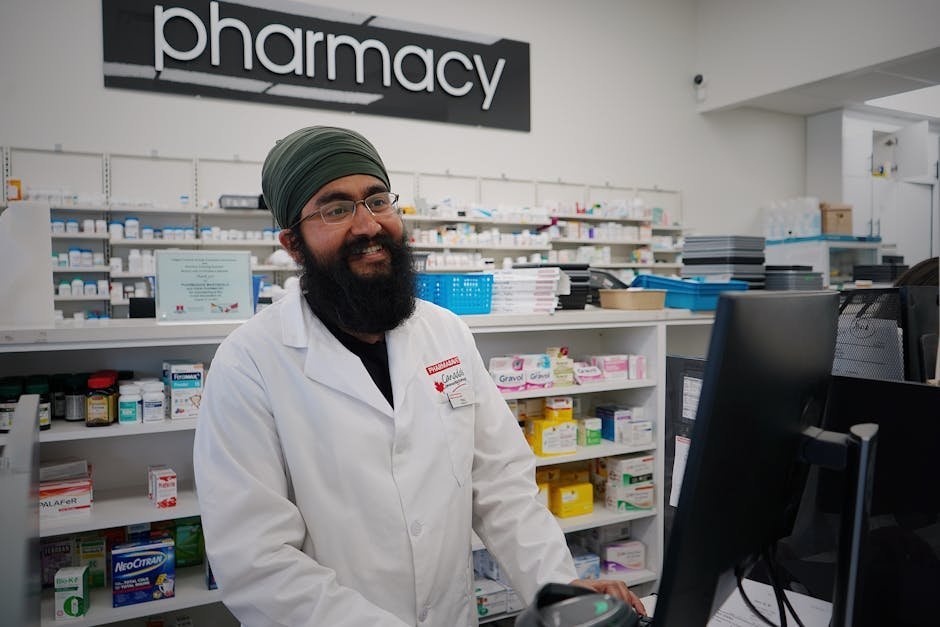
Carla worked the late shift at a corner pharmacy in Camden, New Jersey, the kind of neighbourhood where the medical examiner’s van had become a familiar sight. On a Thursday in March, an older woman walked up to the counter holding a creased printout from a community group. She was 68, her name was Beverly, and her grandson Marcus had moved back into her house after a stint in residential treatment. Beverly had read every pamphlet at the church basement meeting. She knew about fentanyl. She knew that Marcus’s tolerance had reset. She did not know how to get naloxone without a doctor visit she could not schedule for two weeks. Carla pulled a box of over-the-counter Narcan from behind the counter, walked Beverly through the instructions in plain English, accepted the $44.99 with a coupon from the same pamphlet, and showed her where to keep it (kitchen drawer, not the bedroom; warm enough not to freeze, cool enough not to bake). Six weeks later Beverly used the spray on Marcus at 2:14 a.m., called 911 while he started breathing again, and held his hand on the gurney as paramedics loaded him in. Marcus is alive in 2026 because a 68-year-old grandmother walked into a pharmacy in March.
From standing orders to over-the-counter: a brief regulatory history
For most of the past decade, naloxone was technically prescription-only but widely available through statewide standing orders. By 2018 every state plus the District of Columbia had a standing order or pharmacist-prescribing law that let anyone walk into a pharmacy and request naloxone without first seeing a clinician. Coverage and consistency varied; rural counties often had no participating pharmacy, and stigma kept many people from asking. The path forward was clear, and in March 2023 the FDA approved Narcan 4 mg nasal spray as the first over-the-counter naloxone product. By autumn 2023 it was on shelves nationwide. RiVive, a generic 3 mg nasal spray, followed shortly after.
Higher-dose products like Kloxxado (8 mg nasal spray) and injectable naloxone remain prescription-only as of 2026. Most users do not need them. The 4 mg nasal spray reverses the vast majority of opioid overdoses, including most fentanyl events, when used correctly and repeated as needed. Knowing how to get naloxone in your state today usually means walking into any chain pharmacy, ordering through a major online retailer, or accessing free distribution through community programmes.
Where naloxone lives now
The distribution channels in 2026 cover most situations.
- Chain pharmacies: CVS, Walgreens, Walmart, Rite Aid, and Costco stock OTC Narcan; ask at the counter even if you do not see it on the shelf, because many stores keep it locked or behind the counter to prevent theft
- Independent pharmacies: most carry it, often with a more accessible price point
- Online retailers: Amazon, GoodRx, and direct-to-consumer pharmacy services ship Narcan with same-day or next-day delivery in most US zip codes
- Community distribution programmes: NEXT Distro mails free naloxone to all 50 states with no prescription, no questions, and no shipping fee
- Harm reduction organisations: state and local syringe service programmes distribute free naloxone, train recipients in person, and often supply multiple kits
- State health departments: many run mail-order or pickup programmes (NCHRR, Project Lazarus, Don’t Run Bystand)
- Vending machines: an expanding network of public health vending machines in libraries, transit stations, fire houses, and parks dispense free Narcan; locations searchable via state opioid overdose dashboards
- Workplace and school programmes: a growing number of employers and schools stock and train staff under Good Samaritan protections
Cost varies. OTC Narcan retails at $44.99 for a two-dose carton. RiVive runs about $36 for two doses. Many state health programmes provide either product free, sometimes mailed in plain packaging. Insurance often covers prescription naloxone (the older path) at zero copay. The right channel depends on speed, anonymity, and budget.
Recognising an opioid overdose
Reversal only works if the witness identifies the overdose in time. The classic triad:
- Pinpoint pupils, often described as constricted to a fraction of normal size
- Slow or absent breathing, fewer than 8–10 breaths per minute, sometimes gurgling or snoring
- Decreased level of consciousness, ranging from heavy drowsiness that cannot be roused to complete unresponsiveness
Other clues include blue or grey lips and fingertips (cyanosis), pale or clammy skin, weak pulse, and limp body. The defining feature for treatment purposes is respiratory depression. People die in opioid overdose because they stop breathing, not because of cardiac arrest until much later. Naloxone restores breathing, which buys the time needed for emergency services.
How to administer naloxone nasal spray
The technique is simple by design. The packaging shows a four-step illustration on every device.
- Try to rouse the person: shake their shoulders firmly, call their name, rub your knuckles hard against their sternum. If unresponsive, proceed
- Call 911 (or have someone else call) and say “possible overdose, not breathing well.” State your address clearly
- Lay the person on their back, tilt their head slightly, and remove the device from its packaging
- Insert the nozzle into one nostril until your fingers touch the bottom of their nose
- Press the plunger firmly to deliver the full dose
- Begin rescue breathing or CPR if you are trained; if not, continue to monitor
- If there is no response in 2–3 minutes, give a second dose in the other nostril using a new device
- If still no response, continue with additional doses every 2–3 minutes until emergency services arrive
- Once they are breathing, place them in the recovery position (on their side, knee bent forward, head tilted) to prevent aspiration if they vomit
- Stay with them until paramedics take over
Naloxone does nothing in someone who has not taken opioids. It is safe to give if you are unsure. The drug has no abuse potential, no toxicity at standard doses, and no risk of harm if your guess is wrong.
Why fentanyl changes the dosing calculus
The illicit opioid supply in the United States is now overwhelmingly contaminated with fentanyl and fentanyl analogues. These compounds are 50–100 times more potent than morphine and bind opioid receptors with high affinity. A single dose of 4 mg nasal naloxone is often insufficient. Most fentanyl reversals require two to four doses, and a meaningful number need more. CDC and SAMHSA guidance now explicitly states that responders should expect to use multiple doses and should request emergency services every time.
The half-life of naloxone is shorter (60–90 minutes) than the half-life of fentanyl on receptors. People who have been reversed with naloxone can re-overdose as the naloxone wears off. This is why the post-reversal ER visit is non-negotiable. Even a person who appears fully alert after Narcan needs observation in a hospital for at least 4 hours, often longer. The post-overdose continuum of care ideally extends from the ER directly into opioid detox or buprenorphine induction, but at minimum to a primary care follow-up within a week.
Good Samaritan protections
Every state plus DC has some form of Good Samaritan law that protects bystanders who call 911 during an overdose from low-level drug possession charges. The protections vary, but the broad principle holds: you will not be arrested for drug possession because you tried to save someone’s life. Most laws also explicitly protect lay administration of naloxone from civil liability.
The protections do not cover outstanding warrants, drug distribution charges, or violations of probation conditions, depending on the state. Many people who use drugs hesitate to call 911 even with these protections. The harm reduction movement’s response has been to pair naloxone with education about local laws and with peer outreach, where someone with lived experience answers questions about what will and will not happen when paramedics arrive. Effective community programmes treat the legal anxiety as seriously as the pharmacology.
Training: online and in person
Reading the box is not enough for most people. Brief training raises confidence and improves outcomes substantially. Free options:
- SAMHSA’s free online opioid overdose toolkit, which includes a 15-minute video and downloadable handouts
- Get Naloxone Now, a free online certification course endorsed by major harm reduction organisations
- State and county health department workshops, often hosted at libraries and community centres
- NAMI affiliate trainings for family members of people with opioid use disorder
- NEXT Distro online and mailed training materials accompanying their free naloxone shipments
- Pharmacy counsel sessions, which most chain pharmacies offer at the time of sale
- Workplace AED-style training, increasingly required in industries with high overdose risk
The best training combines a short didactic on overdose recognition with a hands-on practice using a placebo device on a manikin or volunteer. Confidence drops sharply if a person has never opened the package physically. The five minutes spent rehearsing the steps in advance can be the difference between a saved life and a fumbled response. Embedding training within broader community mental health programmes increases reach across populations who may not seek out specifically opioid-focused content.
Frequently asked questions
How long does naloxone last?
About 30–90 minutes of effect. Long-acting opioids like methadone or fentanyl can outlast naloxone, which is why the ER visit is essential.
Can naloxone hurt someone who is not overdosing?
No. It has no effect in the absence of opioids and no toxicity at the doses sold OTC.
Can children carry naloxone?
Yes. Many schools now stock it, and parents of teens at risk are encouraged to keep a kit at home. The administration steps are simple enough for any adolescent to learn.
Will my insurance still cover prescription naloxone?
In most cases yes, often at zero copay. The OTC product is sometimes covered through pharmacy benefit managers, but coverage is patchier than it is for prescription routes.
Does naloxone cause withdrawal?
In someone with opioid dependence, yes, often abruptly and uncomfortably. This is sometimes used to argue against carrying it; the counterargument is that withdrawal is survivable and overdose is not.
The bottom line
In 2026 anyone in the United States can walk into a pharmacy, log into a major retailer, or fill out a free mail-order form and have naloxone in hand within days, sometimes within minutes. The price is between zero and fifty dollars depending on channel. The training takes fifteen minutes. The drug saves lives at near-100 percent rates when given in time. Carrying it is not a statement about the people in your life. It is a statement about the contaminated drug supply that exists in every county. Beverly, the grandmother in our opening, now keeps two boxes (one in the kitchen, one in her purse) and trains the women at her church. Marcus stayed in treatment. The pharmacy where Carla worked sells about a hundred boxes a month, and the storefront has a small handwritten sign that reads, in three languages, “ask us, we won’t ask you.”
If you or someone you love is in a substance-use or mental-health crisis, the 988 Suicide and Crisis Lifeline connects you to local resources around the clock. For overdose-specific guidance and free naloxone access points, the Substance Abuse and Mental Health Services Administration and the Centers for Disease Control and Prevention publish updated state-by-state directories.
This article is for educational purposes only and does not constitute medical advice. Suspected opioid overdose is a medical emergency. Always call 911 in addition to administering naloxone, and seek evaluation in an emergency department after any reversal because re-sedation is common as naloxone wears off.