Marisol was nineteen, a sophomore at the University of Denver, when her residence director found her unconscious on the bathroom floor. Her roommate had called twice that week, worried. Marisol had stopped going to the dining hall in November. By February, she weighed 78 pounds. The paramedics noted a heart rate of 32 beats per minute, a core temperature of 94.1, and a blood pressure that barely registered on the cuff. At Denver Health, the ED resident did not call psychiatry first. He called the medical ICU, then the ACUTE Center for Eating Disorders upstairs. Marisol’s parents flew in from El Paso that night, bracing for a psychiatric admission. What they got instead was a medical floor, a cardiac monitor, a dietitian who measured calories in single digits, and an attending who told them, gently, that their daughter was not first a patient with a mental illness. She was a patient who could die before the weekend. This is what an anorexia medical emergency looks like, and it is the part of eating disorder care that families and even some clinicians still miss.
Why anorexia is the deadliest psychiatric illness
Anorexia nervosa carries the highest mortality rate of any mental health diagnosis, with figures sitting between 5 and 10 percent depending on the cohort. About half of those deaths come from medical complications. The rest come from suicide. That dual fingerprint is what makes anorexia uniquely dangerous: the body is starving while the brain is also in crisis. An anorexia medical emergency is not a mood swing or a behavioural setback. It is a physiological cliff edge.
Doctors trained in the last decade increasingly recognise this. But families who arrive at an emergency department often hear, in some form, the phrase that haunts the field: she’s not sick enough. The truth is that someone with anorexia can look thin but functional and still be hours away from a fatal arrhythmia. Weight is one data point. The full medical picture is the rest of the story.
The warning signs that demand an ER visit
The Academy for Eating Disorders publishes criteria for medical hospitalisation. They are not arbitrary thresholds. They reflect what kills people. If any of the following are present, the next stop is the emergency department, not a phone call to an outpatient therapist on Monday:
- BMI under 14, or weight under 75 percent of expected body weight in adolescents
- Heart rate under 40 beats per minute, especially during the day
- Systolic blood pressure under 90, or orthostatic drop greater than 20 points
- Core body temperature under 96 degrees Fahrenheit
- Blood glucose under 60
- Potassium under 3.0, phosphate under 2.5, or sodium under 130
- QTc prolongation over 450 milliseconds on ECG
- Syncope, fainting, or any episode of loss of consciousness
- Refusal to eat or drink anything for over 48 hours
These criteria are not all-or-nothing. Two or three together raise the urgency. A teenager with a heart rate of 38 and a potassium of 2.9 is in immediate danger even if she walked into the clinic on her own feet. For more on the structure of inpatient care after stabilisation, our guide to inpatient eating disorder treatment covers the next phase.
The ACUTE Center model: medical stabilisation comes first
The ACUTE Center for Eating Disorders at Denver Health is the country’s flagship medical stabilisation unit, and its existence reframes how the field thinks about severe cases. ACUTE accepts patients other facilities turn away: BMI of 9, BMI of 10, patients on cardiac monitors who cannot safely board a plane without medical escort. The model is simple and counterintuitive. Before any psychiatric or eating-disorder-specialised treatment can begin, the body must be stable enough to tolerate it.
That means a medical floor with hospitalists, cardiology consults, dietitians who calibrate calories by phosphate level, and a slow refeeding protocol that prioritises survival over weight gain in the first week. Psychiatric care is integrated, but it is not the engine. Once the patient is medically stable, transfer to an eating-disorder residential or partial-hospitalisation program follows. Other centres modelled after ACUTE include the Eating Recovery Center medical units in Denver and Chicago and select academic hospitals like Stanford and the University of Iowa.

What happens on a medical anorexia floor
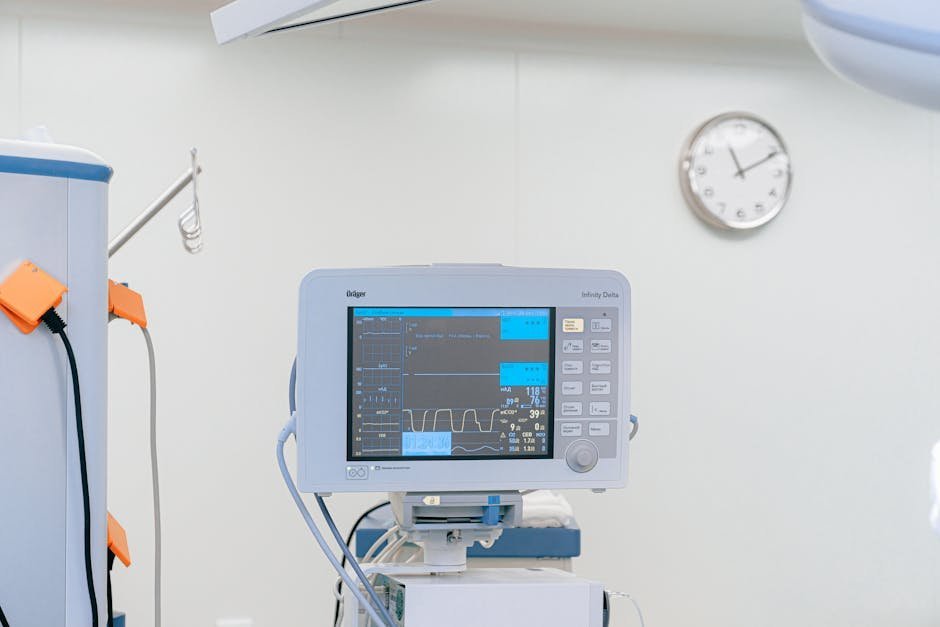
Families often picture inpatient eating disorder treatment as group therapy and meal supervision. The medical phase looks nothing like that. It looks like a hospital. There is a cardiac telemetry monitor on continuously. Vitals are checked every four hours, sometimes every two. Bloodwork happens daily for the first week, often twice daily for phosphate, magnesium, and potassium. A dietitian visits every morning to adjust the meal plan based on the prior 24 hours of labs.
Calories start low. At ACUTE, patients with the most severe malnutrition begin around 1,000 to 1,200 kcal per day, advancing slowly. This is the opposite of the older “start high and push through” approach, because the most dangerous moment in anorexia treatment is not the starvation itself. It is the first 7 to 10 days of refeeding, when the body shifts from a catabolic to anabolic state and electrolytes crash. We cover that physiology in detail in our piece on refeeding syndrome and what to expect during the first weeks of recovery.
Length of stay and what comes next
The medical-only inpatient phase typically lasts 10 to 21 days. Some patients with very low BMIs or refractory bradycardia stay six weeks. Insurance often pushes back, and family advocacy matters here: the medical necessity letter from the attending is what keeps coverage in place. Once heart rate normalises above 50 sustained, electrolytes stabilise without daily replacement, and weight reaches a baseline that supports basic organ function, the transfer to a specialised eating disorder program happens.
That next step is usually inpatient or residential treatment focused on the psychiatric and behavioural side. The medical floor has bought time. The eating-disorder unit teaches the patient how to live without the eating disorder. Both phases are necessary. Skipping the medical phase, or trying to compress it into 48 hours, is how patients die during what was supposed to be treatment.
Avoiding the “she’s not sick enough” mistake
Parents, partners, and even pediatricians sometimes look at a teenager who is “only” 15 pounds underweight and conclude that an outpatient referral is enough. Sometimes it is. But anorexia is a deceptive illness, and the people inside it are often working hard to appear functional. A normal-looking face can sit on top of a heart rate of 36. The labs do not lie even when the social presentation does.
The right move when in doubt is a same-day medical assessment. An ECG, a full electrolyte panel, orthostatic vitals, and a temperature take 90 minutes in any urgent care or ED. If those numbers are normal, you have peace of mind. If they are not, you have caught the emergency early. Our guide to finding eating disorder care near you walks through how to navigate that triage step.

Resources for families during a medical admission
Families often feel paralysed during the medical phase. They cannot bring food in. They cannot push their child to gain faster. They are watching, waiting, and signing forms. Useful things to do during this window: meet the dietitian and the social worker, ask for a daily care conference, document weight and labs in a notebook, identify the residential program for the next phase early, and look into FBT (family-based treatment) options for after discharge.
The National Eating Disorders Association maintains a free helpline and family resources. Research summaries from the National Institutes of Health on anorexia mortality and refeeding protocols help when speaking with insurance reviewers. Both are reliable and free.
Frequently asked questions
Can someone with anorexia be too weak to walk into the ER?
Yes. Severe orthostatic hypotension and muscle wasting can make ambulation unsafe. Call 911 if the person cannot stand without fainting, has chest pain, or has had a syncope episode. Paramedics are trained to handle bradycardia and electrolyte abnormalities en route.
Will my insurance cover a 21-day medical admission?
Most major insurers cover medical hospitalisation for anorexia when the AED criteria are met and documented. The denials usually happen at the residential phase, not the acute medical phase. The hospital’s utilisation reviewer handles the daily authorisation calls.
What is the difference between a medical anorexia unit and an inpatient ED program?
A medical unit is a hospital floor with cardiac monitoring and a hospitalist. An inpatient eating disorder program is a psychiatric or specialty unit with therapists, dietitians, and structured meal support. Severely malnourished patients need the medical unit first.
Is bradycardia in anorexia the same as athletic bradycardia?
No. Athletic bradycardia comes from a strong, conditioned heart muscle. Anorexia bradycardia comes from cardiac wasting and adrenergic downregulation. The first protects you. The second can kill you. ECGs and echocardiograms tell the difference.
How long until weight starts to come back during medical refeeding?
The first week often shows fluid weight changes that are not true mass. Real lean tissue rebuilding starts around weeks two and three, when calories advance into a positive balance and electrolytes are stable. This is normal and expected.
The bottom line
An anorexia medical emergency is not a metaphor. It is a code-stroke, code-sepsis-equivalent event where minutes and electrolytes matter more than therapy goals. If you see bradycardia, hypotension, hypothermia, or syncope in someone with restrictive eating, the next stop is an emergency department that knows the AED criteria. Medical stabilisation comes first. Behavioural treatment follows. Both phases save lives. Skipping the first one ends them.
If you or someone you love is in crisis, call or text 988 to reach the Suicide and Crisis Lifeline, available 24 hours a day across the United States.
This article is for general educational purposes only and is not a substitute for medical advice, diagnosis, or treatment. Anorexia nervosa is a medical and psychiatric emergency in its severe forms; please consult a licensed physician or call 911 for urgent concerns.