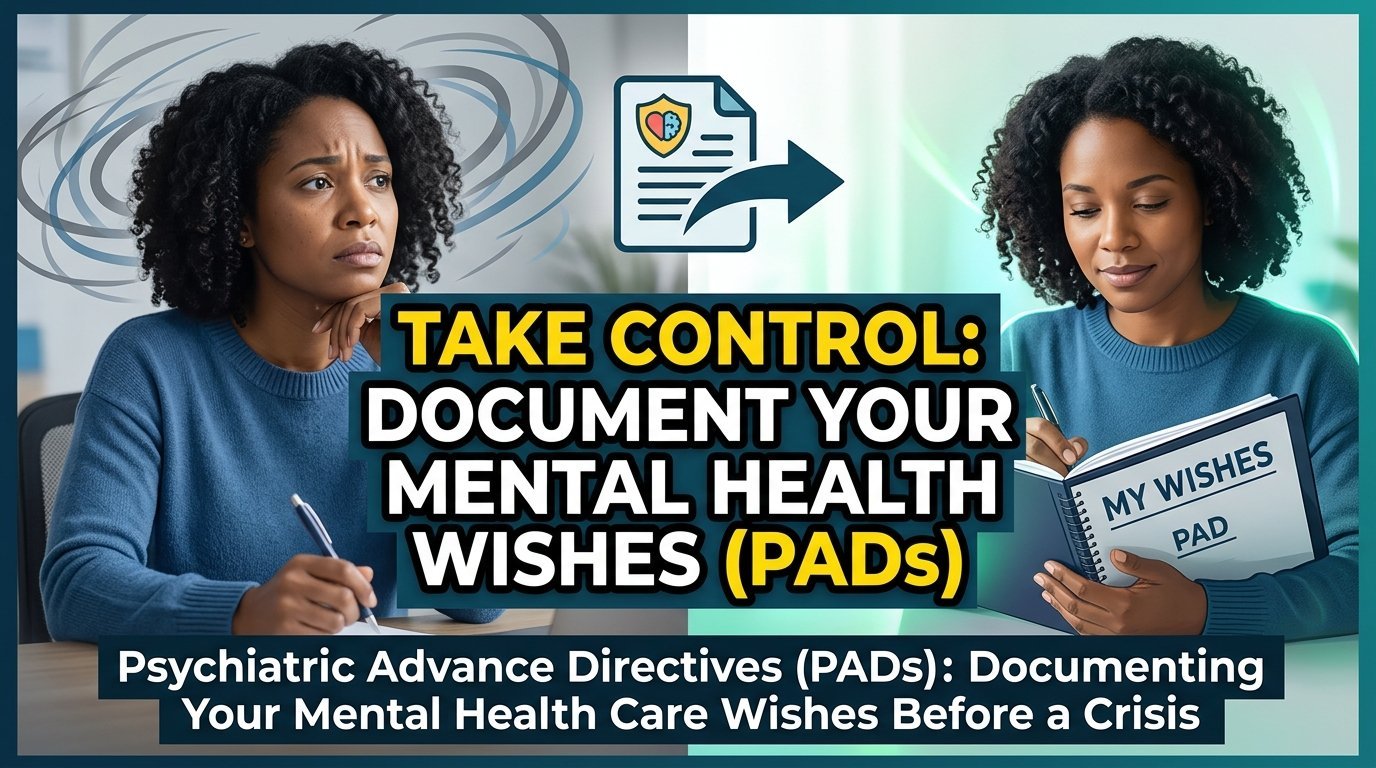
The hardest decisions about psychiatric care often come at the worst possible time—during a manic episode, a severe depression, an episode of psychosis, or any moment when the very illness being treated also impairs the ability to direct that treatment. A Psychiatric Advance Directive (PAD) is a legal document that lets you record your treatment preferences while you are well, so they guide your care later when you may not be able to advocate for yourself.
This guide explains what PADs do, what they cover, how they differ from a general healthcare power of attorney, the state-by-state legal landscape in 2026, and exactly how to create one that hospitals will actually honor.
What a Psychiatric Advance Directive Covers
A PAD typically addresses:
- Medication preferences—which psychiatric medications have helped you, which have caused intolerable side effects, and which you do not consent to receive (other than in genuine emergencies)
- Hospital and provider preferences—which facilities you prefer, which to avoid, and the names of clinicians who already know your history
- Specific intervention preferences—your views on ECT, restraints, seclusion, and intramuscular injections
- People to contact—family, friends, therapists, peer supporters, and anyone you do not want contacted
- A psychiatric healthcare agent—a trusted person granted legal authority to make psychiatric decisions for you when you cannot
- Childcare, pet care, and bills—practical instructions if you are hospitalized
- Discharge wishes—living arrangements, medication continuity, and follow-up care
How a PAD Differs From a General Healthcare Directive
A general advance directive or healthcare power of attorney usually focuses on end-of-life and acute medical decisions. PADs are tailored to mental health: they spell out treatment for psychiatric crises, reference specific medications and providers, and address situations where the patient may temporarily lack decision-making capacity but is still alive and well otherwise. Some states recognize a combined document; others have a stand-alone PAD form.
The Legal Landscape: State Variation
As of 2026, more than 30 states have specific PAD statutes. Even in states without dedicated laws, federal mental health parity rules and general advance-directive statutes typically allow a properly executed document to guide care. State-by-state variation includes:
- How long the directive remains in effect—some states make it permanent until revoked, others require periodic renewal
- Whether the patient can revoke it during a crisis—some allow revocation only when the patient has decisional capacity; others permit revocation anytime
- Witness and notary requirements—most states require two adult witnesses; some require notarization or a clinician’s capacity attestation
- Whether the directive can require admission to a specific facility—most states do not, but it can request
- The role of the agent—some states allow the agent to consent to admission and ECT, others limit agent authority
The National Resource Center on Psychiatric Advance Directives at NRC-PAD.org maintains state-specific forms and statutes. Bazelon Center for Mental Health Law and many state Disability Rights organizations also publish free templates.
Step-by-Step: Creating Your PAD
- Download your state’s PAD form from NRC-PAD.org or your state’s mental health authority
- Reflect on past episodes—what helped, what harmed, what you would want next time
- Talk with your treatment team—your psychiatrist, therapist, and primary care provider can offer realistic input on which medications and interventions are most appropriate
- Choose a healthcare agent—someone who knows you, will respect your written wishes, and can be reached during a crisis
- Complete the form carefully—name specific medications, doses you have tolerated, and specific interventions you accept or refuse
- Sign with witnesses (and notary if required)—follow your state’s execution requirements exactly
- Distribute copies—your agent, treatment team, primary hospital, family, and anyone likely to be involved in a crisis
- Register the document—some states maintain electronic registries; some hospital systems will scan it into their EMR
- Carry a wallet card—noting that you have a PAD and where copies are stored
When PADs Can Be Overridden
A PAD is binding but not absolute. State law and clinical ethics typically allow override when:
- Following the directive would violate accepted standards of care
- The patient is in imminent danger and the directive does not address the emergency
- A court order overrides the directive—rare but possible in commitment hearings
Even when a PAD is overridden, it remains a powerful advocacy tool. Your healthcare agent can challenge decisions, and the documented wishes can shape treatment after the immediate crisis subsides.
Combining a PAD With a Crisis Plan
A formal PAD works best alongside a less formal crisis plan—a one-page document with phone numbers, early warning signs, coping strategies, and the names of people authorized to act. Hospitals respond to formal documents, but family members and crisis teams often act on the informal plan first. WRAP (Wellness Recovery Action Plan) is a widely used framework for this informal companion document.
PADs and Civil Commitment
If you are involuntarily hospitalized, your PAD remains relevant. Hospitals are obligated to consider your documented preferences for medications and procedures even during involuntary care. A psychiatric healthcare agent can attend treatment team meetings, request second opinions, and challenge interventions you have refused in writing. Many advocates argue that PADs reduce the trauma of commitment by preserving patient voice during loss of liberty.
For Family Members and Caregivers
If you are a parent, partner, or close friend of someone with serious mental illness, encouraging the creation of a PAD is one of the most useful conversations you can have. It clarifies your role during a crisis, prevents arguments at hospital intake, and may dramatically reduce the time it takes to stabilize an episode. Frame it as planning during stability so future crises feel less chaotic, not as an admission that another crisis is inevitable.
A Final Note
A psychiatric advance directive is one of the most under-used tools in the U.S. mental health system. It costs nothing to create, requires only an afternoon of reflection and paperwork, and can profoundly change the experience of psychiatric crisis—both for the person living with mental illness and for the loved ones supporting them. Done while you are well, it is an act of self-respect that pays dividends if and when the unwell times return.
This article is for informational purposes only and is not legal or medical advice. State PAD laws vary; verify current requirements with your state mental health authority or an attorney before signing.