Informational only. This article does not provide medical advice and is not a substitute for a conversation with a licensed clinician.
If you have read about ketamine therapy for depression and wondered whether it might help when medication and talk therapy have not lifted things, you are not alone. Many people start looking into this option after months or years of trying first-line treatments with only partial relief, and the questions can feel overwhelming. This guide walks through what the treatment actually is, the difference between off-label IV ketamine and FDA-approved Spravato, what research suggests, and the practical steps involved, so you can have a more informed conversation with your own care team.
If you’re in crisis or having thoughts of self-harm, call or text 988 (Suicide & Crisis Lifeline) anytime, free and confidential. If someone is in immediate danger, call 911.

What ketamine therapy for depression actually is
Ketamine is a medication that has been used in medicine for decades, originally as an anesthetic, and over the last several years it has been studied for mood conditions because of an unusual property: in some people it can ease depressive symptoms quickly, sometimes within hours or days rather than the weeks many antidepressants take. There are two distinct things people mean when they say “ketamine therapy.” The first is intravenous (IV) ketamine, given as an infusion in a clinic, which is used off-label for depression, meaning the drug itself is FDA-approved but not specifically for this purpose. The second is esketamine, sold under the brand name Spravato, a nasal spray derived from ketamine that the U.S. Food and Drug Administration has specifically approved for treatment-resistant depression and, in certain cases, for depressive symptoms with acute suicidal thinking. Both are given under medical supervision, and neither is something you take home.
How ketamine is thought to work and what the evidence shows
Most common antidepressants act on serotonin and related chemical messengers. Ketamine works through a different pathway, acting on the brain’s glutamate system and a receptor known as NMDA, which researchers believe may help restore connections between nerve cells and is thought to underlie its rapid effect. According to the National Institute of Mental Health, depression that has not responded to standard treatments is an active area of research, and rapid-acting approaches are part of that work. In practice, this treatment is most often considered for adults with major depressive disorder who have not gotten enough relief from at least a couple of antidepressants, a situation clinicians call treatment-resistant depression. Studies suggest that a meaningful share of people experience improvement, and the fast onset has drawn particular interest for situations involving acute suicidality, where waiting weeks is not safe.
It is important to be clear-eyed about the limits. The benefit is often not permanent on its own, which is why treatment is typically given as a series and sometimes followed by maintenance sessions or paired with other care. Research on long-term outcomes is still maturing, and outcomes vary from person to person. Many people find ketamine works best as one part of a fuller plan that includes ongoing therapy, medication, and steady supports, rather than as a standalone cure. The FDA’s approval of Spravato came with notable safeguards precisely because the science is still being worked out and the medication carries real risks. None of this replaces a clinician’s judgment about whether the evidence applies to your particular situation, but knowing the vocabulary can make those conversations feel less intimidating.

What a treatment course looks like
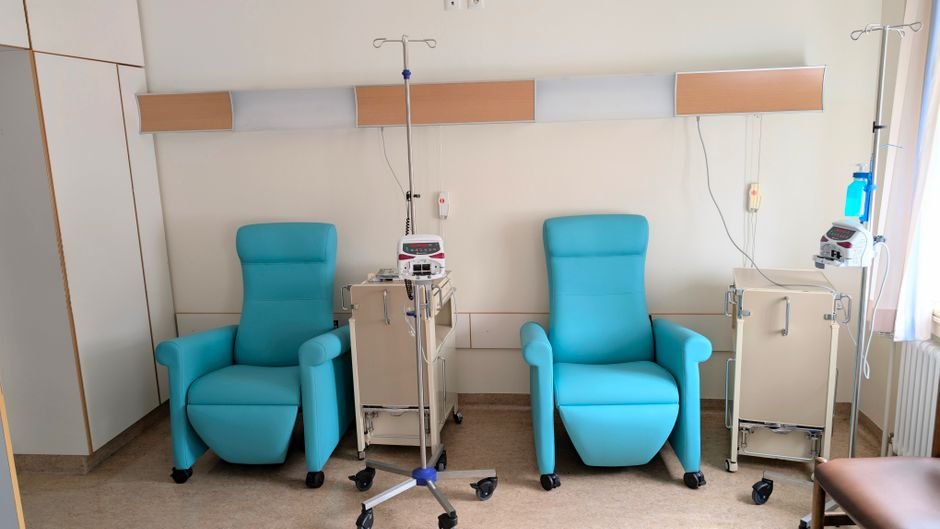
Both forms of this treatment happen in a supervised clinical setting, and the monitoring is a feature, not a formality. For IV ketamine, an infusion is delivered slowly over roughly forty minutes while staff watch your blood pressure, heart rate, and how you are feeling, and you stay for a period afterward until any effects wear off. A typical starting course is a series of sessions spread over a few weeks, with the schedule tailored to how you respond. For Spravato, you self-administer the nasal spray under direct observation in a certified office, then remain there for monitoring for at least a couple of hours before someone else drives you home, since you cannot drive for the rest of the day.
Because of those risks, Spravato is only available through a tightly controlled FDA program called a Risk Evaluation and Mitigation Strategy, or REMS. In plain terms, the REMS means the medication can only be dispensed and given in certified healthcare settings, never picked up at a pharmacy and taken at home, and that the clinic must observe you and document each visit. This is one of the clearest signals that ketamine-based treatment belongs in a supervised setting with trained staff, monitoring equipment, and a plan for managing side effects, rather than anywhere casual. When you are looking at clinics, it is fair to ask whether a physician oversees treatment, what monitoring they provide, and how they handle an adverse reaction.
Who ketamine therapy for depression is and isn’t a fit for
This treatment is generally considered for adults whose depression has persisted despite trying at least a couple of medications, and in some cases for people experiencing depressive symptoms alongside acute suicidal thinking, where the rapid effect matters. It is not appropriate for everyone. Clinicians screen carefully, because ketamine can raise blood pressure and may not be safe for people with certain cardiovascular or aneurysm-related conditions, and they weigh a history of substance use, psychosis, or some other diagnoses where it could pose added risk. Pregnancy, current medications, and your full medical history are all part of that screening conversation. None of this is something to sort out on your own from an article; a prescriber who knows your history is the right person to weigh whether you are a candidate and which form, if any, makes sense.
Side effects, dissociation, and safety
During and shortly after treatment, many people experience dissociation, a temporary feeling of being detached from your body or surroundings, sometimes described as floating or dreamlike. For most this fades within an hour or two, but it can feel disorienting, which is part of why monitoring exists. Other common effects include a rise in blood pressure, nausea, dizziness, blurred vision, and sedation. Because ketamine can be misused and has potential for dependence, supervised dosing and the REMS controls around Spravato are designed to reduce that risk. The requirement that you not drive afterward, and that you arrange a ride home, is a safety rule worth planning around rather than working around. If anything feels wrong during or after a session, the clinic team is there to respond, which is exactly why this care is not delivered at home.

What it costs and how insurance covers it
Cost is one of the realities people most underestimate. Off-label IV ketamine is frequently not covered by insurance, and a course of infusions can add up to a significant out-of-pocket expense that varies widely by clinic and region. FDA-approved Spravato is more often covered, since it carries a formal indication, though plans usually require documentation that other treatments were tried first and may ask for prior authorization. Coverage rules differ by plan, so the most reliable step is to ask the clinic’s billing staff to run a benefits check and confirm exactly what your insurer requires. Our guide to the real cost of mental health care covers HSAs, FSAs, and sliding-scale options many patients never use, and the SAMHSA National Helpline (1-800-662-HELP) can point you toward resources if cost is a barrier.
How to find supervised care you can actually access
Start with your current psychiatrist or primary care prescriber, who may already refer to a certified clinic and can document your treatment history for authorization. You can also use the federal treatment locator at findtreatment.gov to find behavioral health facilities near you, and the NAMI HelpLine (1-800-950-NAMI) can help you think through options and prepare questions. When you call a clinic, it is reasonable to ask whether a physician oversees treatment, what monitoring they provide, and how they coordinate with your existing therapist or prescriber. It also helps to see where this fits among other options; our overview of TMS therapy for depression covers another approach studied for depression that has not lifted with first-line care.
When to seek a higher level of care
Ketamine treatment is delivered in scheduled appointments, and on its own it is not an emergency service. If symptoms are escalating quickly, if you are unable to keep yourself safe, or if depression is making it hard to eat, sleep, or function day to day, those are signs to reach out for more immediate support rather than waiting for a course of treatment to take effect. A higher level of care, such as an intensive outpatient program or a day-treatment level of support, exists precisely for these stretches, offering more hours of structure while still letting you sleep at home. Reaching out early is a strength, not a failure, and moving between levels of care is the system working the way it was designed to.
Looking into a treatment like this is itself a hopeful step, and you do not have to decide everything at once. A simple next move, such as writing down your questions and booking one consultation with a licensed provider, can break the process into something manageable. The best step is the one you can take this week.
Disclaimer: This article is for informational purposes only and is not medical, psychological, or psychiatric advice, diagnosis, or treatment. If you are experiencing symptoms of a mental health condition, consult a licensed clinician in your state.