
Daniel was thirty-six, a software architect in Minneapolis, when his marriage cracked open and he finally walked into a therapist’s office. He had not cried since he was eleven. He could not say why a slammed cupboard door made his chest seize. He had a successful career, two children he loved, and a private life of insomnia, three drinks every night, and a strange sense that the person his wife had married was a costume he wore well. The therapist asked him about his childhood. Daniel said it was fine. Both parents alive, no abuse, suburban Wisconsin, hockey on weekends. The therapist asked again, more slowly. Over the next eight months Daniel began to describe a father who raged unpredictably, a mother who froze, and a household where his job from age six was to read the room and shrink. Nobody had hit him. Nobody had touched him. And yet his nervous system was wired like a man who had spent twenty years on a battlefield. This is what adult childhood trauma looks like in real life, and it is more common than the field used to admit.

How decades-old trauma shows up in adult bodies
The hallmark of adult childhood trauma is that the original event is rarely the presenting problem. People show up for insomnia, panic, IBS, a third failed relationship, an alcohol habit they cannot shake, or a sense of being a stranger inside their own life. The body remembers what the conscious mind has filed away as ordinary. Hypervigilance at the dinner table, a startle response to raised voices, chronic neck pain that no orthopedist can explain, and a deep difficulty trusting another human in close quarters are all common signatures.
Clinicians look for clusters rather than single symptoms. Dysregulated emotion that swings from numb to flooded. Attachment patterns that read as either avoidant or anxious-preoccupied. Somatic complaints that travel without a clear medical diagnosis. Dissociation, which can range from mild zoning out during conflict to losing chunks of time. Compulsive behaviours that soothe but never satisfy: substances, food, sex, work, scrolling. Each one is a learned strategy from a body that once needed to survive something the cortex did not have language for.
The ACE study and what it got right and wrong
In 1998, Dr. Vincent Felitti and Dr. Robert Anda published the Adverse Childhood Experiences study through Kaiser Permanente and the CDC. They surveyed 17,000 adults about ten categories of childhood adversity: physical, emotional, and sexual abuse; physical and emotional neglect; and household dysfunction including a parent with mental illness, addiction, incarceration, or witnessed domestic violence. The findings were staggering. Higher ACE scores correlated with adult heart disease, cancer, suicide attempts, depression, and early death. The study legitimised what trauma clinicians had long suspected: childhood adversity is a public health issue, not a private failing.
The limits matter too. ACE scores are blunt. They miss medical trauma, racial trauma, immigration trauma, sibling abuse, religious abuse, and the chronic low-grade neglect that does not fit any of the ten boxes. They also do not capture protective factors, which can mediate even high-ACE childhoods. A score of 6 with one consistent loving grandmother looks different from a score of 6 with no safe adult anywhere. Use the ACE score as a starting conversation, not a verdict. The CDC keeps a public summary of the research at cdc.gov for those who want the source data.
Complex PTSD versus PTSD: the distinction that finally made it official
For decades, the DSM had only one PTSD diagnosis, built around the model of a discrete traumatic event: a car accident, an assault, a combat tour. That model never fit survivors of chronic relational trauma. A child who lived in a home with daily fear for fifteen years does not have one event to process. She has a developmental landscape shaped by survival. In 2018, the World Health Organization’s ICD-11 finally added Complex PTSD as a separate diagnosis. The American DSM has not followed yet, which means insurance coding in the US still uses PTSD with specifiers, but the clinical reality is recognised globally.
Complex PTSD includes the standard PTSD cluster (intrusion, avoidance, hyperarousal) plus three additional features: persistent negative self-concept, difficulties in emotional regulation, and disturbances in relationships. That third cluster is where adults with childhood trauma often spend their lives stuck. Therapy that treats only the flashbacks misses the harder work, which is rebuilding a sense of self that was never allowed to form on its terms. Our guide to trauma therapy options for adults walks through the modalities that actually address the relational layer.
Phase-based trauma therapy: why order matters
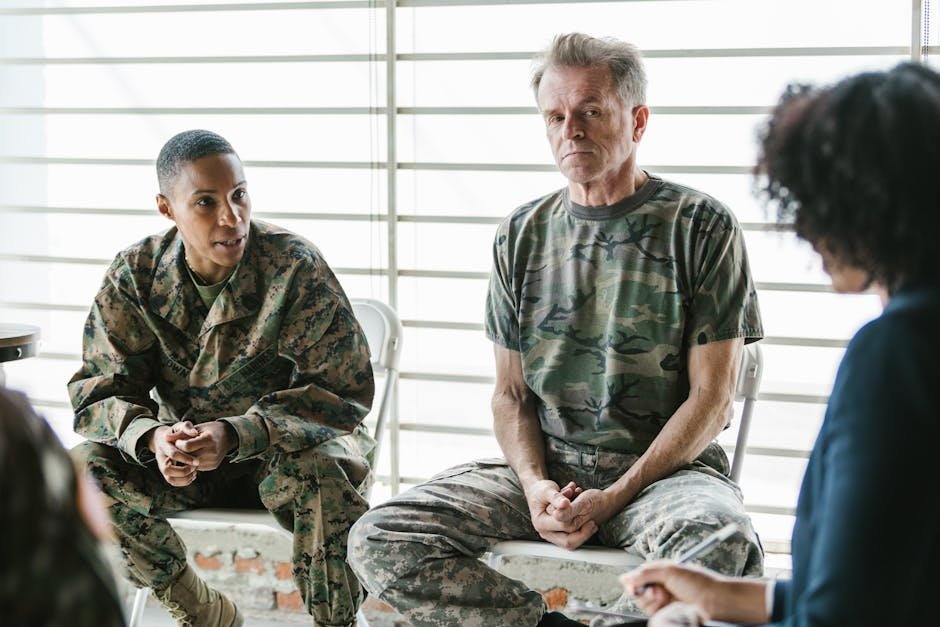
Judith Herman’s three-phase model from 1992 still organises modern complex trauma treatment. Phase one is safety and stabilisation: a regulated nervous system, sleep, basic life structure, and a therapeutic relationship that can hold ambivalence. Phase two is remembrance and mourning: processing the trauma material itself, which is where modalities like EMDR, somatic experiencing, and Internal Family Systems do their work. Phase three is reconnection: rebuilding identity, intimacy, work, and meaning on the other side. Skipping phase one is the most common mistake clients and undertrained therapists make. Diving into trauma processing before the body can hold it usually destabilises more than it heals.
EMDR (Eye Movement Desensitization and Reprocessing) has the strongest evidence base for single-incident PTSD and is increasingly adapted for complex cases. IFS (Internal Family Systems), developed by Richard Schwartz, treats the psyche as a collection of parts and is particularly effective for the dissociative spectrum. Somatic Experiencing, developed by Peter Levine, works with the body’s threat-response cycle that childhood trauma often left incomplete. Sensorimotor Psychotherapy, founded by Pat Ogden, integrates somatic and cognitive approaches. None of these is a quick fix. A complex trauma course often runs 18 months to four years.
Finding a complex-trauma-trained therapist
Many clinicians say they treat trauma. Far fewer have training specific to complex developmental trauma. Look for a few credentials and lineages. The International Society for the Study of Trauma and Dissociation (ISSTD) maintains a member directory and certifies clinicians at multiple levels. Therapists trained at the Trauma Research Foundation, founded by Dr. Bessel van der Kolk after his work at the original Trauma Center, tend to bring strong somatic and embodied skills. The CTAD (Complex Trauma and Dissociation) specialty designation indicates advanced training. Postdoctoral fellowships at Harvard’s Cambridge Hospital and at the McLean Trauma program also produce well-trained graduates.
Ask candid questions on a first call. Have you treated complex PTSD specifically? What models do you use for stabilisation? Do you work with parts and dissociation? How do you handle moments when a client gets flooded in session? A therapist who answers these confidently and concretely is a different category from one who says only that they “do trauma work.” For families navigating early-life severe abuse where outpatient is not enough, our guide to trauma residential programs covers the inpatient and PHP options. The crossover with attachment work also intersects with our piece on attachment-based therapy for adults.
Self-compassion as the foundation, not the prize
Kristin Neff’s research on self-compassion has changed trauma treatment in a quiet, structural way. Adults raised in chronically critical or neglectful homes carry an internal voice that mirrors what was done to them. They diagnose themselves harshly, push through pain, and treat their own suffering as a problem to solve rather than a wound to tend. Self-compassion is not a feel-good add-on at the end of recovery. It is often the precondition for the recovery to happen at all. A nervous system that has been fighting itself for decades will not heal in a relationship, internal or external, that keeps fighting it.
Practical self-compassion looks ordinary. Speaking to yourself the way you would speak to a frightened seven-year-old. Noticing physical pain without judgement. Allowing rest without productivity logic. Letting grief surface without shutting it down. Most adults with trauma find this awkward at first because it has no template in their history. Therapists trained in IFS, Compassion-Focused Therapy (Paul Gilbert), and self-compassion-informed CBT can scaffold the work.

Family of origin work without burning bridges
One of the hardest parts of healing adult childhood trauma is deciding what to do with the people still alive. The pop-psychology answer is to cut off everyone toxic. The clinical answer is more textured. Some families can be re-engaged with new boundaries and limited intimacy. Some require contact only at structured events. Some genuinely require permanent estrangement, particularly where ongoing abuse continues. The decision is not made in a single session and is rarely final on a first attempt. Therapists who do family of origin work draw from Bowenian theory, structural family therapy, and contemporary attachment-informed approaches.
What helps is separating two questions. First: what level of contact serves my own regulation and life? Second: what do I want my children, partner, or chosen family to know and witness? The answers can be inconsistent without being incoherent. A survivor might choose holiday-only contact with a parent while protecting children from unsupervised time. The National Institute of Mental Health publishes general resources on trauma and recovery at nimh.nih.gov for those starting to map the terrain.
Trauma is not destiny, but it is not nothing
The phrase trauma is not destiny is true and gets misused. It is true because neuroplasticity is real, because brains keep rewiring throughout adulthood, and because thousands of survivors build full lives that the bare ACE score would not predict. It gets misused when it slides into a tone that asks survivors to hurry up, get over it, or treat their continued symptoms as a willpower failure. The middle ground is more honest. Healing is possible. It is also long, non-linear, and full of plateaus. Setbacks are not relapses; they are the shape of the work.
A useful frame is that adult survivors are not broken people who need fixing. They are people whose nervous systems learned a coherent strategy in an incoherent environment and are now updating that strategy with better information. The therapist’s job is not to remove the trauma. It is to help the system metabolise it so that more of life becomes available.
Frequently asked questions
I do not remember much of my childhood. Does that mean I was traumatised?
Possibly, but not necessarily. Patchy autobiographical memory has many causes, including ADHD and ordinary developmental forgetting. What matters more is whether your current life shows trauma signatures. A therapist can help you map this without forcing recovered-memory work, which has its own troubled history.
How long does therapy for complex trauma usually take?
Most courses run two to four years of weekly work, with phases of more and less intensity. Brief models exist for single-incident trauma. Childhood trauma rarely fits a brief model.
Is medication useful for adult childhood trauma?
SSRIs help some people with depression and anxiety co-morbidities. Prazosin can reduce trauma nightmares. No medication treats the underlying complex trauma directly. Medication is a support, not a cure.
Can I do this work without confronting my family?
Yes. Most healing work is internal. Confrontation, disclosure, or estrangement are choices, not requirements. Many survivors heal substantially with no change in family communication.
Will my own parenting be damaged by my trauma history?
It can be, especially during young-child years that mirror your own hardest ages. Trauma-informed parenting work and your own therapy reduce intergenerational transmission substantially. Self-awareness is the protective factor.
The bottom line
Adult childhood trauma is a recognised, treatable condition that often hides behind anxiety, addiction, relationship trouble, and chronic somatic symptoms. The path forward is phase-based, slow, and worth it: stabilise the body, process the material with a trained complex-trauma therapist, and rebuild the self in relationships that can hold the new shape. You are not too late. The brain you have at thirty-six or fifty-six is still capable of meaningful change.
If you are in immediate emotional crisis or thinking about suicide, call or text 988 to reach the Suicide and Crisis Lifeline. Trained counsellors are available 24/7 and the call is free and confidential.
This article is for educational purposes only and does not constitute medical or psychological advice. Always consult a licensed mental health professional for diagnosis and treatment of trauma-related conditions.