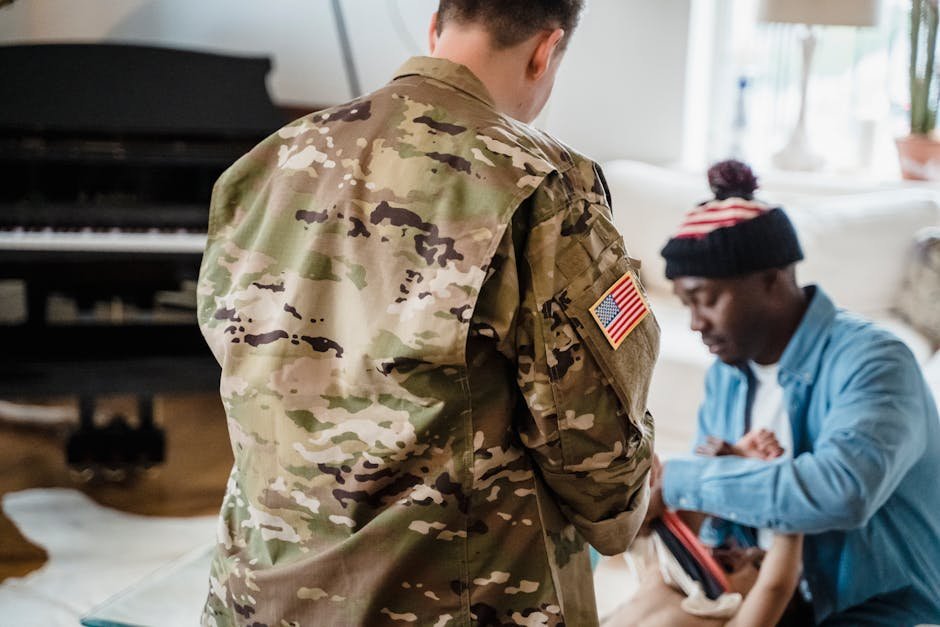
Marcus Halloway had been out of the Marine Corps for nine years when his wife Tasha, sitting in the parking lot of a community hospital ER in Tampa, pulled out her phone and called the Veterans Crisis Line instead. Marcus had been admitted to a private psych unit two years earlier after a suicidal episode and had hated the experience — the staff had asked him to take off his dog tags, and on his second night a nurse had startled him from behind, which had not gone well for either of them. Tasha had read enough by then to know there was another path. The Crisis Line counsellor stayed on the call, looped in the local Veterans Affairs medical centre, and within ninety minutes Marcus was being walked into a VA psychiatric admission unit by a nurse who had served in Iraq herself. That night was the first time in nine years he had slept without his back to a wall. This article explains when VA inpatient psychiatric care is the right choice for a veteran, when a community hospital is better, and how the choice gets made when minutes matter.
What VA inpatient psychiatric care actually offers
The Department of Veterans Affairs operates inpatient psychiatric units within most of its 170-plus medical centres. These units are staffed by psychiatrists, psychologists, social workers, and nurses who treat veterans every day. Many have served themselves. The buildings differ, but the model does not: units focus on stabilisation of acute symptoms, evaluation for level-of-care recommendations, family contact in line with the veteran’s wishes, and a structured handoff to outpatient care that lives inside the same medical record. Because the system is integrated, an admission at the Houston VA can be read by the outpatient team in Killeen the next morning without paperwork shuffling. That continuity is the strongest argument for choosing VA inpatient over a community hospital when both are viable. VA inpatient psychiatric care is not always the right answer, but for veterans already inside the system it usually is.
Eligibility and how to get admitted
Most veterans who served the minimum required active-duty time and were not dishonourably discharged are eligible for VA mental health care, including inpatient. Service-connected veterans, post-9/11 veterans within five years of separation, and veterans with combat exposure, military sexual trauma, or recent suicidal ideation typically have priority access. There are three common entry points to a VA inpatient admission: walking into a VA emergency department or urgent care, being referred by a VA outpatient clinician, or being routed through the Veterans Crisis Line. The Crisis Line route is often the fastest, because counsellors can directly facilitate a same-day admission to a participating VA. For an overview of the larger VA mental health benefit picture, see our guide to VA mental health benefits.
When a community hospital is the better choice
VA inpatient is not always the right call. If the veteran lives more than an hour from the nearest VA medical centre with an inpatient unit, a community hospital under the MISSION Act and Community Care program may be authorised. If the veteran’s clinical picture involves a primary medical emergency such as serotonin syndrome, severe alcohol withdrawal with seizure risk, or a cardiac issue alongside psychiatric symptoms, the closest tertiary medical centre is usually the right destination first, with VA transfer afterwards. If the veteran has had repeatedly negative experiences inside a VA and is willing to accept treatment outside it, that preference matters and is clinically reasonable. The MISSION Act, signed in 2018, made it easier for VA-eligible veterans to receive care from non-VA providers when distance, wait times, or service availability make VA care impractical, and the Community Care portal at the local VA can authorise an inpatient psychiatric admission outside the system when criteria are met.
Specialised PTSD and trauma-focused programs
The VA runs the country’s largest network of specialised PTSD treatment, including residential rehabilitation programs known as PRRTPs and inpatient PTSD programs that go deeper than acute stabilisation. These are not usually the right setting for a person in active suicidal crisis — those veterans typically stabilise on a general inpatient unit first, then transition to a PRRTP or an outpatient PTSD program afterwards. The trauma-focused inpatient programs use evidence-based protocols including Cognitive Processing Therapy and Prolonged Exposure, the same protocols used in outpatient care. A veteran who completes acute stabilisation and is ready to engage in trauma work often does best moving from inpatient to a PRRTP rather than back to outpatient too quickly. Our companion piece on finding a veterans CPT or PE therapist covers the outpatient side of that transition.
Military sexual trauma and inpatient considerations
Military Sexual Trauma, abbreviated MST, refers to sexual assault or repeated, threatening sexual harassment that occurred during military service. The VA provides MST-related care free of charge regardless of service-connection status or discharge characterisation. Inpatient considerations for MST survivors include same-gender unit options where available, the right to request a same-gender clinician for assessments, accommodations for hyperarousal triggered by hospital environments, and access to MST coordinators who exist at every VA. A veteran admitted in crisis can disclose MST at any point during a stay; clinicians are trained to receive that disclosure without requiring it to be repeated unnecessarily. Some VAs operate dedicated women’s inpatient units; others have designated wings or rooms within mixed units. Asking the admitting clinician about specific accommodations is appropriate.
Voluntary versus involuntary admission
Most VA inpatient psychiatric admissions are voluntary. The veteran consents to admission, can sign in and out under standard psychiatric hospital rules, and works collaboratively with the team. Involuntary admissions occur under the same state laws that govern community hospitals; the VA does not have separate commitment authority. If a veteran meets state criteria for emergency psychiatric hold — typically imminent danger to self, danger to others, or grave disability — the VA can hold the veteran for evaluation while a state-court process unfolds. Length of involuntary stay is governed by state law, not federal. Veterans who arrive voluntarily and later wish to leave against medical advice will be evaluated for whether civil commitment criteria are met before discharge can be blocked.
Length of stay norms and what to expect
VA inpatient stays for acute psychiatric conditions tend to run between five and fourteen days, similar to community hospitals. Length of stay is driven by clinical stabilisation, not by insurance authorisation, which is one of the structural advantages of receiving care inside an integrated federal system. The first forty-eight hours involve detailed history, medication review, lab work, and treatment planning. The middle days focus on therapeutic groups, individual sessions, and medication adjustment. The final days centre on discharge planning: outpatient appointments scheduled before the veteran leaves, a written safety plan, family or partner inclusion if the veteran wants it, and warm handoffs to the receiving outpatient team. Veterans whose primary issue is combat-related trauma may be referred forward to a residential or specialised program; our overview of veterans trauma treatment covers what those next-step programs look like.
Family communication policies
VA units, like all psychiatric units, follow HIPAA rules. The veteran must sign a release of information for family members to receive clinical updates. Most units strongly encourage that release because family involvement reduces readmission rates, but ultimately the choice belongs to the veteran. Many units offer family education sessions, family therapy, and structured visiting hours. Spouses, parents, and adult children often find these sessions clarifying — both because they learn what is happening clinically and because they get to talk with other family members of veterans on the unit and discover they are not alone in the disorientation of being a veteran’s loved one during admission.

Transitioning to outpatient and the Whole Health team
VA outpatient mental health is structured around interdisciplinary teams that include psychiatry, primary care, social work, peer support, and the Whole Health initiative — the VA’s integrative-medicine model that includes acupuncture, yoga, mindfulness training, and health coaching. After inpatient discharge, most veterans transition into a Behavioral Health Interdisciplinary Program team, sometimes called a BHIP, which provides outpatient psychiatry and therapy in coordinated cycles. For veterans without stable housing at discharge, the HUD-VASH program combines a Department of Housing and Urban Development voucher with VA case management and is one of the most effective supportive housing programs in the country. A discharge planner on the inpatient unit screens every admission for HUD-VASH eligibility, and waiting times vary by city.
Making the choice in the moment
For most eligible veterans in active psychiatric crisis, VA inpatient is the right choice when the medical centre is reachable, the unit has capacity, and the veteran can tolerate the environment. Community hospital admission is the right choice when distance, capacity, or specific medical needs make VA care impractical. The Veterans Crisis Line — call or text 988 then press 1, or chat at the linked site — is the most reliable single point of triage, because the counsellors know the local availability of both options and can route accordingly. The official benefits portal at va.gov and the PTSD-specific resources at ptsd.va.gov are good starting points for veterans and families wanting to understand the system before they need it.
Frequently asked questions
Can a veteran with an other-than-honourable discharge get VA inpatient care?
In many cases, yes. The 2018 expansion of VA mental health eligibility allows former service members with other-than-honourable discharges to receive emergency mental health care, including inpatient admission, regardless of discharge characterisation in many circumstances. The eligibility analyst at the local VA can confirm specifics. If access is unclear in a crisis, the Veterans Crisis Line can usually facilitate an emergency admission while paperwork is sorted afterwards.
What does VA inpatient cost the veteran?
For service-connected veterans receiving care for service-connected conditions, the cost is typically zero. For other veterans, modest copays may apply, and Priority Group assignment determines specifics. Most veterans pay considerably less for inpatient psychiatry at a VA than at a community hospital, even when community hospital insurance covers the stay.
Can family bring personal items to a veteran on the unit?
Most units allow specific personal items — clothing without drawstrings, photos, books, basic toiletries — once safety screening is complete. Phones, sharps, and items containing strings or wires are usually held during admission and returned at discharge. Each unit has a written list, and asking the unit clerk by phone before visiting saves a return trip.
How does VA inpatient handle veterans with substance use disorders?
VA inpatient units stabilise acute psychiatric symptoms first, then refer to substance-use treatment as a step-down. Many VAs have integrated dual-diagnosis tracks that handle both simultaneously. Detoxification typically happens on a medical or specialised detox unit before transfer to psychiatry, depending on the substance and the medical risk involved.
What if a veteran refuses VA care entirely?
The veteran’s preference matters. If trust in the VA has been damaged by a previous experience, community hospital admission under MISSION Act Community Care is a legitimate alternative. After stabilisation, outpatient mental health care can resume in the community without forcing a return to the VA system. Some veterans split their care, using community providers for therapy and the VA for medication management or vice versa.
The bottom line
VA inpatient psychiatric care is, for many veterans, the most clinically integrated and culturally informed option in the country. It is not perfect, and it is not always the closest building to where a veteran is in crisis, but the staff usually understand the experience of military service in a way community hospital staff often cannot. For families navigating an admission decision in real time, the Veterans Crisis Line at 988 then press 1 is a faster path to the right answer than driving to the nearest ER and hoping. The choice between VA and community hospital is rarely permanent — most veterans use both at some point — and the goal in any acute crisis is the same: a safe place tonight, and a real plan for tomorrow.
If you are in crisis
If you are a veteran in immediate crisis, call or text 988 and press 1, or chat through the Veterans Crisis Line website. The line is staffed twenty-four hours a day and can connect you directly to a VA medical centre. If a medical emergency is occurring, call 911 or go to the nearest emergency department, VA or community.
This article is informational and educational only. It is not medical advice and does not establish a clinician-patient relationship. Speak with a licensed clinician or a VA mental health provider about decisions involving psychiatric care, hospitalisation, or VA benefits.