Hannah grew up in Provo. Her family was eighth-generation Mormon. She served a mission in São Paulo at twenty-one, married in the Salt Lake temple at twenty-three, and by thirty-one was a stay-at-home mother of three who could no longer make herself believe. She did not announce it. She kept showing up to sacrament meeting for a year and a half while her interior collapsed quietly, panic attacks at the grocery store, insomnia at three in the morning, an unshakeable conviction that she was about to be cast out of every community she loved. When she finally told her husband, he wept and said he had been waiting. When she told her mother, the conversation ended in a way that has not yet repaired. Hannah’s first call to a regular therapist was a disaster. The man was kind but kept asking why she could not just keep what was helpful and discard the rest. He did not understand that for her, the entire architecture of the self was the thing being dismantled. She finally found a therapist on the Reclamation Collective directory who specialised in religious trauma therapy, and the work began.
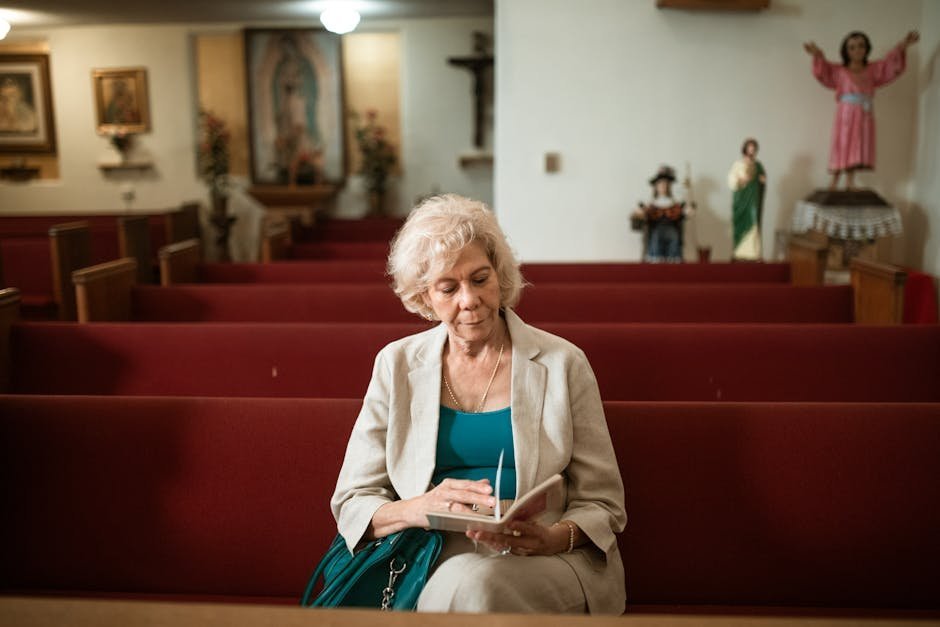
What religious trauma syndrome actually is
The term religious trauma syndrome was coined by Dr. Marlene Winell, a psychologist and herself a survivor of fundamentalist Christianity, in a 2011 article in the British Association for Behavioural and Cognitive Psychotherapies journal. It is not in the DSM. It is a clinical construct that describes a recognisable cluster of symptoms in people leaving high-control religious environments. The symptoms map closely onto complex PTSD: intrusive imagery (often of hell or divine judgement), hypervigilance, identity confusion, social isolation, sexual dysfunction, and pervasive shame. Religious trauma therapy is the specialisation that addresses this cluster directly rather than forcing it through generic CBT protocols that miss the structural piece.
What distinguishes religious trauma from generic adversity is that the harm came from a system the person trusted at the deepest level. The same community that taught love also taught fear of damnation. The same parents who held the child also reinforced ideologies that punished dissent. Untangling those threads is psychological work that requires both therapist competence and time.
What high-control religion actually looks like
Not all religion is harmful. The marker for clinicians is whether the system is high-control. Steven Hassan’s BITE model identifies four domains of control: behaviour, information, thought, and emotion. High-control religious groups, regardless of theology, restrict outside information sources, monitor or guide major life decisions, dictate appearance and dating, label doubts as spiritual failure, and use shunning or exclusion to enforce compliance. The pattern is more important than the label. NXIVM was not nominally religious, yet operated on identical control mechanisms. Conservative Jehovah’s Witness congregations, the most rigid LDS branches, fundamentalist Evangelical churches, parts of Orthodox Judaism, and several Islamic sects can all qualify.
The deconstruction phenomenon, particularly in American Evangelicalism since around 2015, has produced a generation of adults reckoning publicly with what they were taught. Authors like Joshua Harris (who renounced his own bestselling purity-culture book), Linda Kay Klein, and Jamie Lee Finch have given language to people who thought they were alone. The TikTok and YouTube communities under #exvangelical and #deconstruction tags have created visibility, though they are not therapy.
Symptoms that linger long after leaving
Many leavers expect that walking away will bring immediate relief. Some get that. Most do not. The fear of damnation, internalised across decades, does not evaporate when the cognitive belief drops. Clients describe waking at 3am convinced they have made the wrong choice and are now condemned. Identity confusion is profound: who am I if not the role I played in this community? Social loss is real. Friendships that depended on shared belief vanish. Marriages strain or end. Sexuality, especially for those raised in purity culture, is often a long project of unwinding shame.
Specific clusters that show up in therapy include: scrupulosity-flavoured OCD that survives the deconversion, sexual dysfunction tied to early conditioning, parenting anxiety (am I now ruining my kids?), grief over the version of self that no longer exists, and what survivors call the spiritual phantom limb, an ache for transcendent community that the new secular life has not replaced. Adults who are also processing childhood family-of-origin trauma often find significant overlap; our piece on adult childhood trauma covers the underlying frame.

Finding a therapist who actually gets it
The Reclamation Collective maintains the most comprehensive US directory of clinicians trained in religious trauma. Membership requires demonstrated training and ongoing consultation. The Journey Free network, founded by Marlene Winell, also maintains a referral list and runs the Release and Reclaim recovery group program. The Secular Therapy Project (founded by Darrel Ray) lists clinicians who explicitly do not bring religious frameworks to the work, useful for clients who want a clean secular space. For Black clients leaving Black church traditions, the Therapy for Black Girls and Therapy for Black Men directories often include providers attuned to the specific cultural layers.
There is also a category of religiously-respectful therapists who are themselves still believers but trained to support clients whose spiritual paths are diverging. This option suits some clients, particularly those moving from one faith tradition to another rather than to secular life. It is not a fit for clients who need to dismantle without being subtly steered. Be candid in initial calls about what you need. A useful question: do you treat religious trauma as a clinical category, or as a faith struggle? The first answer is what you want for active deconstruction.
The rebuilding identity phase
Phase one of religious trauma recovery is usually crisis stabilisation. Phase two is processing the trauma material, which often includes grief, anger, and confronting specific harmful experiences. Phase three is the long work of rebuilding identity from the ground up. This is where many people stall, because the absence of a ready-made meaning system creates a kind of vertigo that does not resolve through reading more books. Clients in this phase often experiment: secular humanism, paganism, Unitarian Universalism, Reform Judaism, Buddhism, or no spiritual framework at all. The task is not to land somewhere fast. It is to learn to live with provisional answers.
Practical identity work includes rebuilding values from first principles, learning to make decisions without consulting an authority, developing a relationship with mortality that does not require the old framework, and learning to feel pleasure (sexual, sensual, leisure) without a guilt overlay. Therapists trained in narrative therapy and IFS often do well in this phase because both modalities support multi-stranded identity exploration.
Support communities that help
Therapy is necessary but not sufficient for most people. Recovering community matters because the loss of community is itself part of the wound. Established options include:
- Recovering from Religion, a US nonprofit running peer support groups across the country and a 24/7 helpline
- The ExMormon community on Reddit (r/exmormon), one of the most active and historically organised online recovery spaces
- The ExJW community on Reddit and the JWfacts website for Jehovah’s Witness leavers
- The Clergy Project, specifically for ordained ministers who have lost faith
- Reclamation Collective also runs paid online groups facilitated by trained clinicians
- Local secular humanist or Unitarian Universalist congregations for in-person community without dogma
SAMHSA maintains a general behavioural health services locator at samhsa.gov that can help connect with broader mental health resources during a deconstruction process.
Boundaries with family who still believe
Few areas cause as much pain as ongoing relationships with believing family members. Parents who interpret deconversion as eternal stakes will often campaign, weep, send books, and recruit other relatives. Siblings may or may not stay neutral. Adult children of high-control families often find that the relationship was always conditional on their compliance and that their leaving exposes the conditionality. Boundaries here are practical: time-limited visits, declared no-go topics, scripted responses to recruitment attempts, and a clear policy on what your own kids will be exposed to.
Some leavers find that parents soften over years, especially as grandchildren become a unifying focus. Others reach a stable estrangement that is sad but functional. The middle path of low-contact, high-clarity often works better than full estrangement attempts that get reversed and full openness that erodes the leaver’s nervous system. For those who came from Christian backgrounds and are weighing whether faith-integrated counselling could help, our piece on Christian counseling versus secular therapy covers what each model offers and where they diverge.
Kids in mixed-belief families
One of the hardest situations is when one parent deconstructs and the other does not. Children watch the disagreement and often feel they have to take a side. The clinical guidance is consistent across the field. Avoid bad-mouthing the other parent’s beliefs in front of children. Be honest at age-appropriate levels about your own change. Allow children to hold both parents’ frameworks until they are old enough to examine them. Protect children from coercion in either direction. Family therapists with religious-trauma awareness can help mixed-belief couples find a workable structure, particularly during transitions like baptisms, communions, or coming-of-age rituals.

Sexuality and purity culture residue
Purity culture, dominant in American Evangelicalism through the 1990s and 2000s, taught that bodies were dangerous, that female desire in particular was a threat, and that any sexual experience before marriage damaged the person. Adults who internalised these messages report sexual dysfunction at higher rates than the general population, including pain disorders, anorgasmia, and chronic anxiety around intimacy. Tina Schermer Sellers’s research on this population at Seattle School of Theology and Psychology helped legitimise the clinical work. AASECT-certified sex therapists with religious trauma training are the specialists who do this work directly.
The recovery is rarely fast. It often involves a partner, sometimes years of work to reconnect body and pleasure, and a gradual rewriting of internal scripts. The National Institute of Mental Health publishes research on trauma’s effects on adult functioning at nimh.nih.gov for those tracing the broader physiology. For people whose deconstruction is intersecting with anxiety treatment specifically, our overview on anxiety therapy options covers the practical clinical paths.
Frequently asked questions
Is religious trauma syndrome a real diagnosis?
It is not in the DSM. It is a clinical construct used by trained therapists. Insurance claims typically use PTSD, complex PTSD specifiers, anxiety disorder, or adjustment disorder codes. The lack of formal diagnostic status does not mean the syndrome is not real or treatable.
Can a religious therapist help with deconstruction?
Some can, especially those trained specifically in religious trauma and who can hold space for clients moving away from any faith. Many cannot, because their professional and personal frameworks are intertwined with the system the client is leaving. Vet carefully on the first call.
How long does deconstruction take?
The cognitive shift can happen in months. Emotional and identity integration usually takes three to seven years for those raised inside high-control systems from childhood. Adults who joined as adults often process faster.
Will I lose all my friends?
You will likely lose some, particularly those whose theology requires shunning. Many friendships transform but survive. Building new community is part of the work, not a sign of failure.
Do I need to tell my family right away?
No. Disclosure is your timeline. Many people work in therapy for a year before any family conversation. Privacy during the early phase often protects the work.
The bottom line
Religious deconstruction is a recognised form of identity reorganisation that can produce significant psychological symptoms. With a therapist trained in religious trauma, peer community, and patience for a multi-year process, most people rebuild full lives. The losses are real. The gains are also real. You are not crazy, you are not broken, and you are not alone in what you are walking through.
If you are in immediate emotional crisis or thinking about suicide, call or text 988 to reach the Suicide and Crisis Lifeline. Trained counsellors are available 24/7 and the call is free and confidential.
This article is for educational purposes only and does not constitute medical, psychological, or spiritual advice. Always consult a licensed mental health professional for the diagnosis and treatment of trauma-related conditions.