Marisol was making spaghetti when the trooper knocked on the door of her Albuquerque duplex. Her husband Daniel, a long-haul driver, had been killed two hours earlier when a wrong-way driver crossed the median on I-40. By 9 p.m., Marisol was on her kitchen floor, unable to move her legs, certain she was having a heart attack. Her sister called 911. In the ER, the cardiac workup was clean. The triage nurse listened to Marisol describe the trooper, the spaghetti, the smell of garlic still in the air, and gently said, “I think your body is in shock from grief. We can help with that here.” For the next six hours, a social worker stayed with her, a psychiatrist prescribed something for sleep, and the chaplain helped her call Daniel’s parents in Texas. Marisol later said the ER visit didn’t fix anything, because nothing about Daniel’s death could be fixed, but it kept her alive on the worst night of her life. That is what an acute grief reaction looks like when it crosses the line from terrible into medical, and it is one of the most underrecognized reasons people walk into American emergency departments.
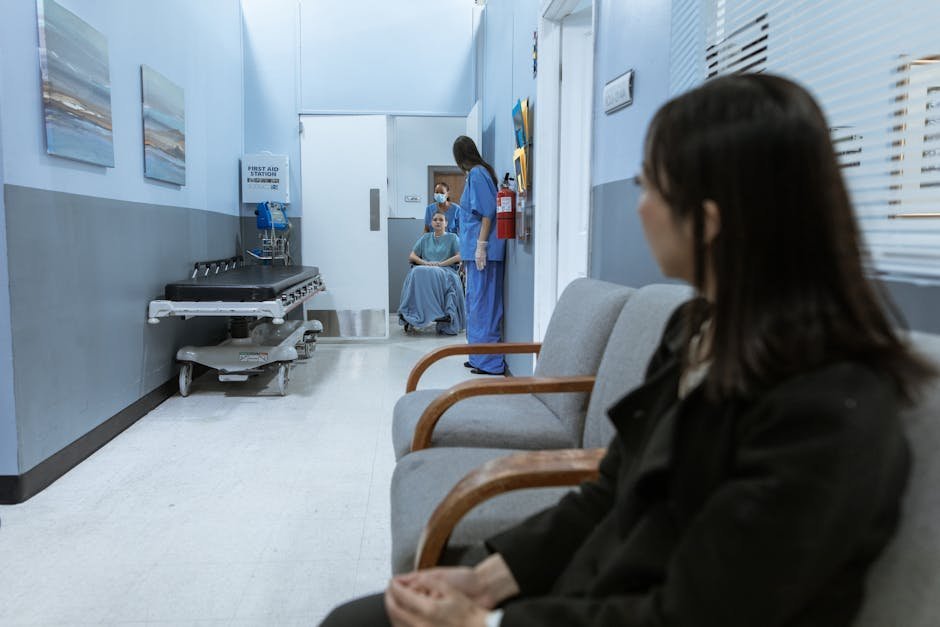
What an acute grief reaction actually is
An acute grief reaction is the intense biological and psychological response that follows the death of someone close, especially when that death is sudden, violent, or otherwise unexpected. In the first hours and days, it can include chest tightness, breathlessness, nausea, intrusive images, dissociation, sleeplessness, and a powerful urge to undo what happened. Cardiologists describe a stress-induced cardiomyopathy known as takotsubo, sometimes called broken-heart syndrome, that can mimic a heart attack in the early aftermath of bereavement. Acute grief is not a mental illness. It is the appropriate human response to losing a person who mattered. The clinical question is not whether grief should hurt this much, but whether the person grieving is safe, is breathing well, and has somewhere to go when the ER discharges them.
Acute grief versus major depressive disorder
The DSM-5-TR removed the old “bereavement exclusion” that once kept clinicians from diagnosing major depressive disorder within two months of a death. The change reflects evidence that some people do develop full MDD episodes after a loss, and that withholding treatment harmed them. Distinguishing the two is still mostly a matter of pattern. Acute grief tends to come in waves triggered by reminders, with periods of relief, capacity for connection, and yearning that focuses on the deceased. MDD looks more like a steady fog: pervasive worthlessness, anhedonia that swallows everything, suicidal thinking that is not specifically about reuniting with the lost person, and psychomotor slowing that does not lift even briefly. A bereaved person who can still laugh at a memory and then sob ten minutes later is usually grieving. A bereaved person who cannot feel anything at all for weeks may be depressed.
Many of the same emergency-department conversations apply to other crisis presentations. Our guide to walk-in psychiatric assessment after a traumatic event covers what triage looks like when a patient cannot say whether they are depressed or simply devastated.
Prolonged Grief Disorder in the DSM-5-TR
In 2022 the American Psychiatric Association added Prolonged Grief Disorder to the DSM-5-TR. The diagnosis requires at least twelve months since the death for adults, six months for children, and a persistent grief response that includes intense yearning or preoccupation with the deceased plus three or more of: identity disruption, marked disbelief, avoidance of reminders, intense emotional pain, difficulty reintegrating, emotional numbness, sense that life is meaningless, and intense loneliness. The twelve-month rule matters in the ER. A grief reaction in week one, however severe, is not Prolonged Grief Disorder. It cannot be. The diagnosis is reserved for grief that has not changed shape across a year, and treating it earlier with that label risks pathologizing a process that is still unfolding.
Sudden death contexts that bring people to the ER
Certain death contexts disproportionately produce acute grief reactions severe enough for emergency care. Motor vehicle accidents leave families with no warning, often combined with a long wait for forensic identification. Overdose deaths add stigma, guilt about earlier interventions that did not work, and frequent contact with police and coroners. Suicide loss carries the highest documented risk of complicated grief in survivors, plus elevated suicide risk among the bereaved themselves. Homicide loss involves an open criminal case, news coverage, and the particular cruelty of waiting years for trials. Each of these contexts means a grieving person is sometimes alone with extreme physiological symptoms hours after the death notification, which is exactly when ER staff are best positioned to stabilize them.

When the ER is the right choice
An emergency department is the right place to be after a sudden loss when any of the following are true. The grieving person has thoughts of suicide, especially with a plan, intent, or access to means. They are experiencing chest pain, shortness of breath, fainting, or other physical symptoms that need a workup before they can be attributed to grief. They are dissociating in ways that compromise safety, such as not remembering how they got somewhere, or believing the death has not really happened. They have not eaten or slept for days and are showing signs of physical collapse. They are alone and have no one to stay with them through the night. They are intoxicated and in active suicidal crisis. The ER cannot give them their person back, but it can prevent a second tragedy.
What bereavement support in the ER looks like
Most American hospitals now have at least basic bereavement protocols for ER patients, although depth varies enormously. A typical visit might include the following sequence.
- Medical screening to rule out cardiac, neurological, and metabolic emergencies that mimic acute grief.
- A social worker or chaplain consult, often within the first hour, to provide presence and practical help with phone calls.
- A mental-health evaluation focused on suicide risk, dissociation, and psychotic features rather than on diagnosing grief itself.
- Short-term medication, typically a non-benzodiazepine sleep aid for one or two nights, sometimes a small benzodiazepine prescription for severe panic.
- A printed list of bereavement resources, including local grief support groups and 24-hour hotlines.
- A safety plan that names a specific person who will be with the patient for the next 24 to 72 hours.
- A warm handoff to outpatient follow-up, often a grief counselor or primary-care visit within a week.
The National Institute of Mental Health publishes patient-friendly information on grief, depression, and when to seek emergency help, available at nimh.nih.gov.
Transition planning out of the ER
The hours after ER discharge are unusually high-risk for sudden-loss survivors. Good transition planning treats discharge as a clinical event, not a paperwork event. That means a named contact person for the next three nights, a follow-up appointment scheduled before the patient leaves, a written safety plan with the 988 number on it, removal of firearms from the home if any are present, and a check-in call from the social worker within 48 hours. Discharge instructions should also include realistic expectations about the days ahead. Survivors are often blindsided by a brief calm in days two and three, followed by a crash around the funeral or memorial. Knowing this is normal can prevent a second ER visit driven by panic that something has gotten worse.
The role of grief counselors and support groups
Grief counselors are licensed therapists with specialized training in bereavement. They are not the same as bereavement coordinators at hospices, who provide non-clinical support, although both can be valuable. For acute grief after sudden loss, the most evidence-supported individual treatment is Complicated Grief Treatment developed by Dr. Katherine Shear, which adapts elements of cognitive-behavioral therapy and prolonged-exposure therapy for grief. Group support also matters. The Compassionate Friends serves families who have lost a child at any age. Survivors of Suicide Loss groups, often facilitated through the American Foundation for Suicide Prevention, are widely available across the country. GriefShare runs faith-based groups in thousands of churches. Parents of Murdered Children supports homicide-loss families through the courts and beyond. Our explainer on finding a grief therapist who specializes in sudden death walks through how to vet a clinician, and our piece on peer-led bereavement groups covers what to expect from your first meeting. The Suicide Prevention Resource Center, at sprc.org, maintains a directory of survivor-of-suicide-loss programs.

The follow-up window for prolonged grief diagnosis
If acute grief does not begin to soften by the six-month mark, that is a clinically important signal, although still short of the twelve-month threshold for the formal Prolonged Grief Disorder diagnosis in adults. Many grief specialists recommend a check-in around month three and another around month nine for sudden-loss survivors, with an explicit screen for PGD criteria after a year. Markers worth tracking include intensity of yearning, ability to engage with daily roles, capacity to think about the deceased without overwhelming distress, and presence of suicidal ideation. A primary-care physician or therapist who saw the patient in the ER or shortly after is well positioned to note these markers across visits.
FAQ
Is going to the ER for grief a waste of resources?
No. ER staff are trained to differentiate medical emergencies from extreme but non-dangerous distress, and they are accustomed to seeing acute grief reactions. If you have suicidal thoughts, severe physical symptoms, or no safe place to be, the ER is appropriate.
Will I be put on a psychiatric hold for grieving?
Grief alone does not meet involuntary-hold criteria in any U.S. state. Holds require imminent danger to self or others, or grave disability. Most grieving ER patients are evaluated, supported, and discharged the same day with follow-up.
Can I get medication to make grief stop hurting?
No medication erases grief, and trying to medicate it away usually backfires. Short-term sleep aids and limited anxiolytics can take the edge off the first few nights. SSRIs may help if depression develops, but they are not first-line for grief itself.
How long does acute grief usually last?
The most intense physical and dissociative symptoms typically begin to soften within four to eight weeks, although waves continue for months and years. By twelve months, most bereaved adults can function in daily roles, even though the loss never fully fades.
What if my family thinks I am being dramatic?
Acute grief responses, especially after sudden death, look frightening from the outside even when they are within normal range. A clinician can help validate what is happening and, if needed, talk with family members about what supportive presence looks like during the first weeks.
The bottom line
An acute grief reaction after sudden loss can be one of the most physically and psychologically intense experiences a human being ever has, and the emergency department is sometimes exactly the right place for it. Going to the ER is not an admission that grief is pathological. It is an acknowledgement that on a particular night, in a particular body, the person grieving needs more help than the people around them can provide. Good ER care for acute grief looks like a medical workup, a chaplain or social worker who stays, a brief medication if needed, a written safety plan, and a follow-up appointment scheduled before discharge. The follow-up window matters too, because acute grief that does not begin to soften by the six-month mark deserves another professional look, and a year out is when the Prolonged Grief Disorder diagnosis becomes clinically meaningful. None of this brings the person back. It only keeps the survivors alive long enough to find out what life looks like on the other side of the loss.
If you are in crisis
If you or someone you love is having thoughts of suicide, call or text 988 to reach the Suicide and Crisis Lifeline, available 24 hours a day across the United States. If there is immediate danger, call 911 or go to the nearest emergency department.
This article is for general information only and is not a substitute for medical, psychological, or legal advice. Diagnostic criteria and clinical decisions should be discussed with a licensed clinician who knows your full history.