Hannah was fifteen, a varsity cross-country runner in Boulder, Colorado, and the kind of straight-A student parents brag about at dinner parties. Her mother Karen first noticed something off when Hannah started cooking elaborate meals for the family but eating only small portions of plain vegetables herself. By winter break, Hannah had lost twenty-two pounds. Her resting heart rate at the pediatrician’s office was 38 beats per minute. The pediatrician, who had treated Hannah since infancy, said three words that made Karen’s stomach drop: “We need cardiology.” A weeklong medical admission at Children’s Hospital Colorado stabilised Hannah’s heart rate and electrolytes, but the harder problem remained — how would Hannah actually eat enough food, every day, for the months it would take her body and brain to recover. The hospital social worker handed Karen a printed list of treatment options and circled three. “Family-Based Treatment is what the evidence supports for someone Hannah’s age,” she said. “Find a clinician trained in FBT. Your role as parent is going to change a lot, fast.” That was the beginning.

Adolescent eating disorder treatment looks fundamentally different from adult eating disorder treatment. The clinical evidence base, the role of parents, the medical fragility, the developmental considerations, the school continuity questions, and the insurance authorisation pathway all diverge. A program designed for adults with anorexia or bulimia is rarely the right setting for a 14-year-old, and pediatric specialty centers exist precisely because the science of recovery in a developing brain and body demands a different model. Parents searching for help for a teenager benefit enormously from understanding the landscape before they pick a program.
Family-Based Treatment (Maudsley) as the gold standard
The strongest evidence base for adolescent eating disorder treatment, particularly anorexia nervosa, supports Family-Based Treatment, often called the Maudsley approach after the London hospital where it was developed. FBT is an outpatient intervention typically conducted over 15 to 20 sessions across about a year. It rests on three core principles. First, parents are not to blame for the eating disorder; it is a serious illness, not a parenting failure. Second, parents are the most powerful resource for refeeding their starving adolescent and are positioned at the center of treatment. Third, the adolescent’s normal development (autonomy, individuation, social life, school) is temporarily set aside until weight is restored, then gradually returned.
The treatment proceeds in three phases. Phase 1 is parental control of refeeding: parents plate every meal, sit with their child for every meal and snack, supervise post-meal periods to prevent purging, and tolerate the often intense distress this produces. Phase 2 hands eating control gradually back to the adolescent as weight is restored. Phase 3 addresses the developmental tasks of adolescence and any remaining individual or family work. Randomized controlled trials show FBT produces remission rates of roughly 40 to 50 percent at end of treatment and 35 to 45 percent at follow-up, substantially better than individual adolescent therapy for the same population.
How adolescent ED programs differ from adult programs
Adult ED treatment models often emphasise individual autonomy, motivation enhancement, and the patient’s own readiness for change. Adolescent treatment flips this. Parents are co-clinicians. The teen is rarely “ready” for recovery in the way adults can sometimes be; the urgency of medical risk in a still-developing body trumps the wait for motivation. Programs designed for adults sometimes inadvertently undermine parents by creating excessive privacy or by treating the teen as the sole decision-maker about meals. Specialised pediatric programs are explicit about parent involvement, family meals on the unit, parent meal coaching sessions, and gradual transfer of control as appropriate to age and recovery.
School continuity is a second major difference. Adolescent residential and partial hospitalization programs typically employ teachers, coordinate with the home school district to maintain coursework, and structure the day so academic learning continues. Adult programs rarely include schooling because adult patients are not in school. For families, this matters enormously: a teen falling six months behind academically during treatment can compound the recovery challenge.
Specialised pediatric eating disorder programs in the US
Several US programs specialise specifically in adolescent and pediatric eating disorders. Children’s Hospital Colorado in Aurora operates a comprehensive pediatric eating disorder program with inpatient medical stabilization, partial hospitalization, and intensive outpatient levels. Boston Children’s Hospital, affiliated with Harvard Medical School, runs a long-established adolescent ED program. The Children’s Hospital of Philadelphia (CHOP) integrates eating disorders into adolescent medicine. Veritas Collaborative operates several pediatric-specific facilities across the southeast. Children’s National Hospital in Washington DC, Stanford Children’s Hospital in Palo Alto, the University of California San Francisco Benioff Children’s Hospital, Lurie Children’s in Chicago, and Cincinnati Children’s all maintain pediatric ED specialty services.
The Academy for Eating Disorders maintains practitioner directories, and the National Eating Disorders Association operates a screening tool and treatment finder useful for families starting their search. For families considering language-and-culture matched outpatient providers, our piece on Mandarin and Chinese-speaking therapists may be useful where applicable.
The medical stabilization piece
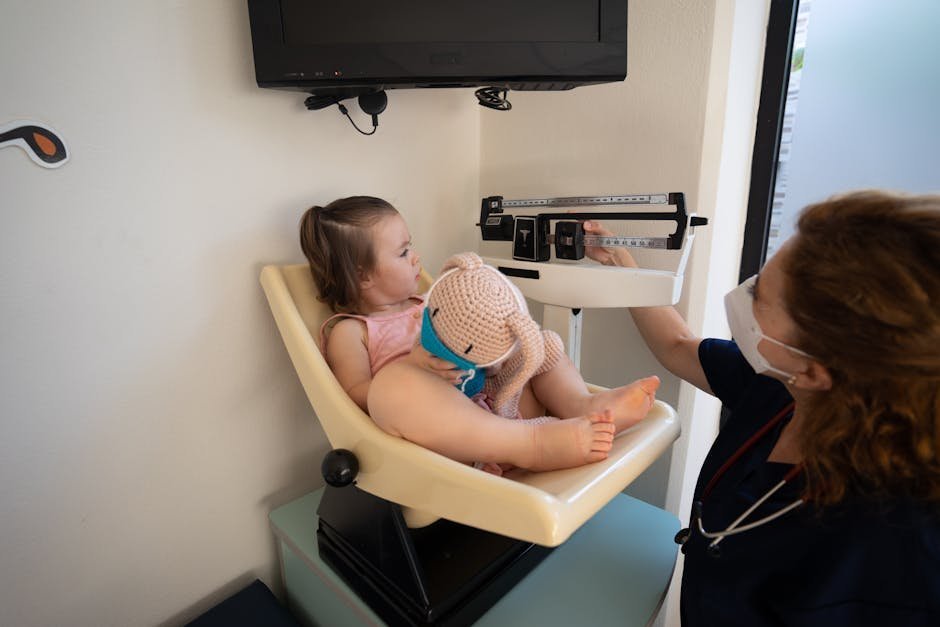
Before any psychotherapy starts, an adolescent with anorexia who has lost significant weight must be medically stable. The Society for Adolescent Health and Medicine publishes criteria for inpatient medical admission: heart rate below 50 daytime or 45 at night, blood pressure below 90/45 mmHg, orthostatic increase in pulse over 20 bpm, temperature below 35.6°C, dehydration, electrolyte disturbances, ECG abnormalities, suicidality, food refusal, intractable purging, or weight under 75 percent of expected body weight. Medical admission is short, often a week to ten days, focused on initial nutritional rehabilitation while monitoring for refeeding syndrome.
Refeeding syndrome — the dangerous shift in phosphorus, potassium, and magnesium that can occur when a severely malnourished body resumes normal eating — is a particular pediatric concern because adolescents may present with extreme degrees of malnutrition. Our deeper coverage of refeeding syndrome walks through the protocol pediatric services use to monitor and prevent it, and our piece on anorexia as a medical emergency covers the broader inpatient picture.
Insurance authorisation and the medical-necessity battle
Eating disorders are among the most insurance-disputed mental health diagnoses, and adolescent ED care is no exception. The Mental Health Parity and Addiction Equity Act requires insurance plans that cover mental health to do so on terms no less favorable than medical care, but parity disputes are common. Insurers may approve only the lowest level of care (intensive outpatient) when a child clearly needs residential, may set arbitrary weight thresholds for continued residential authorisation, or may deny continued stay once the immediate medical crisis passes even though the eating behavior remains entrenched.
Effective parent advocacy involves: keeping a written log of every conversation with insurance with dates and names; obtaining the specific medical necessity criteria the insurer applies (often called level-of-care guidelines, sometimes published, sometimes not); ensuring the treating clinician documents in the language of those criteria; filing internal appeals promptly when denied; and pursuing external review through the state insurance commissioner if internal appeals fail. Some specialised eating disorder programs employ utilization review staff specifically to fight these battles on behalf of families.
School-based screening and early identification
Some school districts have implemented systematic eating disorder screening in middle and high school using validated tools like the SCOFF questionnaire or the Eating Attitudes Test. Earlier identification matters enormously: outcomes for adolescent ED treated in the first six months after onset are dramatically better than treatment that begins after years of entrenched illness. School counselors, school nurses, and athletic trainers (especially in sports with weight categories or aesthetic emphasis) are often first to notice warning signs. Pediatricians who routinely plot growth charts can detect inappropriate weight loss or arrest of expected weight gain.
The National Institutes of Health publishes consumer information on warning signs and treatment evidence. Parents who notice a teen avoiding meals with the family, increasing exercise compulsively, hiding food, weighing themselves repeatedly, or making dramatic changes to clothing should ask the pediatrician for a screening conversation, not wait.
Finding pediatric eating disorder specialists
Outside specialty programs, finding individual outpatient clinicians trained in adolescent ED treatment can be challenging. Specific certifications and trainings worth asking about include: certification in Family-Based Treatment from the Training Institute for Child and Adolescent Eating Disorders or similar credentialing bodies; experience in FBT specifically (not just “eating disorder experience”); status as a Certified Eating Disorder Specialist (CEDS); registration with the International Association of Eating Disorders Professionals. A complete adolescent ED outpatient team typically includes: adolescent medicine pediatrician or pediatric psychiatrist, FBT-trained psychotherapist, registered dietitian with pediatric ED experience, and (often) a psychiatrist for medication if comorbid depression, anxiety, or OCD.

The Maudsley approach in detail
The session structure of FBT is highly specified. The first session typically includes a “family meal” where parents bring food and the therapist coaches them through getting their adolescent to eat one extra bite than they would have alone. This early experience is intended to mobilise parents’ competence and demonstrate that the eating disorder, not the child, is what they are pushing back against. Subsequent sessions, usually weekly, focus on troubleshooting specific meal challenges, addressing sibling dynamics, supporting the parents’ alliance, and weighing the child to track progress.
Phase transitions are tied to clinical milestones, not arbitrary timelines. Phase 2 begins typically when the adolescent has reached around 87 percent of expected weight and is eating with less resistance. Phase 3 begins when weight is fully restored and the eating disorder cognitions have softened enough for individual developmental work to be productive. Therapists check in with the family about residual concerns: returning to sports, social eating, college planning, lingering body image preoccupations, and the family’s redistribution of roles.
Frequently asked questions
What if my teen refuses to eat even with FBT?
Some adolescents cannot be refed at home even with skilled parental coaching, and a higher level of care (residential, partial hospitalization, or inpatient) becomes necessary. FBT is not the only option, and stepping up to a residential setting is not failure; it is appropriate matching of care intensity to clinical need. After residential weight restoration, FBT can resume in outpatient form.
How long does adolescent ED treatment usually take?
Outpatient FBT runs about 12 months. Residential admissions vary from 30 to 90 days. Total treatment from first symptom to durable remission often spans 18 to 36 months including step-down levels, with ongoing follow-up beyond that. Anorexia in particular has a long arc, and parents benefit from setting realistic expectations early.
Should we look for a single-sex or co-ed program?
This depends on your child. Some pediatric ED programs are co-ed, others single-sex. For teens with trauma histories, gender identity considerations, or specific privacy preferences, single-sex programming can feel safer. Ask programs how they group residents, what privacy structures exist, and how they handle gender-diverse adolescents.
Can residential ED programs go out of state?
Yes, and this is common because pediatric specialty programs are not in every state. Insurance authorisation for out-of-state residential is sometimes harder. The argument for medical necessity at a specific program (rather than any in-network adult program) often requires the treating physician to document specific pediatric clinical needs.
What is the role of medication in adolescent ED?
Medication is generally adjunctive, not primary. SSRIs may help with comorbid anxiety, depression, or OCD once weight is restored. There is no FDA-approved medication for anorexia nervosa specifically. Olanzapine is sometimes used off-label in pediatric anorexia and has modest evidence. Medication decisions should involve a child and adolescent psychiatrist with ED experience.
The bottom line
The first hours after a parent realises their teen has an eating disorder are some of the loneliest hours a family will face. The clinical reality is that adolescent eating disorder care has a clear, evidence-based path: medical stabilization if needed, Family-Based Treatment if outpatient is feasible, pediatric specialty programs if a higher level of care is required, parent advocacy through insurance, school continuity, and patient long-term follow-up. The path takes a year or more. The remission rates with the right model are far better than they were a generation ago. Hannah, the runner from Boulder, finished her senior year at her high school, ran a 5K with her dad in the spring, and started college the following fall — heart rate normal, body restored, eating with her family without supervision. The family went through hard months in between. They came out the other side.
If you are in crisis
If you or your child is in a mental health crisis, call or text 988 to reach the Suicide and Crisis Lifeline. For acute medical concerns related to an eating disorder (low heart rate, fainting, severe weakness), call 911 or go to the nearest pediatric emergency department.
This article is for educational purposes only and is not medical advice. Always consult a qualified clinician for diagnosis and treatment decisions specific to your child.