Marisol, a 38-year-old graphic designer in Albuquerque, started using lavender oil after her sister sent her a starter kit from a multi-level marketing company. Within weeks she was diffusing seven different blends, swallowing oregano capsules for “immune support,” and applying undiluted clove oil to a toothache that turned out to be an abscess. When she finally landed in her dentist’s chair with a chemical burn on her gum, she asked an honest question: was any of this actually doing anything for her anxiety, or was she just buying expensive bottles of plant water? Her therapist referred her to a clinically trained aromatherapist in Santa Fe who held a NAHA credential. The contrast was stark. The new practitioner asked about medications, pregnancy plans, asthma history, and the cat at home. She built a single inhaler for panic moments and told Marisol to stop ingesting oils entirely. Six months later Marisol still uses lavender, but she also still takes her SSRI, sees her therapist, and no longer believes essential oils cure cancer. This is the realistic middle ground between snake oil and total dismissal.
If you have ever wondered whether aromatherapy anxiety protocols hold up under scrutiny or whether the entire practice is wellness theater, the honest answer sits in the middle. Some applications have modest evidence, some are genuinely dangerous, and a great deal of what gets sold under the aromatherapy banner has more to do with sales commissions than clinical care. This guide walks through what the research actually says, where clinical aromatherapy diverges sharply from network-marketing culture, and how to fold scent-based tools into a broader mental health plan without burning yourself or your pets.
Clinical aromatherapy vs. MLM essential oil culture
Clinical aromatherapy is a small, regulated profession in which practitioners study plant chemistry, contraindications, dilution math, and mode of administration for at least 200 to 400 hours before sitting for a credentialing exam. In the United States, the National Association for Holistic Aromatherapy, known as NAHA, and the Alliance of International Aromatherapists set the recognized standards. A NAHA-credentialed aromatherapist will ask about your medications, your reproductive plans, your skin reactivity, and your living situation before recommending a single drop.
Multi-level marketing essential oil culture looks nothing like that. Recruiters with no clinical training sell expensive kits, encourage internal use of oils that should never be swallowed, and circulate testimonials about curing autism, cancer, and concussions. The Federal Trade Commission has sent multiple warning letters to the largest brands for unproven medical claims. The oils themselves are often fine. The marketing structure pushes them past safe applications into territory that hurts people.
What the research actually shows about aromatherapy anxiety protocols
The strongest evidence sits with lavender, specifically Lavandula angustifolia. Small randomized controlled trials and a 2012 Cochrane review found modest reductions in self-reported anxiety in dental waiting rooms, preoperative settings, and intensive care units. The effect sizes are real but small, the studies are short, and many have methodological weaknesses including unblinded conditions and control groups that lack a credible placebo. A standardized oral lavender preparation called Silexan has stronger evidence in generalized anxiety disorder and is sold as a prescription medication in Germany, but it is a regulated extract, not the bottle on the wellness store shelf.
Peppermint shows reasonable evidence for nausea, including chemotherapy-induced and postoperative nausea. Bergamot has small studies suggesting reduced agitation in dementia care when diffused in residential settings. Rosemary has weak evidence for short-term cognitive alertness. Tea tree has antimicrobial properties relevant to skin care, not mental health. Frankincense, myrrh, and the dozens of “grounding blends” sold for emotional regulation have essentially no rigorous evidence behind specific clinical claims.
Inhalation, topical, and the line you should not cross
Inhalation through a personal inhaler stick or a properly cleaned diffuser is the safest route for emotional applications. The dose is small, the exposure is brief, and adverse reactions are easier to spot. Topical use requires dilution in a carrier oil such as jojoba, sweet almond, or fractionated coconut, typically at one to three percent for adults and far lower for children, elderly, or sensitive skin. Undiluted “neat” application is a common cause of chemical burns and sensitization, the latter being a permanent allergic reaction that ends your relationship with that oil for life.
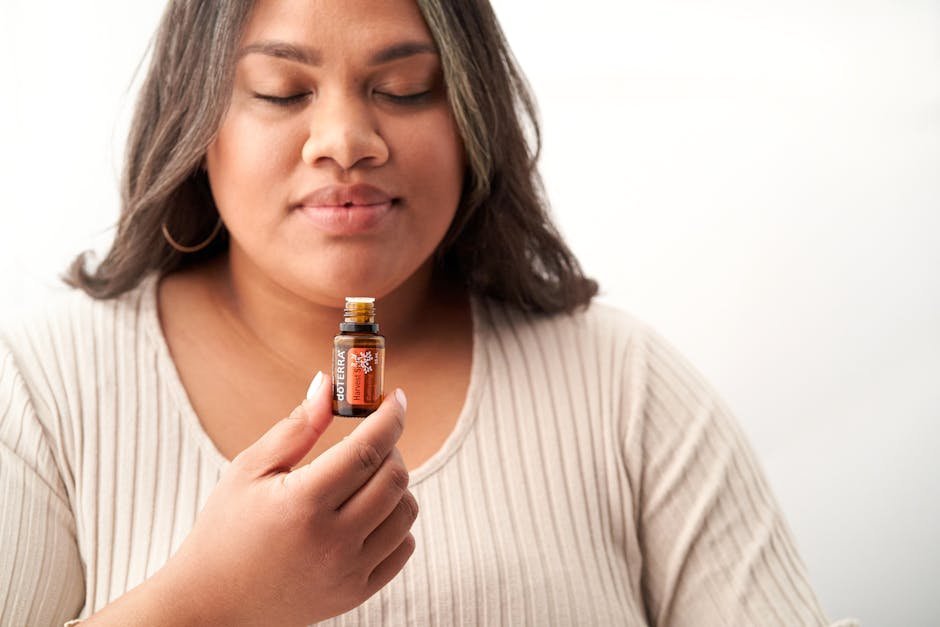
Internal use, meaning swallowing essential oils or putting them in water, is the most contested area in the field. NAHA guidelines and most international aromatherapy associations explicitly do not recommend internal use outside of supervised clinical settings. The MLM playbook of dropping oils into capsules at home has caused liver injury, mucosal burns, and pediatric poisonings reported to U.S. poison control centers every year. If you take nothing else from this article, take that.
Contraindications most people never hear about
Pregnancy is a major caution zone. Several oils, including clary sage, rosemary, and basil, are traditionally avoided during pregnancy because of theoretical effects on uterine activity and hormonal pathways. Asthma can be triggered by strong scent exposure, and eucalyptus and peppermint are common offenders. People with seizure disorders should avoid rosemary, sage, and hyssop. Hormone-sensitive cancer survivors should be careful with oils containing estrogenic compounds.
- Children under 30 months should not be exposed to peppermint, eucalyptus, or rosemary, because of risk of breathing difficulty
- People taking sedating medications should be cautious about additive effects with lavender and bergamot
- Citrus oils, especially bergamot, are photosensitizing and can cause severe burns when sun exposure follows skin application
- Skin sensitization, once it develops, is permanent and may extend to chemically related oils
- Diffusing for hours in a closed room raises indoor air pollution and can aggravate respiratory conditions
Pets are not small humans
Cats lack a liver enzyme called glucuronyl transferase that metabolizes phenols and certain monoterpenes found in tea tree, eucalyptus, peppermint, citrus, and pine oils. Diffusing these in a home with cats has caused liver failure and death. Dogs tolerate more but can still develop tremors, ataxia, and skin reactions from concentrated exposures. Birds are extraordinarily sensitive because of their respiratory anatomy. The American Veterinary Medical Association and ASPCA Animal Poison Control receive calls about essential oil exposures every week. If you live with animals, restrict diffuser use to a closed room they cannot enter, and consider a personal inhaler instead.
Where aromatherapy fits inside actual mental health care
Aromatherapy works best as a sensory anchor inside an evidence-based plan. A drop of lavender on an inhaler stick during a panic moment, paired with paced breathing, gives the nervous system an additional cue to settle. Patients who use scent during therapy sometimes find that the same scent at home helps them recall and rehearse the regulation skills they practiced in session. None of this replaces the therapy. We cover compatible practices in our piece on mindfulness meditation, and the broader lifestyle context in our article on sleep, exercise, and nutrition.
For moderate or severe anxiety, the combination of cognitive behavioral therapy and, when appropriate, medication has decades of evidence behind it. Aromatherapy is an adjunct, not a substitute. If you are weighing pharmacological options, our overview of working with an online psychiatrist for anxiety may help frame the conversation.
Finding a NAHA-credentialed aromatherapist
Use the NAHA practitioner directory and the Alliance of International Aromatherapists directory to verify credentials. A clinically trained aromatherapist will ask for a thorough intake, will not promise cures, will not push you toward a single brand, and will coordinate with your prescriber if asked. Expect to pay for time, not for product, and to leave with a small custom blend rather than a haul of bottles. If your “aromatherapist” is recruiting you into a downline or claiming oils replace insulin, walk away.
When aromatherapy is genuinely hype
Claims that essential oils raise cellular frequency, repair DNA, treat autism, cure herpes, replace antibiotics, or substitute for chemotherapy are not supported by evidence and have prompted regulatory action against the companies making them. Diffuser blends marketed for ADHD focus, depression cure, or trauma resolution are not clinical interventions, no matter how thoughtfully named. A scent that smells nice and helps you slow your breathing is doing something real. A scent that someone claims will dissolve a tumor is doing something dangerous, because it can delay treatment that works.
Building a small, sane home practice
You do not need 40 bottles. A starter kit of three or four oils, a personal inhaler, a carrier oil, and a basic dilution chart will cover most reasonable applications. Lavender for general calm, peppermint for nausea or focus, sweet orange for low-key uplift, and one citrus blend for variety is more than enough. Store oils in dark glass, away from heat, and respect the shelf life printed on the bottle. Keep them locked away from children and pets. Track which scents you actually use, and let the rest go.
Frequently asked questions
Does lavender oil really help anxiety?
Small randomized trials and a Cochrane review suggest a modest, short-term reduction in self-reported anxiety from inhaled lavender, especially in waiting-room and procedural contexts. The standardized oral preparation Silexan has stronger evidence in generalized anxiety disorder. The effect is real but modest and is not a substitute for therapy or medication when those are indicated.
Is it safe to swallow essential oils?
Outside a supervised clinical setting, no. Internal use has caused liver injury, mucosal burns, and pediatric poisonings. NAHA and most international aromatherapy bodies do not recommend home internal use. The MLM practice of capsule-dropping oils is the source of many poison control calls.
Can I diffuse oils around my cat?
Cats are uniquely sensitive to many oils, including tea tree, eucalyptus, peppermint, citrus, and pine. Diffusing these can cause liver injury or worse. Use a personal inhaler instead, or restrict diffusing to a room the cat cannot access. Birds are even more sensitive.
How do I know if an aromatherapist is qualified?
Look for NAHA or Alliance of International Aromatherapists credentials, several hundred hours of training, and a clinical intake that asks about medications and health conditions. Avoid anyone recruiting you into a sales structure or making cure claims.
Can aromatherapy replace my SSRI?
No. There is no evidence that essential oils replace antidepressant or antianxiety medication for moderate or severe conditions. Stopping a prescribed medication without clinician guidance can be dangerous. Aromatherapy can sit alongside medication and therapy as a sensory tool, not as a substitute.
The bottom line
Aromatherapy is neither miracle nor scam. A clinically trained aromatherapist using a few oils, in safe doses, by inhalation or properly diluted topical application, can give you a useful sensory tool for anxious moments, sleep wind-downs, and procedural stress. The MLM ecosystem that swallowed the field over the last 20 years is something different and much more troubling. If you want the benefit without the harm, work with a NAHA-credentialed practitioner, keep your medications, keep your therapist, and keep the cat out of the diffuser room.
If you are in crisis, please call or text the 988 Suicide and Crisis Lifeline, available 24 hours a day across the United States. You can also reach the National Center for Complementary and Integrative Health at nccih.nih.gov for evidence reviews on complementary practices, and the National Institutes of Health at nih.gov for broader research summaries.
This article is for educational purposes only and is not medical advice. Essential oils can cause serious adverse effects, especially in pregnancy, in children, in pets, and in people with asthma, seizures, or hormone-sensitive conditions. Talk with a licensed clinician and a credentialed aromatherapist before starting or changing any practice.