Marisol Tavares had been on Xanax for eleven years when her primary care doctor in Tucson retired in March. The new physician told her the prescription was “inappropriate long-term” and cut her dose in half on a Tuesday afternoon. By Friday, Marisol was in the emergency room at Banner University Medical Center with a tonic-clonic seizure, a body temperature of 103, and blood pressure that nearly killed her. She had not abused her medication. She had taken it exactly as prescribed since 2014. The fast taper, ordered by a well-meaning doctor who had never managed long-term benzodiazepine patients, almost ended her life. A neurologist later told her family that another forty-eight hours of cold-turkey withdrawal could have caused permanent brain injury. Marisol’s story is not rare. Across the United States, an estimated 30 million adults filled a benzodiazepine prescription last year, and the medical system has produced almost no infrastructure for tapering them safely.
Anyone who has been on alprazolam, clonazepam, lorazepam, or diazepam for more than four weeks needs to understand what benzo withdrawal detox actually involves. This is not opioid withdrawal. It can kill you. And the standard 7-day inpatient detox model used for most substances is genuinely dangerous when applied to long-term benzodiazepine users.

Why Benzodiazepine Withdrawal Can Actually Kill You
Benzodiazepines work by amplifying GABA, the brain’s primary inhibitory neurotransmitter. After months or years of use, the brain compensates by downregulating GABA receptors and upregulating excitatory glutamate pathways. When the drug is suddenly removed, you have a brain wired for excitation with no brake pedal left. The result is autonomic storm: tachycardia, hypertensive crisis, hyperthermia, and seizures that can progress to status epilepticus.
Mortality from untreated benzodiazepine withdrawal has been estimated at up to 5 percent in older case series, comparable to severe alcohol withdrawal. The kindling phenomenon makes each subsequent withdrawal worse than the last, which is why someone who has been through one bad taper attempt often experiences a more violent reaction the second time even at the same dose drop.
Why Fast Tapers Fail (Even the “Safe” Ones)
The tapering schedules taught in most medical residencies look something like this: reduce 25 percent per week until off. For a patient who has been on 2 mg of clonazepam for six years, this is a recipe for the kind of disaster that brought Marisol to the ER. Receptor regrowth is slow and nonlinear. The last 25 percent of a dose often produces 75 percent of the symptom burden because each milligram occupies a disproportionate share of remaining receptors.
The standard 4-week taper protocol used in most US detox facilities was largely adopted from alcohol detox conventions and short-term hypnotic withdrawal data. It does not match the neurobiology of long-term benzodiazepine dependence. Patients who fail these tapers are routinely labeled “treatment-resistant” or “drug-seeking” when in reality they are receiving incorrect care. If you need a refresher on how detox levels of care actually map to substance dependence, our guide on substance use levels of care walks through the ASAM continuum.
The Ashton Manual: The Closest Thing to a Standard
Dr. Heather Ashton, a British neuropsychopharmacologist at Newcastle University, ran a benzodiazepine withdrawal clinic for 12 years and published her protocol in 1999, with revisions through 2002. The Ashton Manual remains the most widely cited tapering guide in the world despite never being formally adopted by any US professional society. Its core principles:
- Switch the patient from a short-acting benzo to long-acting diazepam (Valium) before tapering, because steady plasma levels reduce inter-dose withdrawal
- Use equivalence tables: 1 mg alprazolam equals roughly 20 mg diazepam, 0.5 mg clonazepam equals roughly 10 mg diazepam, 1 mg lorazepam equals roughly 10 mg diazepam
- Reduce by 5 to 10 percent of the current dose every 2 to 4 weeks, never on a fixed calendar
- Slow further as the dose drops below 5 mg diazepam equivalent, where most patients struggle
- Total taper duration ranges from 6 months to 2 years for long-term users, not weeks
A typical Ashton-style taper from 4 mg of alprazolam (roughly 80 mg diazepam) might run 14 to 18 months. Patients and families need to budget for that timeline psychologically and financially.
Hyperbolic Micro-Tapering and Liquid Titration
A 2024 paper in The Lancet Psychiatry on antidepressant withdrawal popularized the term hyperbolic tapering, but the principle has been used in benzodiazepine practice for two decades. Because receptor occupancy is a logarithmic curve, equal milligram drops produce escalating effects as the dose approaches zero. A 0.5 mg drop from 4 mg of clonazepam is barely felt. The same 0.5 mg drop from 1 mg can be devastating.
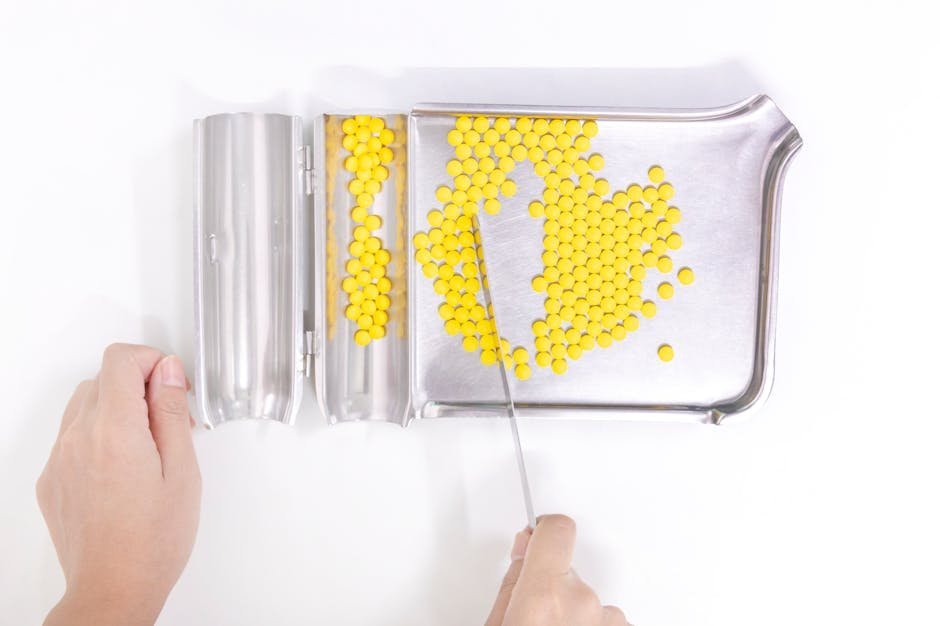
Practical approaches to micro-tapering include compounding pharmacies that produce custom-dose capsules, weighing tablets on milligram-precision jewelers’ scales, dissolving tablets in measured volumes of water (suspension), and using diazepam oral solution available as 5 mg/mL liquid. Compounded capsules from Pavilion Compounding in Atlanta or Skip’s Pharmacy in Florida often run $80 to $150 per month and most insurance will not cover them.
When Inpatient Detox Is Actually Required
Most long-term benzodiazepine tapers should happen as outpatient supervised tapers, not in a 28-day rehab. The exceptions are real, however. Inpatient admission is appropriate when the patient is taking dangerously high doses (above 6 mg alprazolam or 8 mg clonazepam daily), when there has been recent escalation or polysubstance use, when prior taper attempts produced seizures or psychosis, when the patient is suicidal or unable to manage the regimen at home, or when they have been combining benzodiazepines with alcohol or opioids. A comparison of outpatient versus inpatient detox options helps clarify what each setting offers.
Even in inpatient settings, the goal should be to stabilize the patient on diazepam at an equivalent dose and discharge them onto a slow outpatient taper, not to detox them off entirely in 7 days. Facilities that promise full benzo detox in a week should be avoided unless the patient has been on the medication less than three months.
Post-Acute Withdrawal Syndrome (PAWS)
After the final dose, many patients enter a phase of lingering symptoms that the Ashton Manual calls protracted withdrawal and current literature labels post-acute withdrawal syndrome. Tinnitus, paresthesias, depersonalization, sensory hypersensitivity, insomnia, and cognitive fog can persist for 6 to 24 months. About 10 to 15 percent of long-term users report symptoms beyond two years, though most slowly improve.
The National Institute of Mental Health (NIMH anxiety resources) does not yet acknowledge PAWS as a discrete diagnosis, which complicates getting providers to take it seriously. Patient advocacy groups like Benzo Information Coalition and the BenzoBuddies forum have collected the largest body of lived-experience data, though none is peer-reviewed.
Finding a Benzo-Knowledgeable Prescriber
Most psychiatrists and family physicians in the United States have never managed an Ashton-style taper. The patient looking for help often has to interview prescribers and educate them, which is exhausting when withdrawal symptoms make basic tasks difficult. Practical search strategies:
- Ask explicitly: “Have you used the Ashton Manual? How long was your longest taper?” If they have not heard of Ashton, keep looking
- Search the Alliance for Benzodiazepine Best Practices (a nonprofit) provider directory
- Ask compounding pharmacies which local doctors send them benzo taper prescriptions, since this is a very telling marker
- Telehealth options like Outro Health and Benzo Free Body have built specialized taper clinics, though most are cash-pay
- Avoid prescribers who promise rapid detox or who substitute kratom, gabapentin alone, or “natural sleep aids” for slow tapering

Insurance Coverage and the Cost Problem
Aetna, Cigna, BCBS, and UnitedHealthcare all cover medical detox for sedative-hypnotic dependence under the standard substance use disorder benefit, typically authorizing 5 to 10 inpatient days. Getting them to authorize a 12-month outpatient taper is harder, because outpatient pharmacotherapy management is billed under standard E/M codes (99213, 99214) at $90 to $200 per visit. Most patients see a prescriber every 2 to 4 weeks for the duration. The cumulative out-of-pocket cost of an 18-month taper, including compounded medication, can reach $4,000 to $8,000 even with good insurance.
Sliding-scale outpatient detox programs are available through some federally qualified health centers and SAMHSA-funded clinics. The SAMHSA national helpline (1-800-662-4357) is free and confidential 24 hours, and they keep a database of programs that accept Medicaid for substance use treatment. For patients also weaning off alcohol while addressing benzo dependence, our piece on medical alcohol detox covers how the two situations overlap and where they diverge.
What Not to Do
Several “alternatives” circulate in withdrawal communities and cause real harm. Here is the short list of things that make benzo withdrawal worse, not better:
- Cold turkey at home: even with someone watching, seizure risk is unpredictable, and a single grand mal can cause aspiration pneumonia or fatal injury
- Alcohol substitution: alcohol cross-reacts at GABA receptors but with chaotic kinetics and a worse side effect profile
- Kratom: not a benzodiazepine, will not prevent seizures, has its own dependence and hepatotoxicity issues
- Flumazenil infusions: marketed by some private clinics as “rapid benzo detox” for $5,000 to $15,000, evidence is poor, and cases of seizures during and after the procedure are well documented
- Stopping your taper because someone shamed you for taking benzos: the goal is your health, not validation from a stranger online
Frequently Asked Questions
How long does benzodiazepine withdrawal last? Acute withdrawal peaks at 1 to 2 weeks and resolves over 4 to 6 weeks for most users. Protracted symptoms (PAWS) can last 6 to 24 months in long-term users, with gradual improvement.
Can I taper off Xanax without switching to Valium first? Yes, but it is more difficult. Alprazolam has a short half-life (6-12 hours) and produces inter-dose withdrawal, which makes the cuts feel sharper. Most patients find the diazepam crossover smoother, though some who have been stable on Xanax for years prefer to taper their existing medication directly.
Will I have a seizure if I miss a dose? One missed dose for a patient on a stable regimen rarely causes seizures. The risk rises sharply with abrupt cessation of the entire regimen, especially at higher doses or after long-term use.
Are there any medications that help with the taper itself? Some clinicians use gabapentin, propranolol, or hydroxyzine as adjuncts for specific symptoms, but none replace the slow taper. SSRIs are sometimes started before tapering if the underlying anxiety needs ongoing treatment.
Is it safe to take a benzodiazepine again after I have tapered off? The kindling effect means subsequent withdrawals can be worse. Most addiction specialists recommend permanent avoidance after a difficult taper, though limited situational use under careful supervision is sometimes appropriate.
The Bottom Line
Benzo withdrawal detox is fundamentally different from any other substance withdrawal in American medicine. It cannot be done in a week for long-term users, it cannot be done cold-turkey safely, and it cannot be done well by clinicians who have not specifically trained in it. The Ashton Manual and hyperbolic micro-tapering remain the only well-described protocols, and most US insurance plans are not built to pay for the 12 to 24 months of outpatient supervision that long-term users need. If you are reading this because someone has told you to stop your benzodiazepine quickly, slow down, find a knowledgeable prescriber, and plan a taper measured in months. Marisol Tavares, after a year of slow re-stabilization and an Ashton-protocol taper at her own pace, is medication-free in early 2026 and back at work. The path was long, but it kept her alive.
If you are in immediate danger, are experiencing seizures, or are having thoughts of suicide during withdrawal, call or text 988 to reach the Suicide and Crisis Lifeline. They can also help you find local emergency mental health resources.
This article is for informational purposes only and does not constitute medical advice. Benzodiazepine withdrawal can be life-threatening and must be supervised by a licensed clinician familiar with sedative-hypnotic taper protocols. Do not change your dose or discontinue your medication based on anything you read here. Always consult a qualified healthcare provider before adjusting any psychiatric medication.