Marcus was sitting in his Phoenix apartment at 2 a.m. with a bottle of his mother’s old hydrocodone in one hand and his phone in the other. The 31-year-old warehouse supervisor had not slept in four days. His sister had moved out the previous weekend, his lease renewal letter had arrived Tuesday, and the panic attacks that had been creeping back since March now lasted hours instead of minutes. He dialed 988 because his sister had texted him the number that afternoon. The counselor stayed on the line while a Maricopa County mobile crisis team drove to his complex. Two hours later Marcus was sitting in a recliner at a Connections Health Solutions facility on West Buckeye Road, an IV of fluids in his arm, a psychiatrist asking him about the last time he had eaten. He was discharged at 11 p.m. the next night with a follow-up appointment at a partial hospital program, a prescription for hydroxyzine, and a phone number for a peer support specialist who would call him every morning that week. He never saw the inside of an inpatient unit, and his insurance was billed under a fixed observation rate that did not require prior authorization.
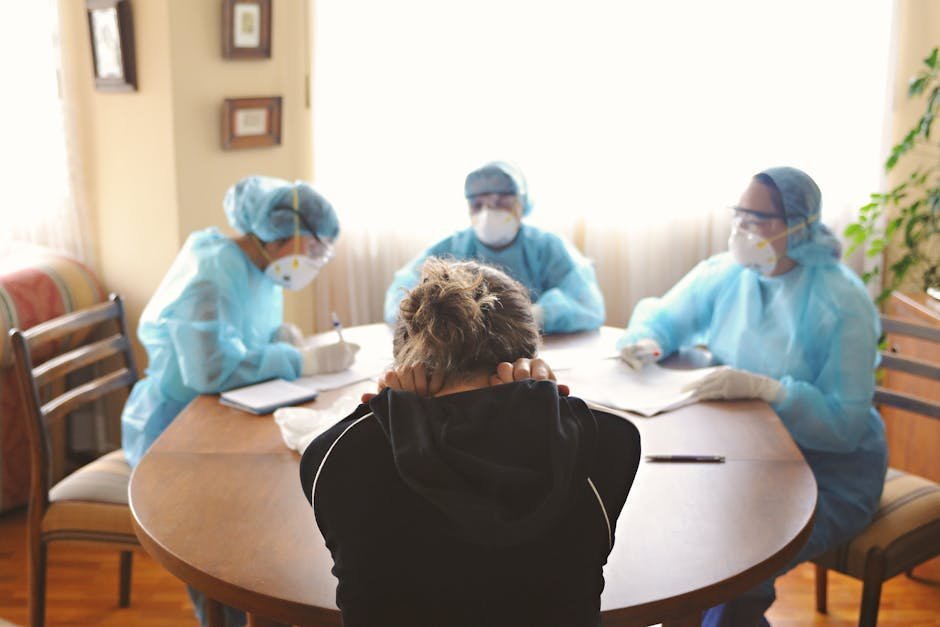
Marcus had used a 23 hour crisis bed, sometimes called a 23-hour observation chair, an Extended Observation Unit, or a Crisis Receiving Center short-stay slot. The model has spread fast since the federal 988 rollout in 2022, partly because it answers a question state Medicaid directors had been asking for a decade: how do you give people in psychiatric crisis real medical attention without the billing, civil-commitment, and bed-shortage headaches of inpatient psychiatry? This guide walks through how the 23 hour crisis bed works, who funds it, what a typical stay looks like, and where to find one.
Why 23 hours and not 24
The number is not a clinical figure. It is a billing one. Under most state Medicaid plans and commercial payer rules, a stay of 24 hours or more triggers inpatient hospital billing, which requires a formal admission order, prior authorization, utilization review, and a psychiatric admission diagnosis attached to the patient’s permanent record. A stay under 24 hours can be billed as observation, evaluation and management, or a fixed-rate crisis service depending on the state.
That billing line matters more than it sounds. An observation stay does not count as a psychiatric hospitalization on background checks for jobs, professional licenses, or firearm purchases in most states. It does not require involuntary commitment paperwork in the way a 5150 hold or its state equivalent does, because the person can theoretically leave at any time. It does not start the clock on a hospital bill that can run $1,800 to $3,500 a day. For people with private insurance the difference between a 23-hour observation and a 72-hour psychiatric admission can be the difference between a $400 copay and a $7,000 deductible.
How a typical 23-hour stay unfolds
The clinical workflow is compressed but real. Within the first hour a registered nurse takes vitals, runs a urine drug screen, draws a basic metabolic panel, and screens for medical issues that mimic psychiatric crisis (thyroid storm, alcohol withdrawal, hypoglycemia, urinary tract infection in older patients). A psychiatric provider, usually a psychiatric nurse practitioner or staff psychiatrist, completes a full evaluation within two to four hours.
Hours four through twenty are spent on stabilization. People sleep, eat, hydrate, and meet with social workers, peer support specialists, and case managers who build a discharge plan in real time. Many programs use medication to break the acute phase: hydroxyzine or low-dose olanzapine for severe anxiety, a one-time dose of a sleep aid, restart of a previously prescribed SSRI that the person had run out of weeks earlier. The last few hours are devoted to safety planning, warm handoff to outpatient providers, and arranging transportation home. Some programs build in a follow-up call within 24 hours of discharge, others schedule a same-week appointment at a co-located outpatient clinic.

The funding mechanism behind the model
Three federal funding streams have made 23-hour beds financially viable for states. Certified Community Behavioral Health Clinics (CCBHCs) operate under a prospective payment system that pays a fixed daily or monthly rate per patient regardless of services rendered, which means a CCBHC running a crisis program does not lose money on observation stays. The SAMHSA Mental Health Block Grant set aside 10 percent for crisis services starting in 2021, expanded to specifically cover 988-related infrastructure. The Medicaid Section 1115 demonstration waivers in states like Arizona, Washington, Oregon, and New York carved out specific crisis service codes with set per-encounter rates.
The 2024 final rule from CMS on crisis service Medicaid payment, summarized at cms.gov, allowed states to establish a single crisis bundle code covering mobile crisis, observation, and short-term stabilization, removing the need for separate authorizations at each step. SAMHSA’s samhsa.gov National Guidelines for Crisis Care recommends 23-hour observation as the middle tier between mobile crisis and full crisis stabilization unit admission.
23-hour bed versus full Crisis Stabilization Unit
The two are easy to confuse because they share buildings, staff, and even billing structures in some states. The functional difference is length and intensity. A 23-hour observation slot is designed to break a single crisis: get someone safe overnight, restart medications, give them a real meal and a bed, and discharge home with outpatient follow-up. A full Crisis Stabilization Unit (CSU) admission runs three to seven days, includes daily psychiatric rounding, group programming, and is typically used when the person needs more than acute stabilization but less than inpatient hospitalization.
Many facilities run both. Connections Health Solutions in Maricopa County operates roughly 50 observation chairs alongside 16-bed CSU pods in the same building, with patients flowing between the two as clinical needs evolve. The full clinical breakdown of CSU programming is covered in our guide to Crisis Stabilization Units.
Where these beds actually exist
Geographic distribution is uneven. Arizona has the densest network in the country: Maricopa County alone runs roughly 280 observation chairs across four facilities, accepting walk-ins, mobile crisis transports, and police drop-offs 24 hours a day with no exclusionary criteria short of medical emergency or active intoxication requiring detox. Rhode Island’s Care New England operates the Mind & Behavior crisis center in Providence with 12 observation slots. Tennessee, Georgia, and Texas all have growing CCBHC-operated crisis facilities with observation capacity.
- Maricopa County, AZ – Connections Health Solutions Crisis Response Centers
- Tucson, AZ – Banner University Medical Center Crisis Response Center
- Providence, RI – Care New England Mind & Behavior
- Nashville, TN – Mental Health Cooperative Crisis Treatment Center
- Atlanta, GA – Behavioral Health Crisis Center
- Houston, TX – The Harris Center NeuroPsychiatric Center
- San Diego, CA – Optum Crisis Stabilization Unit observation slots
- Hennepin County, MN – Acute Psychiatric Services 23-hour suite
Coverage gaps remain large. Most rural counties have no observation capacity, and several Northeastern states still rely on emergency department psychiatric holds where patients wait 8 to 40 hours for a bed that may never open. The 988 system can route callers to the nearest available observation slot, but if none exists within transport range the alternative is the ED.
Referral pathways: how people actually get in
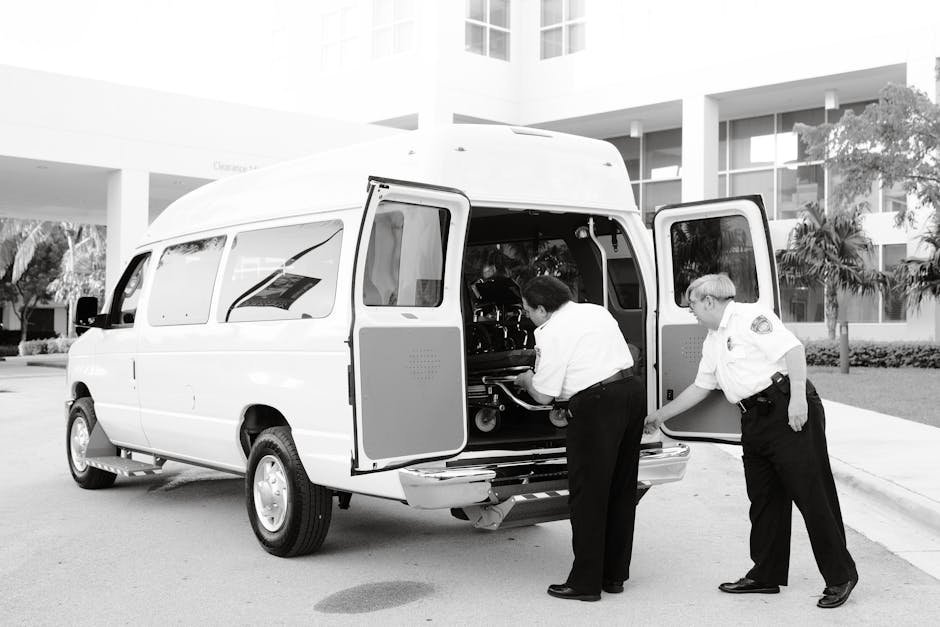
There are four common routes. The first is the 988 Suicide and Crisis Lifeline, which connects callers to local crisis hubs that can dispatch mobile teams or arrange direct admission. The second is mobile crisis: a two-person team (typically a licensed clinician plus a peer support specialist) responds to homes, schools, or public places and can transport directly to an observation facility, bypassing the ED. The third is law enforcement drop-off, which is why Maricopa County built its model around no-exclusion intake (the alternative for police is jail booking, which is why Arizona officers transport to crisis centers in roughly 80 percent of mental health encounters). The fourth is walk-in, which is covered in detail in our walk-in crisis center guide.
What families should expect
Families often arrive at observation facilities expecting an inpatient psychiatric experience and are confused by what they find. Most observation units are open-floor, recliner-based environments rather than locked wards. Patients keep their phones, wear their own clothes, and can leave (against medical advice if necessary) at any time. There are no visiting hours in the traditional sense, but most programs limit family contact to phone calls during the stay so the patient can rest.
The discharge timeline is fast. Family members who drove the patient in at 8 p.m. may receive a discharge call as early as 6 a.m. the next morning. Some programs require a family member or designated support person to pick the patient up; others coordinate ride-share or public transit vouchers. Expect a same-week outpatient appointment to be scheduled before discharge, and expect the patient to be exhausted for two to three days afterward.
When 23 hours is not enough
Roughly 15 to 25 percent of observation patients require step-up to inpatient psychiatric admission. The clinical triggers are usually clear: persistent active suicidal ideation with plan and means after 18 hours of treatment, psychotic symptoms that do not respond to initial medication, severe agitation requiring repeated chemical restraint, or a co-occurring medical condition that needs hospital-level care. Other patients step laterally to a Crisis Stabilization Unit or peer respite for 3 to 7 days. Our peer respite article covers that lower-acuity option in depth.
The model is not designed for everyone. People in active alcohol or benzodiazepine withdrawal need medical detox first. People with severe acute psychosis often need longer than 23 hours to stabilize on antipsychotic medication. People with limited social support or unstable housing may not have a viable discharge environment, which is where the conversation gets harder, because returning to a chaotic situation often produces another crisis within days.
Frequently asked questions
Will a 23-hour stay show up on my medical record as a psychiatric hospitalization?
In most cases no. Observation stays bill differently than inpatient admissions and do not generate the same diagnostic coding on insurance records or background checks. There will be a behavioral health visit on file with your insurer, but it is functionally equivalent to an outpatient psychiatric evaluation, not a hospitalization.
Can I check myself out before the 23 hours are up?
Yes, in almost all programs. These are voluntary observation slots, not involuntary holds. Staff will talk through risks with you and try to address whatever is making you want to leave, but they cannot legally hold you unless they file civil commitment paperwork, which requires a much higher threshold than ordinary acute distress.
What does it cost without insurance?
Most CCBHC-operated observation programs cannot turn anyone away for inability to pay and run sliding-scale or charity-care budgets funded by state block grants. Self-pay rates at hospital-operated programs typically run $400 to $1,200 for a full 23-hour stay, including labs and psychiatric evaluation, which is dramatically less than the $4,000 to $9,000 a comparable ED visit and inpatient admission would generate.
How is an observation stay different from being put on a 5150 hold?
A 5150 (California) or its state equivalent is an involuntary 72-hour psychiatric hold, requires legal paperwork, restricts firearm rights, and locks the patient into a hospital unit. An observation stay is voluntary, runs under 24 hours, and the patient can leave at any time. Some patients arrive on a hold and convert to voluntary observation status if they are willing to stay; others arrive voluntarily and convert to a hold if their condition deteriorates.
Can I bring my own medications and phone?
Phones yes in almost all observation units. Personal medications usually go to the staff pharmacy for verification and dosing during your stay, then return to you at discharge. Some programs prohibit specific items (laptops, tablets, anything with cords longer than six inches) for safety reasons, but the environment is closer to an urgent care lobby than a locked ward.
The bottom line
The 23-hour observation model is the fastest-growing piece of the U.S. crisis care system because it solves three problems at once: it is cheaper than ED-and-inpatient pathways, it produces better short-term outcomes for most patients, and it does not generate the long-term insurance and legal consequences of formal psychiatric admission. If you live in Arizona, Rhode Island, Tennessee, Georgia, Texas, parts of California, or a CCBHC catchment area, an observation slot is likely your local default for an acute mental health crisis. If you live somewhere without one, the 988 line can still tell you what your closest equivalent looks like, which often saves a 14-hour ED waiting room visit.
If you or someone you know is in crisis, call or text 988 to reach the Suicide and Crisis Lifeline. Trained counselors are available 24 hours a day and can route you to the nearest mobile crisis team, observation unit, or peer respite based on what fits the situation.
This article is for general information only and does not substitute for medical or psychiatric advice. Crisis program availability, billing rules, and clinical protocols vary by state and insurer; verify details with your local crisis line, payer, and treating clinician before making care decisions.