Donovan Pierce was twenty-six the first time his mother Eileen sat in a Sacramento courtroom and listened to the words “incompetent to stand trial” being spoken about her son. The petty theft charge that had brought him into the criminal system was almost beside the point — Donovan had been hearing voices for two years, had stopped sleeping, and had stopped recognising her on the phone. The judge ordered him transferred from the Sacramento County jail to a state hospital for competency restoration. Eileen left the courtroom not understanding which hospital, what would happen there, when she could visit, or whether her son would be coming home in three months or three years. The system that took custody of Donovan that day operates by rules most American families never encounter unless they are pulled into them suddenly, and the rules differ in important ways from civil psychiatric admission. This article explains forensic inpatient psychiatric care — what it is, who it is for, and what families need to understand about the process from intake to release.

How forensic differs from civil psychiatric admission
Civil psychiatric admission, including involuntary holds under state laws like California’s 5150 or Florida’s Baker Act, involves a clinical determination that a person is dangerous to self, dangerous to others, or gravely disabled. Forensic admission, by contrast, occurs because of a court order arising out of criminal proceedings. The pathway goes through a judge rather than a hospital admitting clinician, and discharge typically requires a judge as well. Forensic inpatient psychiatric care includes patients found incompetent to stand trial, patients found not guilty by reason of insanity, patients judged to require psychiatric stabilisation while criminal charges are pending, and certain transferred state-prison patients whose mental illness has reached a level that exceeds what corrections psychiatry can manage. The treatment goals are clinical, but the legal framework wraps every clinical decision.
The IST (Incompetent to Stand Trial) population
By far the largest forensic psychiatric population is patients found incompetent to stand trial — IST in legal shorthand. Under the standard from Dusky v. United States, a defendant must have a rational and factual understanding of the proceedings and a present ability to consult with counsel. When a defence attorney or judge raises a doubt about competency, the court orders an evaluation. If a defendant is found incompetent, the case pauses and the defendant is committed for “competency restoration” — a process intended to treat the underlying illness sufficiently for the case to resume. Restoration usually involves antipsychotic medication, structured psychoeducation about the legal process, and ongoing reassessment. National data suggests that the median IST commitment runs three to six months, with substantial state-by-state variation. A separate piece on our site covers the role of the forensic psychiatrist who conducts these evaluations.
The NGRI population and conditional release
Patients found Not Guilty by Reason of Insanity — NGRI — are a smaller but more visible forensic population. The legal standard varies by state; some use the M’Naghten rule, others use the Model Penal Code formulation, and a few states have effectively abolished the insanity defence. When a court finds a defendant NGRI, custody usually transfers to a state forensic hospital, and length of stay is governed by the maximum sentence the underlying charge could have produced — sometimes longer, depending on dangerousness assessments. Conditional release programs let NGRI patients live in supervised community settings with court oversight, regular medication monitoring, and the threat of immediate rehospitalisation if conditions are violated. California’s CONREP program is the largest and most studied; Oregon’s PSRB system operates similarly. Outcomes data suggest that conditional release programs produce lower recidivism than direct release from state hospitals, which is why many states have invested in expanding them.

Sell v. United States and involuntary medication
One of the hardest legal questions in forensic psychiatry is whether a patient who refuses antipsychotic medication can be forcibly medicated to restore competency. The Supreme Court addressed this in Sell v. United States (2003), holding that involuntary medication of a defendant for the purpose of restoring competency is permissible only when four conditions are met: an important governmental interest is at stake, the medication is substantially likely to render the defendant competent without significant side effects that would interfere with assistance to counsel, the medication is necessary to further the interest, and it is medically appropriate. Sell hearings are unusual and adversarial. The standard is high enough that many forensic hospitals first attempt to obtain consent through patient education and rapport, and only proceed to a Sell hearing when restoration cannot otherwise occur. Some states use a parallel administrative process for non-Sell, non-emergency involuntary medication; the legal landscape varies. Patients and families who anticipate this question can pre-empt some of the conflict with documents like psychiatric advance directives, which can clarify medication preferences in advance.
State hospital systems and where forensic care happens
Forensic psychiatric care in the United States is concentrated in state hospitals, most of which were built between the 1850s and the 1950s and have been dramatically reduced in size since the deinstitutionalisation movement of the 1960s and 1970s. California operates Patton State Hospital, Atascadero State Hospital, Napa State Hospital, Coalinga State Hospital, and Metropolitan State Hospital, each with a different mix of forensic and civil populations. New York operates Kirby and Mid-Hudson Forensic Psychiatric Centers. Texas has the Vernon, Rusk, and North Texas State Hospital systems. Saint Elizabeths Hospital in Washington, DC has been a national landmark since the nineteenth century and continues to provide both civil and forensic care. Each system has its own admissions process, visiting policies, and length-of-stay norms, but they share a common challenge: chronic overcrowding driven by long jail-based waitlists for IST admission. The waitlist itself has prompted federal litigation in several states.
Competency restoration units
Within state forensic hospitals, competency restoration units are dedicated wards focused specifically on bringing a defendant’s mental status to the legal threshold for trial. Programming combines psychiatric medication, group classes about the legal system — what a judge does, what a prosecutor does, what the charges mean — and individual sessions with forensic clinicians who can document changes in mental status over time. Some states have begun operating jail-based restoration programs to bypass the state-hospital waitlist for low-acuity cases, with mixed results. The clinical population varies enormously: some defendants restore in weeks, others remain unrestorable, in which case dismissal of charges or a different commitment pathway is considered. The question of who is “permanently unrestorable” is one of the most contested in forensic psychiatry.
Family rights, communication, and visitation
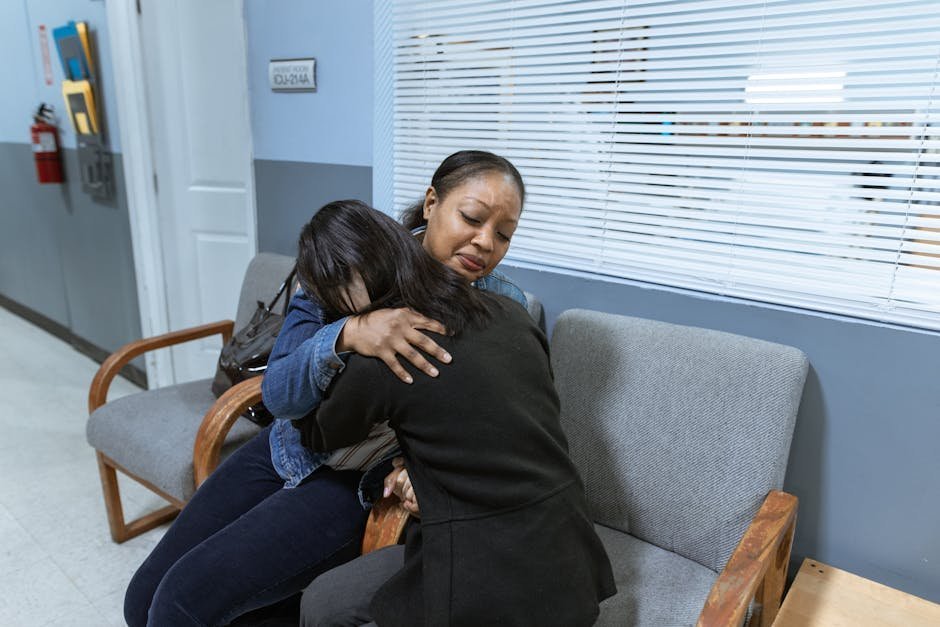
Family members of patients in forensic hospitals often experience a frustrating contraction of access compared with civil hospital admissions. HIPAA still applies, so a patient’s signed release is required for clinical communication, but visitation, mail, and phone access are governed by hospital security policies that can be more restrictive than civil units. Background checks for visitors, limits on items that can be brought in, and structured visiting hours are typical. Most state forensic hospitals have a family liaison or social worker who can help families navigate the system, and many hold periodic family education sessions. Families navigating an emergency hold under civil law before a forensic question arises may also find our overview of the psychiatric hold helpful for context on how the civil process differs.
Olmstead and the least-restrictive setting
The Supreme Court’s 1999 decision in Olmstead v. L.C. held that under the Americans with Disabilities Act, states must provide community-based services to people with mental disabilities when treatment professionals determine community placement is appropriate, the affected individuals do not oppose it, and the placement can be reasonably accommodated. Olmstead reshaped state hospital census numbers and continues to drive expansion of conditional release, supported housing, and assertive community treatment. The forensic application of Olmstead is more complicated, because dangerousness assessments are part of the placement decision, but the principle still applies: hospitals are obligated to consider whether a less restrictive setting could meet the patient’s needs. The Department of Justice publishes Olmstead-related guidance through the resources at ada.gov, and the Bureau of Justice Assistance maintains forensic mental health resources at bja.ojp.gov.
Finding forensic psychiatry programs and what families can do
Forensic admission is not something a family chooses; it is something a court orders. What families can do is hire a defence attorney experienced in mental health cases, request that the court appoint a forensic psychiatric evaluator with strong credentials, attend court hearings, ensure the hospital social worker has accurate family contact information, and prepare for the eventual transition out — back to civil treatment, to conditional release, or to a community placement. Documenting the patient’s psychiatric history, listing current medications, identifying treating clinicians, and naming a healthcare proxy if one exists all help the receiving hospital provide better care. Patient advocacy organisations such as NAMI have local chapters that can connect families with others who have navigated the same system.
- What court issued the commitment order, and what is the next hearing date?
- Who is the patient’s attorney, and is mental health experience part of their practice?
- Which hospital social worker should we contact for clinical updates and visitation logistics?
- What is the criteria for restoration or release, and who decides?
- Is conditional release a possibility, and what does the local program look like?
Frequently asked questions
How long do forensic admissions last?
It depends on the legal pathway. IST commitments often run three to six months, with statutory caps in many states. NGRI commitments can last up to the maximum potential sentence for the underlying charge and sometimes longer if continued dangerousness is established. Civil-to-forensic transfers vary by state. The relevant statute, not clinical preference, ultimately determines length.
Can a forensic patient refuse psychiatric medication?
Yes, with limits. Most states require either a Sell hearing for non-emergency competency restoration medication or a separate administrative process for non-emergency civil refusal. Emergency medication for immediate safety can be given without prior hearing under standard psychiatric emergency rules. Patients can and do retain attorneys to challenge involuntary medication orders.
What is conditional release?
Conditional release is a structured community placement under court oversight for forensic patients who have stabilised enough to leave the hospital. It typically involves mandated treatment, regular reporting to a community team, restrictions on substance use, and the possibility of immediate rehospitalisation if conditions are violated. It is the most common pathway out of a forensic hospital for NGRI patients.
Are forensic hospitals dangerous?
State hospitals have higher rates of staff and patient injury than community psychiatric units, partly because the population includes patients whose criminal charges involved violence and partly because of chronic understaffing. That said, the majority of patients are not violent during their stay, and the hospital environment is not the prison environment, although the security infrastructure can resemble it.
Can charges be dropped while someone is in a forensic hospital?
Yes. Prosecutors may dismiss charges if a defendant is found permanently unrestorable, if the underlying charges are minor and continued commitment is disproportionate, or as part of negotiated resolution. Dismissal does not always mean immediate release; civil commitment may follow if criteria are met.
The bottom line
Forensic inpatient psychiatry sits at the intersection of mental illness and the criminal legal system, and families pulled into it are usually navigating both worlds for the first time. The clinical care can be genuinely good, but the legal scaffolding is heavy and the timelines are slower than civil hospital care. Knowing what to ask, who is in charge, and how the eventual exit will be structured is half the battle. The other half is treating the underlying illness, which remains the same medical problem regardless of which courtroom opened the door to the hospital.
If you are in crisis
If you or a loved one is in immediate danger, call or text 988 to reach the Suicide and Crisis Lifeline, available twenty-four hours a day. If a medical or psychiatric emergency is occurring outside the legal system, civil emergency department evaluation is usually the right path. If a person has been arrested and is now in jail with untreated mental illness, the public defender or assigned attorney is the first call.
This article is general informational and educational content only. It is not legal or medical advice and does not establish an attorney-client or clinician-patient relationship. Decisions about forensic psychiatric matters should be made with a licensed attorney and a qualified forensic clinician.