Hannah, a 41-year-old librarian in Madison, Wisconsin, walked into her psychiatrist’s office in February with a printout of a 2016 JAMA Psychiatry paper. She had read about the Charles Raison hyperthermia trial three times and wanted to know whether the local Finnish-style sauna at her gym counted as a reasonable substitute. Her depression had partially responded to escitalopram but plateaued for the past nine months. Her psychiatrist, who had treated several Scandinavian-American patients in central Wisconsin and was familiar with the regional sauna culture, said it was not a substitute for the experimental hyperthermia protocol but that consistent dry-sauna use was reasonable to add. Hannah began two 20-minute sessions per week at 175 degrees Fahrenheit. By spring her PHQ-9 had dropped four points. She could not tell anyone whether the sauna was driving the change, but she kept going. Her story is part of why sauna depression treatment has moved from a fringe curiosity to a topic genuinely worth discussing with a prescriber.

The Charles Raison hyperthermia trial and sauna depression treatment
The single most cited piece of evidence in the heat-therapy-for-depression conversation is the Raison group’s 2016 randomised trial published in JAMA Psychiatry. Thirty adults with major depressive disorder received either a single 80- to 100-minute session of whole-body hyperthermia (WBH) using infrared heating coils that raised core body temperature to 38.5 degrees Celsius, or a sham procedure. Hamilton Depression Rating Scale scores in the active group dropped significantly more than in the sham group at week one and the antidepressant effect persisted out to six weeks after that single session. That is striking. A single session producing a six-week mood response is not how most antidepressant interventions behave.
The catch: the WBH protocol is not a household sauna. It is a controlled medical procedure with specific equipment, monitored core temperature, and a trained operator. Replication has been limited. A larger trial led by Ashley Mason at UCSF is ongoing as of 2026. Until those results are in, the Raison data is best characterised as proof-of-concept for a thermoregulatory mechanism in depression rather than a treatment recommendation.
Finnish sauna epidemiology
The other major data stream comes from Finland, where sauna bathing is so common that researchers have prospective cohorts large enough to study its long-term associations. Jari Laukkanen and colleagues at the University of Eastern Finland have published a series of papers using the Kuopio Ischaemic Heart Disease cohort. Their findings show that men who use sauna four to seven times per week have lower all-cause mortality, lower cardiovascular mortality, lower dementia incidence, and lower rates of psychotic disorders compared with one-session-per-week users. These are observational data and confounded by lifestyle factors, but the dose-response pattern is consistent across endpoints.
Earlier work by Matti Kupari described sauna-related cardiovascular changes in healthy users, providing the physiological scaffolding for why repeated heat exposure might affect long-term outcomes. The Finnish work also clarifies that traditional dry sauna at 80-100 degrees Celsius (175-212 degrees Fahrenheit) for 15-30 minutes per session is the studied dose. Lower temperature, shorter duration, and less frequent use produces less of an effect or none at all.
Mechanism hypotheses
Several biological pathways connect heat exposure to mood:
- Cytokine modulation: IL-6 and other inflammatory mediators rise transiently, then decline over the following days, mimicking exercise’s anti-inflammatory pattern
- BDNF (brain-derived neurotrophic factor): elevations in BDNF after heat stress have been documented in animal models and small human studies
- Heat shock proteins: HSP70 and HSP90 chaperone activity supports cellular stress resilience
- Endorphin and dynorphin release: kappa-opioid system activation may explain the post-sauna mood elevation
- Thermoregulatory dysregulation reset: the Raison hypothesis is that depressed patients have an elevated baseline core temperature that WBH transiently reshapes
- Cardiovascular conditioning: heart rate during a 30-minute sauna session approaches that of moderate exercise, providing some of the same circulatory benefits
None of these mechanisms is uniquely identified as the active ingredient. As with exercise prescriptions for depression, multiple plausible pathways operate simultaneously, and the practical implication is that consistent practice matters more than mechanistic certainty.
Infrared versus traditional dry sauna
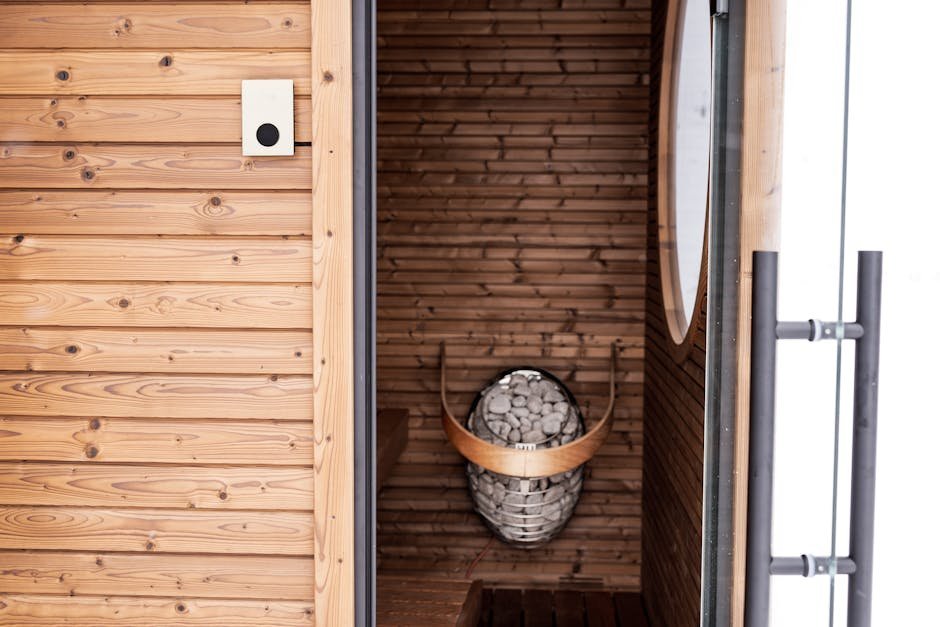
The market splits into two main categories. Traditional Finnish-style dry saunas use a heating element to warm rocks and ambient air to 175-212 degrees Fahrenheit, with low humidity until users pour water on the rocks (löyly) for steam bursts. Infrared saunas use ceramic or carbon panels to emit far-infrared radiation that heats the body directly while keeping ambient temperature lower (120-150 degrees). Marketing claims that infrared “penetrates deeper” or detoxifies more efficiently lack robust support.
For mood and cardiovascular endpoints, the studied dose is the traditional Finnish protocol. Infrared saunas raise core body temperature less aggressively per minute, so a 30-minute infrared session is not equivalent to a 30-minute traditional session. They are still useful, particularly for users who cannot tolerate the higher ambient air temperature, but extrapolating Finnish epidemiology to infrared use requires caveats. If your goal is to approximate the Raison trial’s heat dose, look for a traditional dry sauna or a high-temperature far-infrared model that documents core temperature targets.
Home setup and protocol
A two-person traditional dry sauna kit costs $3,000 to $7,000. Infrared cabin saunas range from $1,800 to $5,000. Public sauna access at a gym, recovery studio, or Russian banya in cities like Brooklyn, San Francisco, Chicago, and Seattle runs $20-40 per visit or $80-150 per month. Korean jjimjilbangs in Los Angeles, Atlanta, and the Dallas-Fort Worth area offer multiple temperature rooms and longer cultural traditions of communal heat.
A reasonable starter protocol if you are medically cleared:
- Start at 160-170 degrees Fahrenheit for 10 minutes, twice weekly
- Drink 16-24 ounces of water with electrolytes before entering
- Build to 15-20 minutes per session, 3-4 times per week, over 4-8 weeks
- Cool down with 5-10 minutes of seated rest before driving or operating machinery
- Avoid sauna within four hours of bedtime; the body needs time to dump heat
- Skip sessions if you are dehydrated, hungover, or feverish
Contraindications and safety
Heat stress is real stress. Cardiovascular events in saunas are uncommon but not zero, and certain conditions make sauna use unsafe. Do not use a sauna without specific clinician clearance if you have:
- Recent myocardial infarction (within 6 months) or unstable angina
- Uncontrolled hypertension or severe aortic stenosis
- Pregnancy, particularly the first trimester (neural tube defects associated with heat exposure)
- Active alcohol intoxication (the leading factor in sauna-related deaths in Finland)
- History of febrile seizures or epilepsy that is sensitive to heat
- Multiple sclerosis (heat can transiently worsen demyelinating symptoms via Uhthoff phenomenon)
- Severe orthostatic hypotension
- Postural orthostatic tachycardia syndrome (POTS)
- Open wounds or recent skin grafts
Dehydration risk compounds with diuretic medications, lithium (sweat increases lithium concentration), and SGLT2 inhibitors. The National Institutes of Health resources on heat-related illness emphasise that older adults and people on multiple medications need a cautious entry point and frequent fluid replacement.
Comparison with exercise-induced thermogenesis
A vigorous run or cycling session raises core temperature by 1-2 degrees Celsius, similar to a 20-minute sauna. The cardiovascular load is similar, though the heart-rate response in sauna comes from peripheral vasodilation rather than skeletal muscle demand. For someone who cannot exercise due to orthopaedic limitations, post-surgical recovery, or chronic pain, sauna may approximate some of the cardiovascular and mood benefits of exercise. It is not a replacement for movement when movement is possible. The combination of exercise plus sauna shows additive benefits in some Finnish epidemiological work, and is consistent with the integrated approach in our sleep, exercise, and nutrition overview.
The access problem
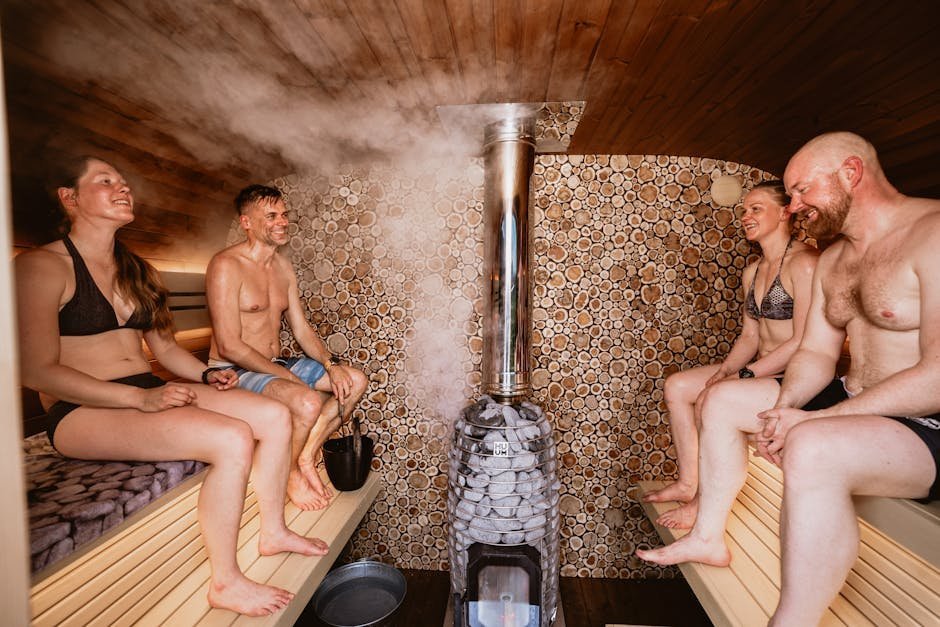
Most Americans do not have a sauna at home and do not live within a reasonable drive of a public one. The Finnish ratio is roughly one sauna per two people. The American ratio is closer to one per several thousand outside of dedicated wellness markets. This access asymmetry is the single biggest reason sauna therapy has not entered routine US mental health practice. Public health systems are unlikely to fund infrared cabin distribution. Insurance does not reimburse sauna access. The intervention remains in the hands of those with disposable income or proximity to dense recovery markets.
Some YMCAs, hotel gyms, and university recreation centres have sauna facilities at modest cost. Day-pass arrangements at high-end gyms can offer week-by-week experimentation before committing to membership. If you are exploring whether sauna is a fit, check community pools and rec centres before assuming you need a $5,000 home installation.
Russian banya, sentō, and global heat traditions
Heat bathing has long traditions outside of Finland. The Russian banya uses higher humidity and birch-branch venik beating, common in immigrant neighborhoods of Brooklyn and Chicago. Japanese sentō and onsen culture pairs hot soaking with social ritual. Korean jjimjilbangs offer a layered temperature experience with intentional cooling pools. Turkish hammams emphasise steam and exfoliation. Native American sweat lodges have ceremonial and communal dimensions that secular wellness sauna culture lacks. Russian banya temperatures hover around 160-180 degrees Fahrenheit at 30-50 percent humidity, which feels hotter than Finnish dry sauna at the same temperature because moist air conducts heat more efficiently.
The cultural framing matters clinically. Therapeutic effect from heat exposure may be amplified when the practice is communal, ritualised, and embedded in identity. A solo session in a closet-sized infrared box at home produces the physiological response without much of the social and contemplative benefit. People who incorporate sauna into a regular practice with friends, family, or community report higher adherence, which is the variable that determines whether any intervention helps depression long-term. Sauna may also pair well with medication adjustments tracked in our tapering antidepressants guide for those working toward lower maintenance doses.
Frequently asked questions about sauna for depression
How often should I use a sauna for mood benefits?
The Finnish data shows the steepest mortality and cognitive benefits at four to seven sessions per week. For mood specifically, three to four sessions weekly at 15-20 minutes each is a reasonable starting target once you are acclimated. Less than two sessions weekly is unlikely to produce meaningful change beyond the post-session relaxation effect.
Will sauna replace my antidepressant?
No, especially not for moderate or severe depression. Even the strongest evidence (the Raison trial) studied a controlled medical hyperthermia protocol, not gym sauna. Use sauna as an adjunct, with your prescriber’s input, while staying on whatever evidence-based treatment is keeping you stable.
Is infrared sauna as good as traditional sauna?
Probably not for matching the studied dose, though it depends on session duration and core temperature achieved. If you cannot tolerate 175-degree air, infrared may still produce meaningful sweating and mild mood effects. The studied evidence base is overwhelmingly for traditional Finnish sauna; infrared is a reasonable substitute when traditional access is not possible.
Can I take my phone into the sauna?
Most phones tolerate brief sauna exposure, but the heat damages batteries over time and risks screen separation. The deeper question is whether the sauna ritual is worth the value. Twenty minutes off your phone at body temperature 38 degrees Celsius is, for many people, the entire mental health point of the practice.
How long until I notice mood changes?
The post-session calm and warmth is immediate. Cumulative shifts in baseline depressive symptoms typically appear after four to eight weeks of consistent practice at three or more sessions weekly. If twelve weeks of regular sauna use produces no change, the intervention may not be a fit and your treatment plan should focus elsewhere.
The bottom line
Sauna depression treatment sits at an unusual intersection: there is one striking trial showing single-session efficacy with a controlled hyperthermia protocol, large Finnish observational cohorts showing dose-dependent benefits with traditional sauna, and almost no research on the specific question of whether US-style gym sauna use treats clinical depression. The signal is real enough to be worth integrating into a broader mental health plan if you have access. The evidence is not strong enough to substitute for medication, therapy, or other established treatments. Cost, access, and contraindications limit who can realistically try the practice. Within those constraints, a regular sauna habit appears to be a low-risk addition for most healthy adults, and a cautious one to discuss with a clinician for anyone with cardiovascular conditions. The National Institute of Mental Health continues to track trials in this area, and the next decade should clarify whether gym sauna delivers a meaningful share of the studied benefit.
If you are in mental health crisis, call or text 988 for the Suicide and Crisis Lifeline. Sauna is not a crisis tool.
This article is for educational purposes only and is not a substitute for medical or mental health advice. Heat exposure carries cardiovascular and dehydration risks; consult a clinician before starting, especially if you are pregnant, have heart disease, hypertension, multiple sclerosis, or take medications affected by fluid balance or sweating.