Hannah delivered her first child on a quiet Tuesday morning in Chapel Hill, North Carolina, and by the following Sunday she was no longer sleeping. By the second week she was hearing her grandmother’s voice telling her the baby would be safer with someone else. Her husband, who had been reading every postpartum article he could find, made two phone calls in the same hour: first to the obstetrician on call, who told them to go to the emergency room, and second to a psychiatrist friend, who told them about a small, almost invisible service called the Perinatal Psychiatry Inpatient Unit at the University of North Carolina, the first mother baby psychiatric unit in the United States. Hannah was admitted that afternoon. The baby came with her. For the next eleven days she slept in a hospital room with her newborn beside her, breastfed when she felt able, met daily with a perinatal psychiatrist, attended group therapy with other mothers in the same situation, and watched her thinking come back. The grandmother’s voice quieted. By discharge she could imagine taking the baby home. The unit she stayed in is the model her family has been advocating, with frustration, to expand ever since.
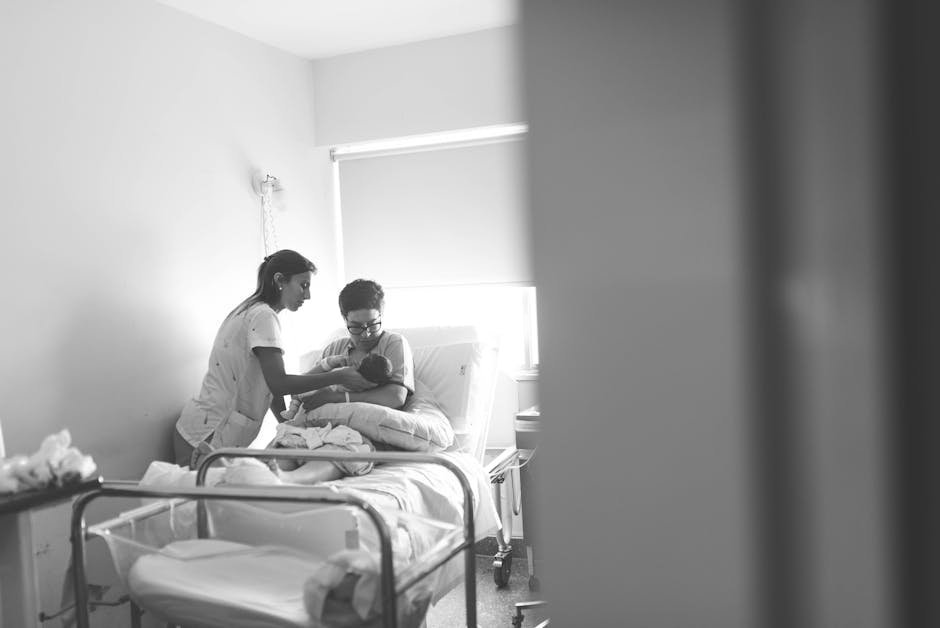
A mother baby psychiatric unit, often abbreviated MBU, is an inpatient psychiatric setting that admits a mother for treatment of postpartum mental illness while allowing her infant to remain with her. The model is standard in much of Europe, particularly in the United Kingdom, where the National Health Service operates more than twenty MBUs as part of routine perinatal care. In the United States, the same model is rare to the point of being a recurring policy embarrassment. This guide explains what MBUs do, where they exist (and don’t) in the United States, the funding obstacles that have kept them rare, the alternatives that have grown up to fill the gap, and how a high-risk pregnancy can be planned in advance to reach the right care.
What a mother-baby unit allows
The defining feature of a mother-baby unit is that the mother is admitted as the patient and her infant is permitted to stay in the room with her under shared care of the inpatient psychiatric team and a paediatric or nursery service. The arrangement is not casual co-rooming. MBUs are physically configured for safety, with infant-appropriate sleeping spaces, locked medication storage, and monitoring protocols that account for the presence of an infant on the unit.
The clinical case for the model rests on three observations. First, separating a mother from her newborn during the early weeks worsens the very illnesses inpatient care is meant to treat — postpartum depression, postpartum anxiety, postpartum psychosis, and postpartum post-traumatic stress disorder. Second, breastfeeding, when the mother chooses it, is significantly more likely to continue when admission permits it. Third, attachment between mother and infant, once disrupted, is harder to rebuild than to preserve. MBUs are designed to keep all three things intact during the period of greatest psychiatric vulnerability in a woman’s life.
The British gold standard
The United Kingdom established the world’s first mother-baby unit at Cassel Hospital in 1948 and has been refining the model ever since. The NHS now operates more than twenty MBUs across England, Scotland, and Wales, with an additional network of community perinatal mental health teams that screen and triage women into them. The British system is cited in nearly every American advocacy document on perinatal mental health, including those produced by Postpartum Support International and the National Institute of Mental Health, as the standard the United States should be working toward.
British MBUs accept mothers from late pregnancy through the first twelve months postpartum. Stays average four to six weeks, considerably longer than American psychiatric admissions. The units treat the full range of perinatal mental illness, from severe depression to postpartum psychosis to relapses of pre-existing bipolar disorder. Discharge planning includes a handoff to a community perinatal team that follows the mother for the rest of the first year. The whole system functions as a continuum, not a sequence of disconnected services.
The American picture: a handful of units
The United States, despite leading the world in perinatal mental health research, has a sparse mother-baby inpatient infrastructure. As of 2025 the country has only a handful of dedicated MBUs, and even the term is sometimes loosely applied to specialty perinatal units that allow regular infant visiting rather than overnight rooming-in.
- UNC Chapel Hill Perinatal Psychiatry Inpatient Unit. Opened in 2011 and widely considered the first true MBU in the United States. The unit is housed within UNC Hospitals and accepts patients from across the country, often as planned admissions arranged in advance for women with high-risk pregnancies.
- El Camino Health Maternal Outpatient Mental Health Services (MOMS). Located in Mountain View, California, the El Camino program is primarily a partial hospitalisation and intensive outpatient program rather than full inpatient, but it is among the most established perinatal services in the western United States.
- Pacific Postpartum Support Society and Pacific Perinatal programs. Several Pacific Northwest hospitals have developed perinatal-specialty inpatient services that, while not always full MBUs in the British sense, offer enhanced infant contact and lactation support during admission.
- Postpartum Wellness Center networks. A growing number of private specialty centres in cities including Boston, Chicago, and Los Angeles offer perinatal partial hospitalisation programs that allow daily infant attendance.
The numbers are stark. A country of more than three hundred million people has fewer dedicated MBU beds than a single English region. Most American mothers admitted to inpatient psychiatric care for postpartum illness are admitted to a general adult psychiatric unit and separated from their infants for the duration of the stay. Our companion article on postpartum psychosis covers the most severe presentation that drives admission.
Why most American states still separate mothers from babies
The reasons American hospitals continue to separate mothers from infants during psychiatric admission are not primarily clinical. They are structural and financial. Psychiatric units in the United States are licensed by states to treat adults; the licensure does not contemplate infant care. To admit an infant to an adult unit, a hospital must navigate paediatric scope-of-practice questions, nursing licensure boundaries, infant-safety architectural requirements, and liability exposures that no single regulator coordinates.
The Centers for Medicare and Medicaid Services pays American psychiatric units on a per-diem basis calibrated for one adult patient. There is no payment mechanism for the infant’s stay. Hospitals that have built MBUs (UNC most prominently) absorb the additional cost, sometimes through hospital cross-subsidies and sometimes through state appropriations. Without a billing pathway for the infant, building an MBU is a charitable enterprise rather than a viable line of business. This is the central financial obstacle that perinatal mental health advocates have been pushing CMS to address.
Postpartum Support International and the advocacy push
Postpartum Support International (PSI), founded in 1987, has become the central American advocacy organisation for perinatal mental health. PSI maintains a national helpline, trains clinicians in perinatal-specific therapy, accredits perinatal mental health specialists, and lobbies state and federal legislators on perinatal mental health legislation. PSI’s MBU advocacy has focused on two policy goals: expanding the number of dedicated American MBUs, and creating a CMS billing pathway that would make infant rooming-in financially viable for any unit that wants to offer it.
The advocacy has had partial success. The federal Bringing Postpartum Depression Out of the Shadows Act, passed in 2016, funded state perinatal mental health programs. The 21st Century Cures Act provided additional perinatal-specific authority. State-level laws in California, Illinois, New York, and Washington have established perinatal mental health task forces. None of these have, by themselves, produced a wave of new MBUs, but they have created the political ground on which the next generation of units may be built. For broader resources, our guide to finding a postpartum therapist covers the outpatient picture.
Specialty perinatal IOP and PHP as alternatives
For most American women, the practical alternative to an MBU is not a general inpatient psychiatric unit but a specialty perinatal intensive outpatient program (IOP) or partial hospitalisation program (PHP). These programs run during the day, six to eight hours, and allow mothers to bring their infants either to attend with them or to leave with caregivers and return home in the evening. They are not appropriate for women with active suicidality, postpartum psychosis, or severe symptoms requiring overnight monitoring, but for the broad middle of postpartum mental illness they provide intensity comparable to an MBU.
Specialty perinatal PHPs typically run four to six weeks, with daily groups, individual therapy, medication management, lactation support, and infant-care groups. The El Camino MOMS program, the Women’s Mental Health Program at Massachusetts General Hospital’s specialty PHP, and the Northwestern Medicine Perinatal Mental Health Program are examples. Insurance coverage is generally good because PHP and IOP fit established billing categories. For women whose symptoms are too severe for outpatient PHP but who cannot access an MBU, these programs are sometimes used as step-down placements after a brief inpatient stay.
Advance planning for high-risk pregnancies
Women with bipolar disorder, prior postpartum psychosis, severe prior postpartum depression, or first-degree relatives with postpartum psychosis are at substantially elevated risk for severe postpartum illness. The single most useful thing a high-risk pregnant woman can do is plan, in the third trimester, for what care she will receive if she becomes ill in the first six weeks postpartum. The plan typically includes the name of a perinatal psychiatrist, the location of the nearest specialty PHP or MBU, an agreed-upon medication strategy if pregnancy-stable medications need to be resumed, and a plan for who will care for the infant during any inpatient admission.
For women whose risk is highest — most notably those with prior postpartum psychosis — pre-arranged admission to UNC’s MBU or a similar program, scheduled in advance for the predicted high-risk week, has been used by some patients with very good outcomes. The advance planning is essential because acute crisis is the worst time to discover that the nearest MBU is fourteen states away. Our guide to perinatal medication safety covers the medication-specific planning in detail.
Frequently asked questions
How do I know if I need an MBU rather than an outpatient program?
An MBU is appropriate when symptoms are severe enough to require overnight psychiatric monitoring — active suicidality, postpartum psychosis, severe self-care deficits — but not so unstable that infant safety would be in question. A specialty PHP fits when symptoms are severe but you remain safe at night. A perinatal psychiatrist can guide the decision.
Will my insurance cover a stay at UNC’s MBU if I live out of state?
Sometimes. UNC accepts most major commercial insurance plans, but out-of-network benefits and prior authorisation requirements vary. For Medicaid patients, out-of-state admission is much harder to arrange. Many out-of-state admissions are paid partially or fully out of pocket, and UNC has historically worked with families on case-by-case financial arrangements.
Can I breastfeed during an MBU stay?
Yes. MBUs are designed around the assumption that breastfeeding may continue during admission. Lactation consultants are available, breast pumps are provided, and medication choices factor in the patient’s wishes around breastfeeding. Some psychiatric medications are more compatible with breastfeeding than others, and the team will discuss the options.
What if my baby was born with health problems?
Infants admitted to an MBU need to be medically stable enough to room with the mother. Babies with significant medical needs, prematurity, or NICU-level requirements cannot typically be admitted with the mother. In those cases, a perinatal PHP after the baby is medically stable may be the better option.
Are partners or family members allowed to stay?
Visiting policies vary by unit. UNC and most American MBUs allow partners and immediate family extended visiting hours but do not provide overnight accommodation for partners. Family involvement in family therapy and discharge planning is part of the standard treatment.
The bottom line
Mother-baby psychiatric units are the standard of care for severe postpartum illness in much of the developed world and a rare exception in the United States. The handful of American MBUs are excellent and routinely accept high-risk pregnancies for advance planning. For most women, however, the practical pathway is a combination of specialty perinatal PHP or IOP, careful third-trimester planning, and partnership with a perinatal-specialist psychiatrist. The advocacy push to expand MBUs is genuine and gaining ground. In the meantime, knowing the names of the few units that exist and planning for them in advance is one of the highest-leverage things a high-risk family can do.
If you or a loved one is in crisis, call or text 988 to reach the 988 Suicide and Crisis Lifeline. The line operates 24 hours a day in English and Spanish. For perinatal-specific support, Postpartum Support International maintains a confidential helpline at 1-800-944-4773.
This article is for educational purposes only and is not a substitute for professional medical advice. Postpartum mental illness is a medical condition that requires individualised assessment and treatment. Always consult a qualified perinatal mental health clinician for guidance about your specific situation.