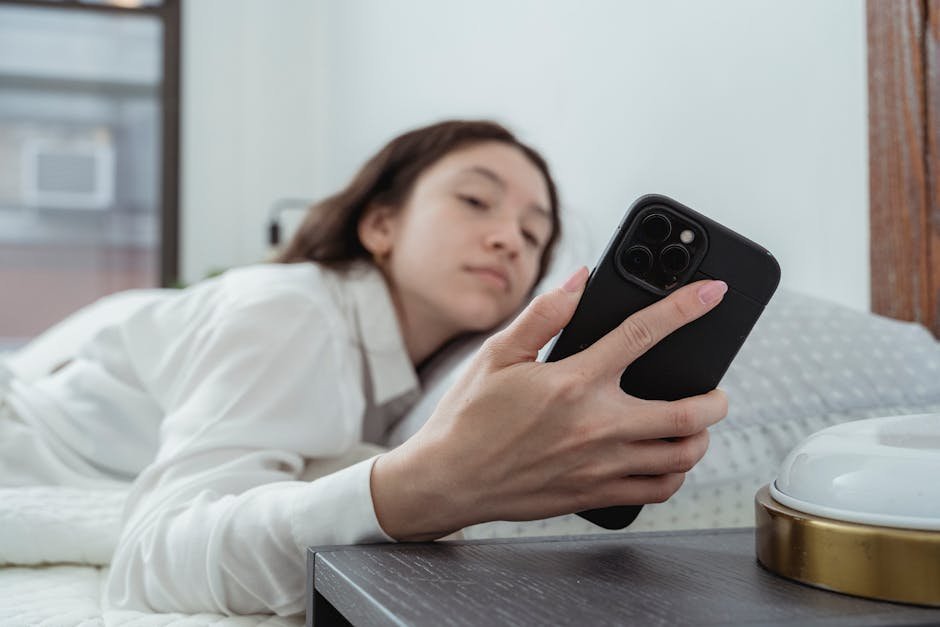
Priya, a 27-year-old paralegal in Minneapolis, did not think she had a problem until the night she found herself crying in her bathroom at 1:30 a.m. after three hours of doomscrolling. The trigger had been small: a coworker’s vacation post. The spiral had been long: comparison, news, more comparison, a strange wellness influencer’s diet routine, an article about a celebrity divorce, then back to the coworker’s vacation. She had checked her phone screen time the next morning. Eight hours and twelve minutes the day before. She had laughed out loud, then cried again. Three months later, she had reduced her screen time to under three hours a day, was sleeping eight hours instead of five, and had stopped having the panic attacks that had quietly become her normal. She did not buy a Light Phone or quit social media entirely. She used Apple’s Screen Time, an app blocker called Opal, and a few rules about where her phone could and could not be. The change was structural, not motivational. Her story is increasingly common as research on the link between phone use and mental health continues to accumulate.
Effective phone detox anxiety protocols start from the recognition that smartphones are not neutral tools. They are designed by some of the smartest engineers in the world to capture and hold attention, and the mental health cost is real and measurable. Research by Jean Twenge, summarized in her 2017 book iGen and in extensive peer-reviewed work, links the rise of smartphone use among teens to documented increases in anxiety and depression. Jonathan Haidt’s 2024 book The Anxious Generation extends and synthesizes this evidence. This guide walks through the mechanisms, the protocols, and the tools that actually work for adults who want to take their attention back. Treating phone detox anxiety as a structural problem rather than a willpower problem is what makes the difference.
The Research Linking Phone Use to Anxiety and Depression
The empirical picture has become clearer over the past decade. Twenge’s work, drawing on multiple large national datasets including Monitoring the Future and the Youth Risk Behavior Survey, shows sharp upticks in adolescent depression, anxiety, and suicide-related outcomes beginning around 2012, the year smartphone ownership crossed 50 percent in U.S. teens. Haidt’s 2024 synthesis added meta-analytic evidence and cross-cultural comparison. Adult data is somewhat sparser but trends in the same direction. A 2023 systematic review in the Journal of Behavioral Addictions found significant associations between problematic smartphone use and anxiety, depression, and sleep disturbance across more than 40 studies.
The mechanisms are several. Variable-ratio reinforcement (the same intermittent reward schedule that drives slot machines) keeps users checking. Sleep disruption from blue light and late-night use compromises mood regulation. Social comparison, particularly on image-heavy platforms like Instagram and TikTok, drives low self-worth. Notification interruption fragments attention so deeply that focused work becomes harder, which in turn produces more anxiety about productivity. The Centers for Disease Control’s data on youth mental health trends documents how these patterns affect emotional well-being at the population level.
How Phones Disrupt Sleep, and Why That Matters Most
If you only fix one thing, fix the bedroom. Sleep is the single most powerful mental health intervention available, and phones disrupt it through three mechanisms: blue light suppresses melatonin, content arouses the nervous system right before sleep, and morning checking floods the brain with stress hormones before you have even gotten out of bed. Studies from the National Institutes of Health have documented these effects repeatedly across age groups, with summaries available at nih.gov.
Practical fixes are not subtle. The phone leaves the bedroom. A real alarm clock costs $15. Charging happens in the kitchen or hallway. Many people are surprised by how much their sleep improves within a week of this single change. Our coverage of mental health wearables covers tools that can supplement sleep tracking without requiring the phone in the bedroom.
Gradual Reduction Versus Cold Turkey: What Actually Works
Both approaches have evidence behind them. Cold turkey works for some people and fails dramatically for others. Gradual reduction works more reliably for most adults but takes longer and requires self-monitoring. The best evidence on behavior change suggests that environmental design (changing what is around you) outperforms willpower for almost everyone. That argues for a gradual reduction approach with strong structural supports.
- Week 1: Track baseline screen time and identify the top three apps consuming the most hours.
- Week 2: Remove social media apps from the home screen; require typing the name to find them.
- Week 3: Set time limits on the worst offenders using Apple Screen Time or Android Digital Wellbeing.
- Week 4: Phone-free bedroom; physical alarm clock.
- Week 5: Notifications off for everything except calls and texts from real people.
- Week 6: One phone-free hour each day, ideally in the morning.
- Week 7: Designate one phone-free location (kitchen table, bed, gym) and enforce it.
- Week 8: Review and adjust; identify which apps you no longer miss and consider deletion.
The eight-week protocol is not magic. It is just slow enough to build genuine habits and structured enough that you do not have to make every decision in the moment.
Dumb Phones, Light Phone, and the Minimalist Phone Movement
For some people, the most effective intervention is to switch devices. The Light Phone, a minimalist phone designed by Joe Hollier and Kaiwei Tang, supports calls, texts, navigation, and a few other tools but no apps, no internet browser, and no social media. Demand has grown steadily since launch. Other options include older flip phones, the Nokia 2780, the Mudita Pure, and Punkt phones. The transition is not for everyone, but for people whose phone use has become genuinely compulsive, removing the variable-ratio reinforcement entirely is sometimes the only thing that works.
A middle option is to keep your smartphone but make it boring: grayscale display, no apps beyond essentials, no social media. The Center for Humane Technology, founded by former Google ethicist Tristan Harris, publishes guides on this approach. The grayscale tweak alone, available in iOS Accessibility settings, reduces engagement measurably for many users because the dopamine reward of bright colors is gone.
App Blockers and Built-In Tools That Actually Help
The market for app blockers has matured. Tools that have earned good reputations among researchers and users include:
- Opal: blocks specific apps for set periods; difficult to bypass; good iOS integration.
- Freedom: cross-platform blocking across phone and computer; subscription-based.
- Apple Screen Time: built-in; sets daily limits; can be password-protected by a partner or family member to prevent self-bypass.
- Android Digital Wellbeing: similar to Apple Screen Time; integrates with Focus Mode.
- One Sec: forces a deep breath before opening designated apps, often reducing impulse opens by 50 percent or more.
- ScreenZen: free; uses friction rather than blocking, creating short delays before app opens.
The shared insight across these tools is that friction works better than willpower. Adding a 10-second delay or a password requirement to opening Instagram does not feel like deprivation, but it interrupts the unconscious habit loop enough to change behavior. Many people report being shocked by how often they reach for their phone without remembering why.
Notifications: The Single Highest-Impact Setting
Notifications are designed to interrupt. Most are not urgent. The default setting on a new phone is to allow nearly every app to push notifications, which means a typical user receives 60 to 100 interruptions per day before they have done anything. Turning off notifications for everything except calls, texts from real people, and calendar reminders typically takes 20 minutes and produces an immediate reduction in baseline anxiety.
The harder version is turning off email notifications too. Email is not urgent. If something is genuinely urgent, the sender will call or text. Checking email three times a day at scheduled times rather than continuously is the single most-cited recommendation by productivity researchers including Cal Newport, whose work on deep attention is grounded in cognitive science. Our piece on journaling for mental health covers an alternative use of small windows of time that many people fill with phone scrolling.

Social Media as a Special Case
Among phone behaviors, social media use deserves its own discussion. The mechanisms that make it harmful (algorithmic amplification of negative content, social comparison, infinite scroll) operate at a different intensity than other phone use. Studies suggest that limiting social media to 30 minutes per day produces measurable improvements in well-being within three weeks. Total elimination produces stronger effects in some studies but is not necessary for most people.
The most effective interventions are removing apps from phones (using only browser versions on a computer creates enough friction), unfollowing accounts that consistently produce negative emotion, and using time limits with hard enforcement. The “browser only” approach has gained popularity because it eliminates push notifications and infinite scroll while preserving the ability to check in occasionally. For people whose social media use has become genuinely compulsive, behavioral therapy approaches similar to those used for other compulsive behaviors are increasingly available.
Building Phone-Free Hours and Locations
The most durable changes come from environmental rules. The phone does not come into the bedroom. The phone does not come to the dinner table. The first hour of the morning is phone-free. Saturday mornings are phone-free until lunch. These rules are easier to follow than minute-by-minute willpower because they remove the decision entirely. People who establish three or four such rules typically see screen time drop by 30 to 50 percent within a month, with corresponding improvements in sleep, anxiety, and relationship satisfaction.
The hardest part is not the first week. It is the third week, when the novelty wears off and the old patterns reassert themselves. This is where partners, accountability, and pre-committed structures (like password-protected Screen Time settings managed by a spouse) make the difference. Many people who relapse find that they did not relapse because the protocol failed; they relapsed because they slowly removed the structural supports.
Frequently Asked Questions
Will I miss something important?
Almost certainly not. The information you would have seen on social media will reach you through other channels if it matters. The articles you would have read will still be there in a week. The vast majority of phone notifications are not time-sensitive in any meaningful way.
How long until I notice mental health improvements?
Sleep usually improves within a week of removing the phone from the bedroom. Anxiety often reduces within two to three weeks of cutting social media and notifications. Mood and focus typically improve over four to eight weeks of sustained changes.
Is screen time always bad?
No. The content matters. Reading a book on a Kindle, video calling family, or learning something through a tutorial are different from algorithmic feeds and notification chases. The research is most consistent on harms from social media, news scrolling, and late-night use.
What if I need my phone for work?
Most jobs do not actually require constant phone access; they have grown to expect it. Negotiating boundaries with your employer is reasonable. For genuinely on-call roles, separating work apps from personal apps and disabling personal notifications during work hours can preserve both functions.
Should I switch to a Light Phone?
For most people, no. The structural changes covered above are sufficient. For people whose phone use has become genuinely compulsive and unresponsive to other interventions, a Light Phone or similar device can be transformative. It is a strong tool for a serious problem.
The Bottom Line
Your phone was designed by people whose job is to keep you on it. Reducing your use is not a failure of self-control; it is a structural redesign of your daily environment. Start with sleep. Turn off notifications. Add friction. Establish phone-free hours and locations. The mental health gains compound over weeks: better sleep, less anxiety, more focus, deeper relationships, more time for the activities that actually feed you. Priya did not need to quit her phone. She needed to put it in another room at night, take Instagram off her home screen, and let her brain remember how to be bored. That was enough.
If you or someone you love is in crisis, call or text 988 to reach the Suicide and Crisis Lifeline, available 24/7 across the United States.
This article is for educational purposes only and does not constitute medical, psychological, or therapeutic advice. Please consult a licensed mental health professional for guidance specific to your situation.