Priya, a 41-year-old software engineer in Austin, Texas, came out of a yearlong depressive episode in 2024 and could not figure out how to feel anything again. Her therapist suggested she walk for an hour each morning and take five photographs on her phone of anything that caught her attention, with one rule: no Instagram, no posting, just looking. The first week she felt absurd. By the third week she had three hundred phone photos of light through Austin oak trees, the way a coffee cup steam moved against a cold window, a stranger’s red boot. By the third month, she had started carrying a small mirrorless camera, joined a Saturday morning photography meetup, and noticed that her eyes were doing something they had not done in years: actually seeing. Her depression did not vanish; she still took her SSRI and saw her therapist. What had changed was that there was now a daily practice that returned her, gently, to her own attention. The methodology her therapist used has roots in what photo therapy practitioners and PhotoVoice researchers have been documenting for decades.
Photography mental health as a topic encompasses several distinct practices: photography as informal mindfulness, formal photo therapy in clinical settings, the participatory PhotoVoice methodology used in trauma and community work, and the evolving relationship between social media photography and mental wellbeing. This article covers the evidence, the practices, and the cautions, including the negative effects that filter culture and comparison can produce.
Photography as mindfulness practice
Mindful photography, sometimes called contemplative photography, treats the camera as a tool for sustained attention rather than a tool for production. The practice draws on Buddhist contemplative traditions through teachers like Andy Karr and Michael Wood, whose Miksang school of contemplative photography emphasizes seeing without conceptual overlay. Practitioners typically walk slowly, notice what catches attention, and photograph it without much framing or fuss. The product is incidental; the process is the practice.
The mental health rationale resembles other mindfulness interventions. Depression and anxiety both involve attentional patterns: depression toward self-referential rumination, anxiety toward future-oriented threat scanning. A practice that trains attention toward present-moment sensory detail counteracts both. The smartphone camera, often a vector of distraction and comparison, can be repurposed as a mindfulness aid by changing the rules: no editing, no posting, no captioning, just looking and capturing. Several therapists working with mood and anxiety disorders now prescribe a daily walk-and-photograph routine as an alternative or supplement to seated meditation.
Photo therapy and PhotoVoice
Photo therapy is a structured therapeutic methodology in which photographs are used as a medium for exploring emotion, memory, identity, and relationship. The Canadian psychologist Judy Weiser developed the framework in the 1980s, distinguishing five techniques including working with photos taken of the client, by the client, of the client by themselves, family albums, and photo-projective work. The approach has been used in trauma recovery, grief work, identity exploration with adopted clients, and group therapy.
PhotoVoice is a participatory action research and group therapy methodology developed by Caroline Wang and Mary Ann Burris in the 1990s, in which community members photograph their own lives and discuss the images in structured groups. The methodology has been adapted for refugee mental health, veterans with PTSD, adolescents in inner-city neighborhoods, and people experiencing homelessness. Studies indexed through the National Library of Medicine show benefits including increased sense of agency, narrative coherence, and group cohesion. PhotoVoice differs from individual photo therapy in its explicit social-justice orientation: participants often present their work to policymakers as part of advocacy.
Smartphone photography and accessibility
The smartphone has democratized photography in ways that earlier technology never did. A 2025-vintage iPhone or comparable Android device contains a sensor and computational pipeline that exceeds what professional cameras did fifteen years ago. For mental health practice, this means the barrier to entry is essentially zero for anyone who already owns a smartphone. People with limited mobility can use accessibility features like voice-activated capture; people with vision impairment can use VoiceOver and TalkBack to compose images they cannot see, sometimes producing remarkably composed work guided by sound and intuition.
The smartphone also creates traps. The same device that enables mindful photography enables endless scrolling, comparison, and the algorithmic dopamine cycle that worsens anxiety in many users. Therapists who recommend phone photography for mental health often pair it with explicit boundaries: airplane mode during the photography walk, a separate folder where practice photos go without ever reaching social media, scheduled review of the work in a slow weekly session rather than constant posting. People struggling with the broader phone-mental-health relationship sometimes find combining a photography practice with broader journaling and reflection routines creates a healthier digital relationship than either practice alone.
Photography clubs and Meetup groups
The social side of photography matters. Photography clubs, photo walks, and Meetup groups exist in essentially every U.S. city and many smaller towns. Camera shop community boards list local groups; Photographic Society of America affiliates host competitions and critiques; Meetup hosts low-key photo walks where strangers gather to photograph a neighborhood for two hours and then have coffee. For someone whose mental health includes social anxiety or recovery from a major loss, a photography group offers a structured social activity with a clear shared focus and minimal small talk.
Specialty groups exist for street photography, nature photography, portrait work, and historical processes like film and darkroom printing. Darkroom co-ops have made a small comeback in cities like Brooklyn, Oakland, and Chicago, offering tactile, slow, chemistry-based photography that some practitioners describe as deeply restorative compared to digital workflow. The combination of physical activity, social structure, and creative engagement explains some of the consistent reports of improved mood among regular club participants.
Evidence in autism and PTSD
Photography appears in research literature for several specific populations. For autistic adolescents and adults, photography offers a structured way to engage with social environments at one’s own pace. The camera mediates social interaction; the photographer can attend to faces, expressions, and bodies through the lens in ways that may be overwhelming in direct interaction. Several autism-affirming clinical programs include photography as a vocational and therapeutic activity.
For PTSD, particularly among veterans, photography programs have shown promising outcomes. Veterans Affairs sites and nonprofits like the Veterans Photo Recovery Project have documented reduced symptom scores and improved sense of purpose. The proposed mechanism includes externalizing inner states through image-making, building a narrative of the post-deployment self distinct from the deployed self, and the structured outdoor activity that often accompanies photography. Photography pairs particularly well with structured outdoor practices like forest bathing and nature immersion, where the deliberate noticing reinforces both practices. People processing trauma may also benefit from combining photography with formal group therapy, where images can serve as starting points for difficult conversations.
The dark side: comparison, filters, and dysmorphia
Photography in 2026 cannot be discussed honestly without addressing what social media has done to the practice. Instagram and TikTok have driven a documented worsening of body image and self-esteem in adolescents and young adults, particularly young women. Filter dysmorphia, sometimes called Snapchat dysmorphia, refers to the phenomenon of people seeking cosmetic procedures to match their filtered selfies. The American Psychological Association has published guidance on social media and mental health that addresses these effects directly.
Photography for mental health requires honest self-examination about which photography one is doing. Curating a personal photo journal that no one else sees is fundamentally different from chasing engagement on a public account. Both are photography; only one consistently supports mental wellbeing in the research. People who find their phone use is causing distress sometimes work with therapists on structured digital boundaries, including the kind discussed in personal phone-detox plans, before adding any photography practice. The distinction between camera-as-mindfulness-tool and camera-as-comparison-engine is the first one to make.
Building a private photography practice
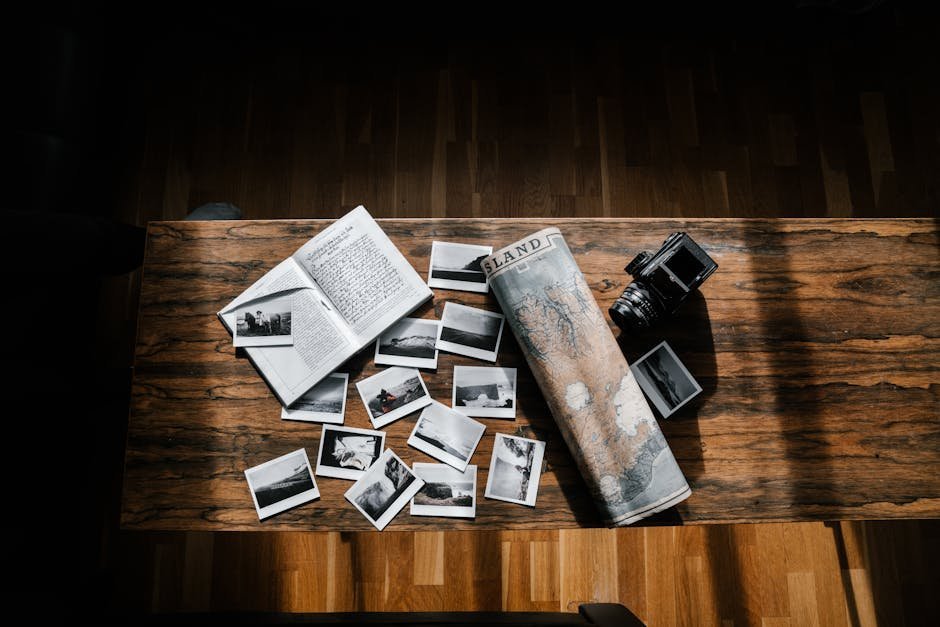
For most people seeking mental health benefits, a private practice works best. The simplest version: a daily or weekly walk with a phone camera, capturing whatever draws attention without judgment, reviewed monthly in a slow scroll, perhaps printed quarterly into a small book or zine. No public posting. No social media tag. The practice is for the practitioner.
Some people add a journaling layer, writing a sentence or two about each photograph from a given week. Some join a small in-person group that meets monthly for low-stakes critique. Some pursue a long-term project, photographing the same tree, intersection, or family member every week for a year, which builds a longitudinal record of attention. The discipline matters more than the equipment. People who spend thousands on cameras often produce less mental health benefit than people with a phone and a daily walk, because the gear becomes its own anxiety driver. Start small, stay consistent, keep the practice private long enough that it becomes truly yours.
Frequently asked questions
Do I need a real camera, or is a phone enough?
For mental health purposes, a phone is more than enough. The cognitive and attentional benefits do not require a dedicated camera. Some people eventually enjoy a small mirrorless or compact camera, but the smartphone you already own is the right tool to start with.
Should I share my photos online?
For the mindfulness and mental health benefit, the research and clinical experience favor private or semi-private practice. Sharing photos can become a separate, more performative activity that crowds out the original practice. Some people maintain both, with clear separation; others stay private indefinitely.
Is photography appropriate during active depression?
Yes for many people, with caveats. Photography is gentler than activities requiring sustained social engagement and can re-engage attention without the demand of meditation. People with severe depression may need to start with very small commitments, like one photograph a day, rather than ambitious projects that risk reinforcing failure narratives.
Can children benefit from photography for mental health?
Yes. Children’s photography programs in schools and after-school settings have shown benefits in self-esteem, attention, and observational skill. Family photo walks are also a low-pressure way to build connection.
What if I am self-conscious photographing in public?
Many beginners feel this. Starting in low-traffic settings like parks at off-hours, or focusing on objects rather than people, eases the entry. Joining a group photo walk normalizes the activity socially.
The bottom line
Photography is one of the more flexible mental wellness practices available. It scales from a daily five-minute phone walk to a years-long photographic project, costs nothing to start, can be private or social, and adapts to mobility, vision, and cognitive variation. The clinical traditions of photo therapy and PhotoVoice provide structured approaches for trauma, identity, and group work. The informal practice of mindful photography supports daily mood regulation. The line to watch is the one between camera-as-mindfulness-tool and camera-as-comparison-engine; staying on the right side of that line is what determines whether photography mental health work helps or hurts. For most people, with intentional practice, it helps.
If you are in crisis or thinking about harming yourself, call or text 988 to reach the 988 Suicide and Crisis Lifeline, available around the clock in the United States.
For research and practice guidance, see the National Institutes of Health and the American Psychological Association.
This article is for general educational purposes and is not medical advice. Speak with a qualified clinician about your specific health situation.