Aamina arrived in Buffalo on a January evening with two children, a duffel bag, and three years of memories she had not yet found a language for. The resettlement caseworker handed her a list of phone numbers, a winter coat, and an apartment key. For five months, she did not sleep more than two hours at a stretch. The youngest child stopped speaking. Aamina kept telling herself she was lucky, because she was, and that lucky people did not need help. The breaking point came at a clinic intake when a volunteer interpreter, herself a former refugee from Mogadishu, leaned forward and said, in Somali, “You are not okay, and that is not weakness.” A refugee mental health specialist at the local resettlement agency saw Aamina the next week. The work that began in that small office, with two interpreters and a clinician who knew the Somali concept of buufis for the longing of exile, was the start of something Aamina had not let herself imagine: rest.
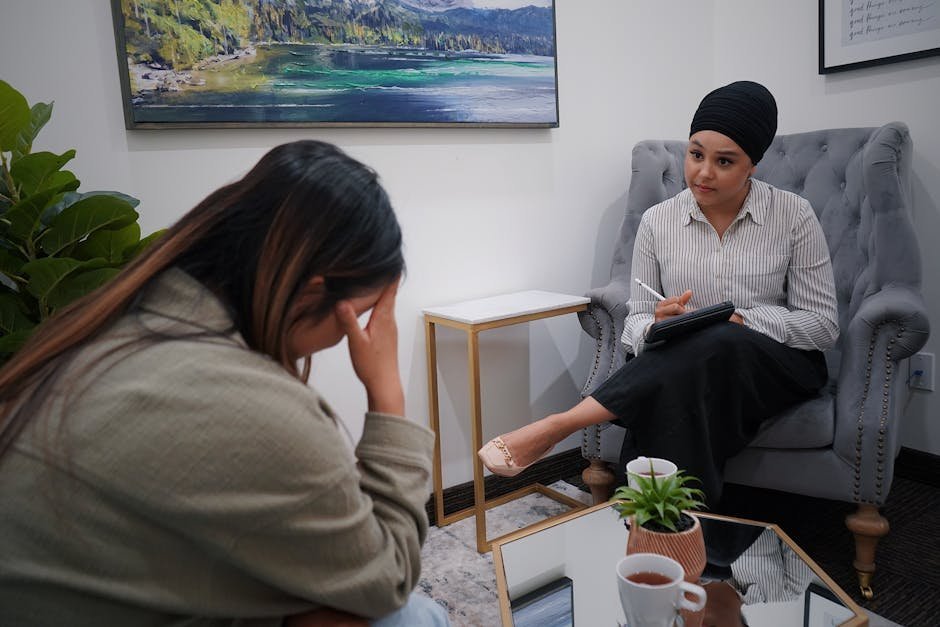
An estimated 600,000 refugees, asylees, and humanitarian parolees live in active resettlement in the United States in 2026, and millions more immigrants carry trauma profiles that look similar even without formal refugee status. Finding mental health care that fits is not a matter of locating any therapist who takes Medicaid. A trained refugee mental health specialist brings cultural framework, interpreter literacy, and trauma protocols designed for the layered violence many newcomers carry. This guide walks through how to find them, what they do differently, and how to navigate the system whether you have documentation, an asylum case, or no status at all.
The Layered Trauma Profile of Newly Arrived Populations
Specialists frame refugee and forced-migrant trauma in four overlapping phases. Pre-migration violence includes war, political persecution, gender-based violence, and torture. The migration journey itself adds prolonged uncertainty, dangerous crossings, family separation, and detention. Post-migration acculturation brings language barriers, status anxiety, racism, and the loss of social roles. Secondary stressors, the slow grind of poverty, housing instability, and family reunification limbo, often outlast the original violence by years.
Standard PTSD treatment was developed largely on populations exposed to single-incident trauma. Refugee experience is rarely single-incident, and rarely safely “in the past.” A specialist adapts protocols accordingly, sequencing stabilization and present-day safety before any focused trauma processing. They also recognize that what looks like avoidance can be cultural privacy, that what looks like dissociation can be exhaustion, and that what looks like depression can be unprocessed grief in a culture without a clinical word for it.
Resettlement Agency Mental Health Programs
Three national resettlement networks operate the largest refugee mental health programs in the United States. The U.S. Committee for Refugees and Immigrants (USCRI) runs clinical and case-management programs in dozens of cities. The International Rescue Committee (IRC) has wellness coordinators at most of its 28 U.S. offices. Lutheran Immigration and Refugee Service (LIRS) partners with local affiliates to deliver trauma-informed services, often in collaboration with Refugee Health Screener-15 (RHS-15) screening at health entry visits.
- USCRI: clinical case management, mental health navigators, and trauma-informed group programs.
- IRC Wellness Programs: integrated mental health within resettlement services in major U.S. cities.
- Lutheran Immigration and Refugee Service: faith-rooted but ecumenical, with trauma services through local affiliates.
- HIAS: historically Jewish but serves all populations; strong on torture survivor work.
- Catholic Charities Refugee Services: parish-network access in many smaller cities without other resettlement infrastructure.
Most agencies will see refugees with formal status at no cost during the first 90 days, and some extend services well past the federally funded window through grant-funded programs. The Office of Refugee Resettlement, housed within the federal Administration for Children and Families at acf.gov, funds many of these programs through state-administered grants and the Refugee Health Promotion Program.
Interpreter-Mediated Therapy: What Good Practice Looks Like
Therapy through an interpreter is its own discipline, not a degraded version of monolingual therapy. Best practice uses trained mental health interpreters, not family members or untrained bilingual staff, because confidentiality, accuracy, and emotional safety all depend on professional distance. Sessions are typically scheduled for 75 to 90 minutes rather than the standard 45 or 50 to allow for the longer rhythm of three-way communication.

A specialist briefs the interpreter before each session, debriefs after, and explicitly addresses how trauma material will be handled. They sit so the client can see the clinician’s face and the interpreter, and they speak directly to the client in second person, not “tell her” or “ask him.” For survivors of torture or sexual violence, gender-matching the interpreter is often essential. For deaf refugees, certified Deaf interpreters paired with hearing interpreters are the standard for complex trauma work.
Cultural Concept of Distress (CCD) Framework
The DSM-5-TR includes an explicit Cultural Concept of Distress framework, and the OQ-Cultural Formulation Interview is now a standard intake tool in trained refugee programs. CCDs are culturally specific ways of expressing, understanding, and seeking help for suffering that do not map cleanly onto Western diagnostic categories. Ataque de nervios in Caribbean and Latin American communities, khyâl cap (“wind attacks”) among Cambodian refugees, buufis in Somali communities, and nervios in many Latin American populations are examples.
An untrained clinician may translate these into anxiety or panic disorder and miss the relational and somatic meaning. A specialist uses the cultural formulation to understand how the client and their community frame the problem before applying any intervention. This often reduces the early dropout rate that has historically plagued refugee mental health work.
Finding Individual Clinicians Outside the Resettlement Network
Not every refugee or immigrant lives near a resettlement agency, and many people whose status is uncertain prefer not to enter agency-affiliated services. Several pathways exist:
- Federally Qualified Health Centers (FQHCs) with behavioral health departments, which serve regardless of immigration status.
- Academic medical center cross-cultural psychiatry programs (often at large public hospitals).
- Inclusive Therapists and Therapy Den directories filtered by language, country of origin, and refugee or immigrant focus.
- The American Psychological Association’s refugee mental health resource network.
- Faith communities and ethnic-specific community centers, which often maintain informal vetted referral lists.
Our piece on finding a Hispanic or Spanish-speaking therapist covers the language and culture matching question in detail and applies broadly to other immigrant populations facing the same search.
Office of Refugee Resettlement Funding and the Mental Health Program
The Office of Refugee Resettlement (ORR) within the Department of Health and Human Services funds the Refugee Mental Health Program, the Refugee Health Promotion grants, and the Survivors of Torture (SOT) program. SOT funds 36 specialty centers across the country that provide free comprehensive care to torture survivors, including medical, mental health, social, and legal services. Eligibility requires documented or credibly disclosed torture experience, but does not require formal refugee status.
The Substance Abuse and Mental Health Services Administration also funds refugee-focused programs through its disaster and trauma initiatives. SAMHSA’s directory and resource pages at samhsa.gov list culturally specific programs and the National Child Traumatic Stress Network (NCTSN) refugee services subgroup.
Working with Undocumented Patients: HIPAA, ICE, and Practical Realities
HIPAA protects health information regardless of immigration status. A therapist or clinic cannot legally share client records with immigration enforcement without a court order, not just a subpoena, in most circumstances. That said, the climate around clinic-level immigration enforcement has shifted multiple times in recent years, and undocumented patients reasonably ask hard questions before disclosing.

Specialist clinicians in this space typically:
- Use intake forms that do not require a Social Security number or visa status.
- Bill on a cash, sliding-scale, or grant-funded basis to avoid creating insurance records that connect to other systems.
- Operate in clinics with explicit “sensitive locations” or sanctuary policies.
- Train front-desk staff in how to handle ICE inquiries (request a warrant, do not consent to entry).
- Use minimum necessary documentation and avoid recording details that could compromise an active asylum case.
Trauma in undocumented populations also frequently reaches back further than the migration. Our long read on “What Happened to You” and trauma frameworks covers how childhood adversity, violence exposure, and ongoing stress compound across decades, and why specialist care matters when several of those layers stack.
Specialty Torture Survivor Centers
For survivors of state torture, the U.S. has a network of specialty centers funded through ORR’s Survivors of Torture program and the National Capacity Building Project. The Center for Victims of Torture (CVT) operates clinics in Minnesota, Georgia, and several other locations, and runs international programs that train providers globally. The Bellevue/NYU Program for Survivors of Torture (BPSOT) in New York and the Boston Center for Refugee Health and Human Rights (BCRHHR) at Boston Medical Center are two of the longest-running centers, both with integrated psychiatric, medical, and legal services.
Other major centers include the Program for Torture Victims in Los Angeles, Survivors of Torture International in San Diego, Heartland Alliance Marjorie Kovler Center in Chicago, and the Hope Clinic in Atlanta. The full list is maintained through the National Consortium of Torture Treatment Programs and is updated regularly. Care is typically free, includes medical evaluations for asylum cases, and is delivered by interdisciplinary teams trained specifically in torture-related trauma.
The intersection of identity-affirming care with refugee work is also where many specialists trained. Daily Reading’s broader overview of cultural competence in therapy outlines how this field has matured, and how training pipelines like the AAUW survivor programs and Harvard Program in Refugee Trauma developed today’s workforce.
Frequently Asked Questions
Do I need formal refugee status to access these services?
Not always. ORR-funded resettlement programs require documented refugee, asylee, or qualifying humanitarian status. Survivor of Torture centers and FQHCs serve regardless of status. Many specialty programs serve asylum seekers, parolees, and undocumented patients on a sliding or no-cost basis, especially when grant funding allows.
Can I bring a family member as my interpreter?
Specialist programs strongly discourage it, especially for trauma work. Family interpreters cannot maintain neutrality, may filter content to protect you (or themselves), and can be retraumatized by the material. A trained mental health interpreter is part of the standard of care.
How long does refugee mental health treatment typically last?
Programs range from short-term stabilization (8 to 12 sessions) to multi-year intensive care for complex trauma and torture survivors. ORR funding covers initial periods, but specialty centers often continue care indefinitely through grant funding and sliding-scale arrangements.
Is medication part of refugee mental health care?
It can be. Many specialty programs include psychiatry, and culturally-attuned medication management is essential because expectations, side-effect profiles, and stigma around psychiatric medication vary widely by community of origin. Most specialists prefer integrated medical and therapy care rather than prescriptions alone.
What if there is no specialist program in my city?
Telehealth has expanded access dramatically. Many specialty centers now provide virtual care across state lines under emergency licensure or through partnerships, and some FQHCs offer specialty refugee services through video. Local ethnic community organizations are also a strong starting point for finding the closest culturally appropriate care.
The Bottom Line
Refugee and immigrant mental health is its own subspecialty, with its own protocols, language, and ethical landscape. The right starting point depends on status and city: a resettlement agency for newly arrived refugees, a Survivor of Torture center for those with that history, an FQHC or community health center for undocumented patients. Insist on trained interpreters rather than family, ask about cultural formulation in intake, and remember that the goal is not to make your story fit a Western diagnostic frame. Effective care in 2026 builds the frame around the story, not the other way around.
If you or someone you know is in crisis, call or text 988 for the Suicide and Crisis Lifeline. Press 2 for Spanish, or use the chat at 988lifeline.org. Help is available in over 250 languages through interpreter services and through ASL videophone.
This article is for informational purposes only and does not replace professional medical, psychological, or legal advice. Immigration consequences of seeking mental health care vary and should be discussed with a qualified immigration attorney. The mention of any organization, program, or therapy approach is not an endorsement, and eligibility rules change frequently.