When Tomás Delgado, a 41-year-old line cook from Albuquerque, New Mexico, finally agreed to enter a 90-day residential treatment program for alcohol use disorder, his family had three days to find $24,000. His insurance covered detox and seven days of inpatient stabilization. The remaining 83 days were on him. His mother offered her retirement savings; he refused. His sister set up a GoFundMe; it raised $4,200 in a week. The treatment center offered an in-house payment plan at 11 percent interest. A friend who had been through recovery sent him to a personal loan website that quoted him a five-year, $20,000 unsecured loan at 14.9 percent APR. By the time Tomás walked into the residential facility, he had stitched together a $24,000 financing package from four sources: family contribution, GoFundMe, a personal loan, and a partial scholarship from a state-funded recovery foundation. None of it was easy. All of it was necessary. Rehab financing loans and the broader landscape of treatment funding are often the difference between someone going to rehab now and someone waiting for a crisis that may never come.

Insurance pays for a substantial share of addiction treatment in the United States, but rarely all of it. Out-of-network residential programs, extended residential stays beyond what utilization review approves, sober living after rehab, and luxury or specialty treatment all routinely exceed insurance coverage. Rehab financing loans, scholarships, crowdfunding, and creative payment arrangements fill the gap for hundreds of thousands of patients each year. Knowing the landscape can save a family from making the wrong financial decision in a moment of crisis.
Personal Loans From Major Lenders
Unsecured personal loans are the most common path to financing residential treatment. The major online lenders—Prosper Marketplace, LightStream (a division of Truist), Discover Personal Loans, SoFi, LendingClub, Upstart, and Marcus by Goldman Sachs—all offer loans of $5,000 to $50,000 or more for medical purposes, including rehab.
Interest rates depend heavily on credit score. A borrower with a 750 credit score can often secure a five-year loan at 7 to 11 percent APR. A borrower with a 620 credit score will see rates of 18 to 30 percent or face declines. Origination fees vary; LightStream typically charges none, while LendingClub and Prosper charge 1 to 6 percent of the loan amount.
Speed matters during a treatment decision. LightStream advertises same-day funding for many approved borrowers. Prosper, SoFi, and Marcus generally fund within two to five business days. The pre-qualification process at most online lenders uses a soft credit pull, allowing applicants to compare rates without affecting their credit score. Our walk-through of treatment financing decisions covers the comparison process.
CareCredit and Medical-Specific Financing
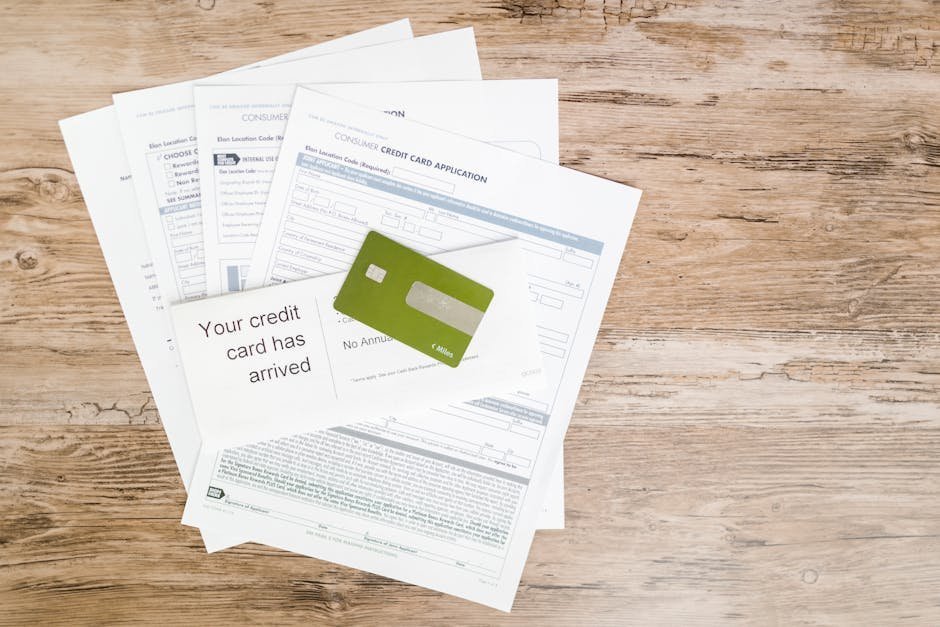
CareCredit is a healthcare credit card issued by Synchrony Bank that is accepted at many outpatient mental health providers, dental offices, and a growing number of substance use treatment centers. The card offers promotional financing options—typically 6, 12, 18, or 24 months at zero percent interest if the balance is paid in full by the end of the promotional period.
The catch is that CareCredit’s deferred-interest structure can be punishing. If the balance is not fully paid by the end of the promotional period, interest is retroactively charged at 26.99 percent or higher from the original purchase date. For someone using CareCredit responsibly with a clear payoff plan, the zero-percent window is genuinely valuable. For someone using it without a payoff plan, the back-end interest charges can transform a $5,000 outpatient bill into an $8,000 obligation.
CareCredit works well for outpatient mental health visits, intensive outpatient programs, partial hospitalization programs, and medication-assisted treatment maintenance. It is less commonly accepted at residential treatment centers, where in-house financing or personal loans are usually the path.
Treatment Center In-House Financing
Most mid-sized and large residential treatment centers offer some form of in-house payment plan or financing arrangement. These arrangements vary enormously and are worth negotiating before admission rather than after.
- Some facilities offer interest-free payment plans for the patient’s portion of treatment, usually requiring 50 percent at admission and the balance over 6 to 24 months.
- Others partner with third-party medical financing companies—Prosper Healthcare Lending, United Medical Credit, AccessOne—which extend loans specifically for treatment with rates ranging from 6 to 24 percent depending on credit.
- A handful of centers will accept a sliding-scale negotiation if the patient demonstrates genuine financial hardship, particularly nonprofit treatment programs.
- Some accept a hybrid: insurance for the first 30 days, partial scholarship for the next 30, and a payment plan for the final 30.
The financial counselor at a treatment center is one of the most underused resources in the rehab process. A 30-minute conversation before admission can produce financing arrangements that nobody offers without being asked. Bring a recent pay stub, a list of monthly expenses, and a clear sense of what you can and cannot afford monthly.
Scholarship Programs and Reduced-Fee Beds
Many of the best-known treatment programs in the United States operate scholarship funds for patients who cannot afford full fees. The Hazelden Betty Ford Foundation, Phoenix House, Caron Treatment Centers, and Father Martin’s Ashley all maintain financial assistance programs with varying eligibility criteria.
Scholarship awards range from full coverage of treatment to partial subsidies of $5,000 to $15,000. Application processes typically require financial documentation—tax returns, bank statements, proof of insurance status—and a personal statement. Awards are competitive and sometimes have waiting periods, but for the right candidate they can transform a financially impossible treatment plan into a feasible one.
State-administered substance abuse funds, often supported by federal block grants from SAMHSA, also provide treatment scholarships in many states. Single-state agencies maintain provider directories and assistance program details. Our piece on scholarship-based recovery funding includes a state-by-state look.
Crowdfunding for Treatment

GoFundMe is the dominant crowdfunding platform for medical needs in the United States, with hundreds of millions of dollars raised annually for treatment-related campaigns. The platform charges no platform fee for personal campaigns; payment processing fees of roughly 2.9 percent plus 30 cents per transaction are deducted from contributions.
Crowdfunding works best when the campaign tells a specific story, names a specific treatment program, lists a clear funding target, and is shared aggressively through personal networks. Campaigns that succeed typically raise the bulk of their funds in the first two weeks, primarily from people personally connected to the campaign organizer.
Privacy concerns are real. A public crowdfunding campaign for substance use treatment exposes the patient’s diagnosis to coworkers, distant relatives, and acquaintances. Some families work around this by having a friend organize the campaign and use neutral language—”medical treatment,” “wellness program”—rather than naming addiction directly. The trade-off is that vague campaigns generally raise less than transparent ones.
Employer Assistance and EAP Funds
Employee Assistance Programs typically offer 3 to 8 sessions of short-term counseling and referral services, but a smaller subset of employers extends financial assistance for substance use treatment beyond what insurance covers. Large self-insured employers, union health and welfare funds, and certain industries with strong recovery cultures—construction, transportation, healthcare—are most likely to have these programs.
Ask your HR department about three specific resources: the EAP and any treatment funding component, any “wellness fund” or “hardship fund” the employer maintains, and any union-sponsored treatment funds if you’re unionized. The conversations should be confidential under most employer policies and federal privacy law.
Family Loan Agreements
Borrowing from family is often the cheapest path to treatment financing, but it carries relational risks that money lenders don’t impose. The most successful family-loan arrangements share a few common features: a written agreement signed by both parties, a clear repayment schedule, an explicit conversation about what happens if the borrower relapses or cannot repay, and an interest rate at or slightly above the IRS Applicable Federal Rate to avoid gift-tax complications.
Family loans have one financial advantage that no commercial product matches: missed or deferred payments don’t damage credit scores, and the interest rate can be set well below market. The cost is paid in family dynamics, and that cost is real. The Consumer Financial Protection Bureau has guidance on documenting family loans for tax and legal purposes.
The Bankruptcy Question
For some patients, the financial pressure of treatment financing combines with pre-existing medical and consumer debt to create an unmanageable obligation. Chapter 7 bankruptcy can discharge most unsecured debts, including medical bills and personal loans used for treatment. Chapter 13 allows a structured repayment plan over three to five years.
Bankruptcy carries credit consequences and emotional weight, but it is sometimes the most rational financial decision after a major medical event. A consultation with a bankruptcy attorney is often free and can clarify whether discharge is realistic for a specific debt picture. Consulting an attorney before taking on additional treatment debt—particularly high-interest medical credit cards—can prevent decisions that worsen an already strained position. Our discussion of debt strategy after major medical care goes deeper.
When Crowdfunding Works for Rehab
Not every treatment scenario is well-suited to crowdfunding. Campaigns that work best share several features: a sympathetic story with broad appeal, an organizer with an active social network, a clear and modest funding goal, and a treatment program with a defined start date that creates urgency.
- Campaigns for first-time treatment generally raise more than campaigns for fifth-time treatment, fairly or not.
- Campaigns with a video from the patient or family member raise approximately twice as much as text-only campaigns on average.
- Campaigns shared through religious, civic, and recovery community networks tend to outperform those relying solely on social media.
- Campaigns that publicly thank donors and post updates raise more in late-stage donations than campaigns that go silent after launch.
- Campaigns with a goal of $5,000 to $15,000 tend to fully fund more often than campaigns with goals over $30,000.
The best crowdfunding strategy is often hybrid: use crowdfunding to cover 20 to 40 percent of the treatment cost and combine it with insurance, scholarships, and a personal loan to fund the rest.
Frequently Asked Questions
What is the cheapest way to finance rehab?
Maximizing insurance coverage and applying for treatment center scholarships are the lowest-cost paths. Family loans at modest interest rates often beat commercial financing. CareCredit’s promotional zero-percent windows can be cheap when paid off on time.
Will a personal loan affect my credit score?
A new personal loan creates a small, temporary dip in your credit score. Consistent on-time payments can improve your score over time. Pre-qualification with most online lenders uses soft credit pulls that don’t affect scores.
Are scholarship-funded treatment programs as good as paid programs?
Scholarships at established programs like Hazelden Betty Ford or Caron offer the same clinical care as paid admissions. State-funded treatment programs vary in quality but are licensed and accredited by the same standards as private programs.
Should I tap my retirement account to pay for rehab?
Hardship withdrawals from a 401(k) or IRA are allowed for medical expenses but trigger income tax and, if you’re under 59-and-a-half, a 10 percent early withdrawal penalty. Loans from a 401(k) avoid the tax hit but must be repaid if you leave your job.
Can I use a Health Savings Account for rehab?
Yes. HSA funds can be used tax-free for substance use disorder treatment, mental health care, and most prescription medications. Keep receipts and treatment documentation in case the IRS requests substantiation.
The Bottom Line
Rehab financing rarely comes from a single source. The patients who get into treatment despite insurance gaps usually combine several funding streams: insurance for what it covers, scholarships for what they can win, crowdfunding for what their network can give, family loans for what relatives can lend, and personal loans for the remainder. Each source has its own rules, costs, and trade-offs. Talking to the treatment center’s financial counselor before admission is the single highest-value 30 minutes a family can spend during the treatment decision process.
If you or someone you love is in crisis, call or text 988 to reach the Suicide and Crisis Lifeline. Help is available 24 hours a day, seven days a week.
This article is for general informational purposes only and does not constitute medical, legal, or financial advice. Loan terms, scholarship eligibility, and treatment center policies vary. Consult licensed financial and treatment professionals before making decisions about funding rehab.