Zach Brown started walking because his car broke down. The 41-year-old high school history teacher in Asheville, North Carolina could not afford a transmission rebuild on a teacher’s salary, so for six weeks in the spring of 2023, he walked the 2.4 miles to school each morning and 2.4 miles back. He had been on bupropion for three years for treatment-resistant depression, with limited results. By the third week, his wife noticed he was sleeping through the night for the first time since their second child was born. By the fifth week, he was actually finishing his morning coffee instead of leaving it half-cold on the counter. When the car was finally fixed, Zach kept walking. He bought a pair of cheap trekking poles, started taking a different route home through Montford to extend the walk by a mile, and within six months had logged more outdoor hours than in the previous five years combined. His PHQ-9 score, which had been stuck at 14 for years, dropped to 4. He told his psychiatrist he was not trying to get off the medication, but he had stopped feeling like he was carrying the weather on his shoulders. He had simply been moving through it.

If you go looking for the most underrated mental health intervention in the literature, walking for mental health consistently shows up near the top. Walking for mental health has been studied across age groups, depression severities, geographies, and contexts, and the effect sizes are remarkably stable. The bar to entry is essentially zero, the side effect profile is benign, and the practice scales infinitely from a five-minute lap of the block to a 500-mile pilgrimage. Walking for mental health is, in many ways, the antidepressant our species evolved with, and we are slowly remembering how to take it.
The depression research on walking
A 2023 meta-analysis published in JAMA Psychiatry pooled data from over 190 trials and concluded that physical activity, with walking as one of the most studied modalities, produced effect sizes for depression treatment comparable to or larger than antidepressant medication and psychotherapy. Lighter intensities, including ordinary brisk walking, often outperformed heavier exercise modalities, in part because adherence was so much better.
The Centers for Disease Control and Prevention’s overview of physical activity guidelines for adults recommends 150 minutes of moderate activity per week, an amount most people reach with a daily 30-minute walk. The mental health dose-response curve, however, is non-linear. The biggest gains come in the first 30 to 60 minutes per day; additional minutes add benefit but with diminishing returns. We covered the broader picture in our piece on exercise as antidepressant medication.
Outdoor walking versus treadmill walking
Treadmill walking is better than not walking, but it is not the same intervention as outdoor walking. A growing body of research, much of it from the United Kingdom and Japan, finds that walking outdoors, especially in green or blue spaces, produces larger reductions in rumination and stress hormones than equivalent indoor walking. A landmark Stanford study by Bratman and colleagues showed reduced activity in the subgenual prefrontal cortex, an area associated with rumination, after a 90-minute nature walk, with no equivalent change after an urban walk.
Urban walking is not without benefits. The visual variety, the social density, and the unpredictability of city streets seem to produce their own form of cognitive engagement that some practitioners prefer to forest paths. The point is not that one is right and the other wrong, only that the treadmill represents the smallest version of the practice and the outdoor walk represents the more complete one.
The 7,000 to 12,000 step evidence
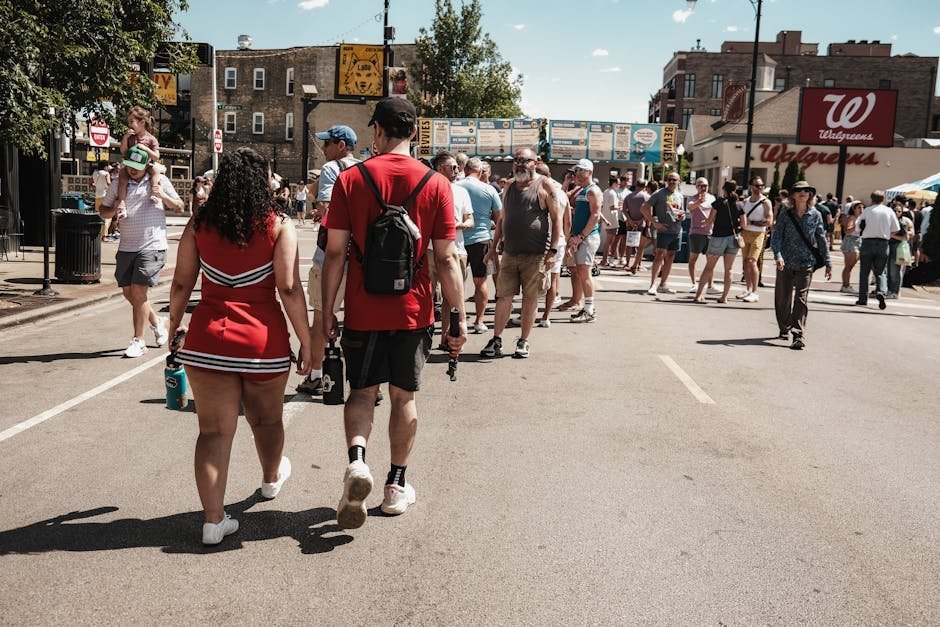
The 10,000 step daily target is a marketing artifact from a 1960s Japanese pedometer, not a research-derived figure. The actual evidence suggests the mental health and mortality benefits of walking start meaningful around 4,000 to 5,000 steps per day, plateau between 7,000 and 12,000, and show diminishing returns above that range. People who currently walk 3,000 steps per day get the largest mental health gains by adding the next 4,000.
Step counts are blunt instruments, but they have the virtue of being easy to measure and easy to nudge. Most modern phones track steps automatically, which means most readers can know their current baseline within an hour and set a sensible target without buying anything new.
Walking groups and Walk With a Doc
The American Volkssport Association runs over a thousand non-competitive group walks each year across the United States, with chapters in nearly every state. Walk With a Doc, founded by an Ohio cardiologist in 2005, now operates over 600 chapters worldwide, where physicians lead free community walks paired with brief health talks. These programs combine the documented mental health benefits of walking with the documented mental health benefits of social connection.
- Local hiking meetups for mid-distance weekend walks
- Run-walk clubs that accommodate slower paces and chronic injuries
- Stroller walking groups for new parents in nearly every metro
- Senior walking clubs through community centers and YMCAs
- Faith-based walking ministries and synagogue Shabbat walking groups
Group walking is where the practice becomes a social institution rather than a private chore. Our broader piece on nature and mental health covers the green-space side of the same picture.
Pilgrimage walking and thru-hikes
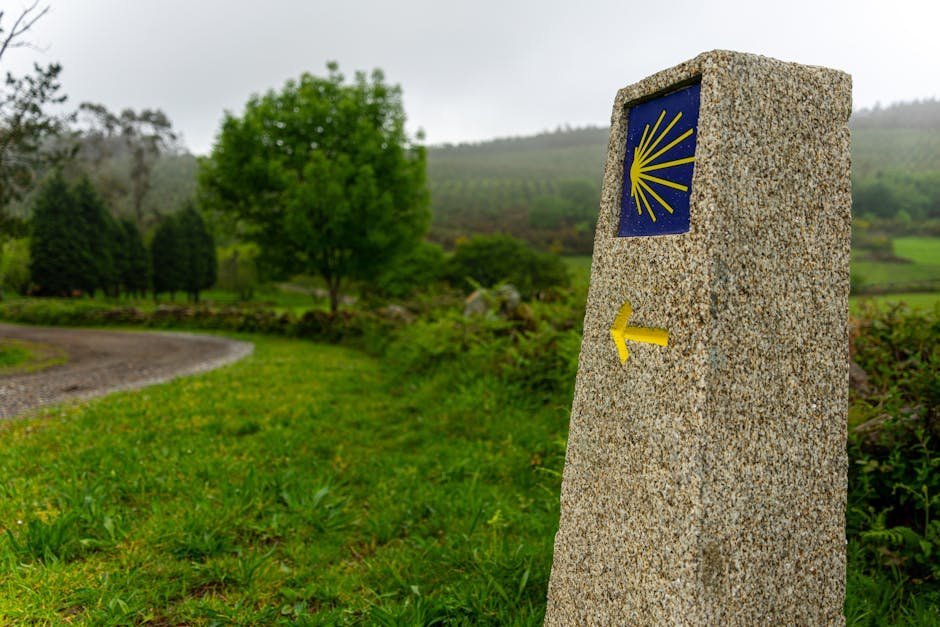
Some walking is short, daily, and woven into ordinary life. Other walking is long, transformative, and operates closer to ritual or pilgrimage. The Camino de Santiago in Spain has been walked continuously for over a thousand years, with American pilgrim numbers rising from a few hundred in the 1990s to tens of thousands annually today. Surveys of returning pilgrims consistently report depression and anxiety reductions that persist months after the walk ends.
The Appalachian Trail, the Pacific Crest Trail, and the Continental Divide Trail run the American thru-hike community, with thousands of attempted thru-hikes each year. The mental health effects of multi-month walking are not subtle. People come off these trails reporting profound shifts in self-concept, priorities, and relationship to anxiety. The intervention is so intense that it cannot be casually replicated, but the underlying mechanism, sustained low-intensity movement in nature with simplified daily decisions, scales down to a weekend backpacking trip or even a long Saturday hike.
Frédéric Gros and the philosophical case for walking
The French philosopher Frédéric Gros, in his 2014 book A Philosophy of Walking, traced the role of walking in the lives of Nietzsche, Rousseau, Thoreau, Rimbaud, and Gandhi. Each of them treated walking not as exercise but as the precondition for thinking. Nietzsche wrote on the move and famously declared that all truly great thoughts are conceived while walking. Rousseau composed entire chapters of his Reveries on long solitary walks around Paris.
This is not just romantic posturing. The cognitive overlap of walking and thinking has held up in modern research; a 2014 Stanford study by Oppezzo and Schwartz found that walking increased creative output by an average of 60 percent compared with sitting. The body in motion seems to free the mind from a kind of mental gravity that desks impose.
Thich Nhat Hanh and walking meditation
The Vietnamese Zen teacher Thich Nhat Hanh popularized walking meditation in the West, where each step is taken with full attention to the contact of foot and ground, the breath, and the sky. Plum Village retreats build entire days around slow walking practice. The form does not require a meditation cushion or a long sitting practice; it can be threaded into a normal commute or a short break from a desk.
The National Institutes of Health summarizes the broader picture in their overview of walking and mental health. We have written more on the contemplative side in our piece on mindfulness and mood.
Walking versus running
Running has a louder cultural reputation, but walking has quietly held its own in the head-to-head studies. The mental health gap between brisk walking and easy running is small, especially when you account for the higher injury rates and lower long-term adherence of running. People who hate running often discover that walking, particularly hilly walking with a weighted vest or trekking poles, delivers a substantial fraction of the cardiovascular and mood benefits without the joint cost.
For people in their fifties and beyond, the case for walking over running tightens further. Lifetime walking is achievable for nearly everyone; lifetime running is not.
Frequently asked questions
How long should my walks be for mental health benefit?
Most research shows meaningful benefit from 30 minutes per day, with strong returns up to 60 minutes. Even 10-minute walks help.
Does walking on a treadmill count?
Yes, but outdoor walking, especially in nature, produces larger mental health effects on average. Treadmill walking is better than no walking.
Should I listen to music or walk in silence?
Both work. Silent walking allows more rumination but also more genuine attention recovery. Many practitioners alternate.
Is fast walking better than slow walking?
Brisk walking has slightly larger cardiovascular effects but mental health benefits show across paces. The pace you can sustain daily beats the faster pace you only manage twice a week.
Can walking replace antidepressants?
For mild to moderate depression, walking has been shown to be roughly as effective as medication in some studies. Do not stop prescribed medication without consulting your prescriber.
The bottom line
Walking is the cheapest, most accessible, best-tolerated mental health intervention in the literature. The dose-response evidence is solid, the practice scales from a hallway lap to a continental thru-hike, and the only equipment required is a pair of shoes that do not hurt. If you are looking for one habit to add this year, walking is the most defensible choice.
If you are in crisis or thinking about suicide, please call or text 988 to reach the Suicide and Crisis Lifeline. Help is available 24 hours a day across the United States.
This article is for general informational purposes only and does not constitute medical advice, diagnosis, or treatment. Speak with a qualified mental health professional or physician about your specific situation.