David Park sat across from his attorney in a borrowed conference room in downtown Phoenix and listened to the words “competency to stand trial” for the first time in his life. His twin brother Jonathan had been arrested on a weapons charge during what David recognized immediately as a manic episode, the third in five years. Jonathan’s public defender wanted a competency evaluation before any plea was entered. The attorney explained that Jonathan’s regular psychiatrist, who had treated him for bipolar I since 2019, could not perform this evaluation; she was a treating clinician and the courts would not accept her report. What Jonathan needed was a forensic psychiatrist, a specialist whose work product was designed for legal proceedings. David spent the next two weeks learning vocabulary most people never encounter unless a family member is caught up in the legal system.
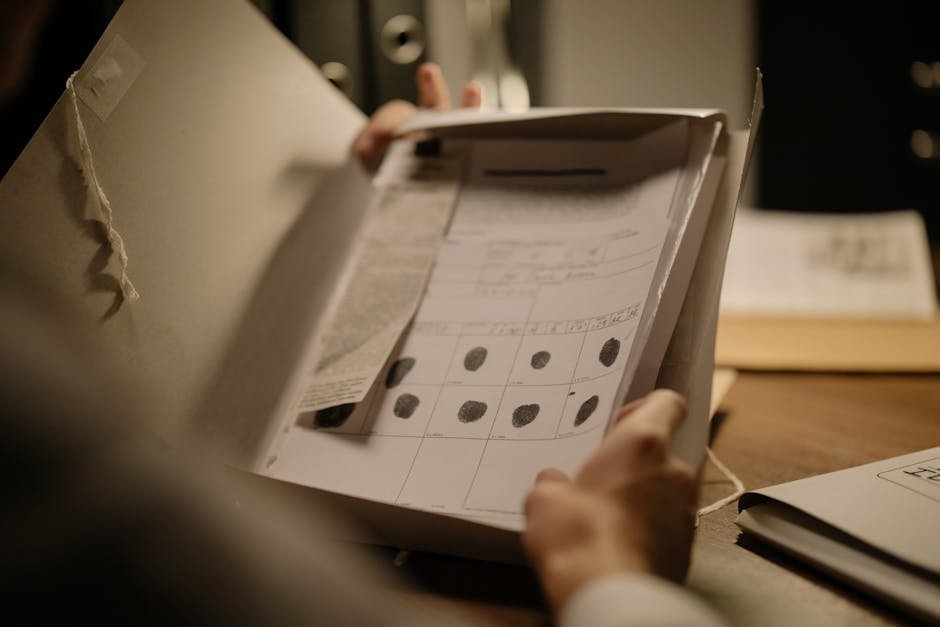
What forensic psychiatry actually does
Forensic psychiatry is the subspecialty of psychiatry that operates at the intersection of psychiatry and the law. A forensic psychiatrist answers legal questions, not clinical ones. The output of their work is a written report and, often, courtroom testimony. The questions they answer fall into a few recognizable categories.
- Competency to stand trial under the Dusky v. United States standard, which asks whether the defendant has rational and factual understanding of the proceedings and can assist counsel
- Mental state at the time of the offense, also called criminal responsibility, which in many states uses the M’Naghten standard or the Model Penal Code formulation for not guilty by reason of insanity (NGRI)
- Custody and visitation evaluations in family court, often under court appointment, addressing the best interests of the child
- Civil commitment evaluations, addressing whether someone meets statutory criteria for involuntary inpatient or outpatient mental health treatment
- Fitness for duty evaluations for police officers, pilots, physicians, and other licensed professionals after a critical incident or impairment concern
- Independent medical examinations (IMEs) for workers’ compensation, Social Security Disability, and personal injury cases
- Testamentary capacity evaluations addressing whether someone had the mental capacity to execute a will or contract
- Risk assessments in sex offender, violence, and threat assessment contexts
How forensic differs from clinical
The most important thing to understand before you hire a forensic psychiatrist is that no doctor-patient relationship exists. The relationship is evaluator-evaluee, governed by a written non-confidentiality notice the evaluee signs at the start. Anything you say can appear in the report, which goes to the retaining attorney, the court, or the agency that ordered the evaluation. There is no HIPAA-protected privacy of the kind that exists with your treating psychiatrist.
This is also why your treating clinician should not perform forensic work on your case. The roles conflict. A treating psychiatrist’s job is to advocate for the patient’s wellbeing. A forensic psychiatrist’s job is to provide an objective assessment that may help, hurt, or be neutral to the legal interests of whoever retained them. Mixing these roles, called dual agency, is considered a serious ethical violation by the American Academy of Psychiatry and the Law (AAPL). If your situation involves potential conflicts with treating providers, our piece on psychiatric advance directives covers some of the boundary issues that come up.
AAPL board certification and what it signals
Forensic psychiatry has been a recognized subspecialty of the American Board of Psychiatry and Neurology since 1994. To become board-certified in forensic psychiatry, a psychiatrist must complete an ACGME-accredited fellowship of at least one year and pass the ABPN forensic psychiatry exam. The American Academy of Psychiatry and the Law (AAPL) is the professional society for forensic psychiatrists and publishes the practice guidelines, ethics opinions, and continuing education that define the field.
Not every psychiatrist who takes forensic cases has done a fellowship. Some general psychiatrists with substantial experience perform forensic evaluations and can produce excellent work. For high-stakes cases, however, an attorney will almost always want a board-certified forensic psychiatrist because the credential withstands cross-examination better. Verify board certification at the ABPN’s public certification verification site at certified.abpn.org and check AAPL membership at aapl.org.

How to find a forensic psychiatrist
The AAPL maintains a member directory at aapl.org, but most retentions happen through other channels. Attorneys are the most common referral source. For pro se litigants, courts maintain panels of pre-approved evaluators for competency cases, accessed through the trial court clerk or public defender’s office. Academic medical centers and university psychiatry departments often house faculty forensic psychiatrists who accept private retentions.
Word of mouth among attorneys carries enormous weight. If you are hiring on your own, ask any candidate three questions: how many cases have you handled in the specific area I need, can you provide a CV and a representative redacted report, and how often have you been excluded as an expert under Daubert or Frye challenges. For attorney-side context, our overview of hiring a mental health attorney covers how legal representation interacts with the psychiatric expert workflow.
What forensic evaluations cost
Forensic psychiatry is almost always private-pay. Insurance does not cover legal evaluations. Hourly rates from board-certified forensic psychiatrists range from $300 to $700 per hour for record review, evaluation time, report writing, and consultation. Deposition and courtroom testimony usually bill at a higher hourly rate, often $500 to $1,000, with minimum half-day or full-day fees. Total costs depend on the complexity of the case.
- A single competency to stand trial evaluation: typically $3,000 to $8,000
- A criminal responsibility evaluation with substantial records: $8,000 to $25,000
- A child custody evaluation: $10,000 to $40,000, often split between parents by court order
- An independent medical examination for workers’ comp or disability: $2,500 to $7,500
- Fitness for duty evaluation: $3,500 to $10,000
Most forensic psychiatrists require a retainer of $5,000 to $15,000 deposited in trust before work begins. The retainer is drawn down against actual time and a final accounting is provided at case closure. If you are indigent and the evaluation is for a criminal case, the court may appoint a forensic expert at public expense under Ake v. Oklahoma, the Supreme Court case establishing the right to a psychiatric expert for indigent defendants in capital cases.
What to bring to the evaluation
The quality of a forensic evaluation depends heavily on the records the psychiatrist reviews. Before the appointment, your attorney will assemble what is sometimes called the “discovery packet” for the expert. For a criminal evaluation this includes police reports, arrest records, jail medical records, prior psychiatric records going back as far as available, school records, military service records if relevant, and any prior forensic reports. For a custody evaluation, it includes prior court orders, parenting plans, school and medical records of the children, and CPS records. For a disability or IME evaluation, it includes treating provider records, employment records, and prior IME reports.
The evaluee should bring a photo ID and any current medication list. Do not bring a friend or family member into the room unless the evaluator specifically requests it. Be prepared for the evaluation to last between three and eight hours, often split across two visits. Psychological testing is sometimes added. The evaluator will explicitly state at the outset that nothing is confidential and may use a written form for you to sign acknowledging the warning. Take that warning seriously. Treat the meeting as a deposition, not a therapy session.
When you need a forensic psychiatrist versus a clinical one
The line is not always intuitive. If you are involved in any active legal proceeding where psychiatric evidence is in dispute, you need forensic. If you are seeking treatment for a condition, you need clinical. If your treating psychiatrist is being asked to write a letter for an employer, a school, or the Social Security Administration, that is a borderline territory; supportive letters from treating clinicians are routine, but a formal forensic opinion should come from a forensic specialist. The American Psychiatric Association’s resource document on dual agency is explicit on the boundary issue.
One additional category deserves mention. If you believe you have been harmed by malpractice from a previous psychiatric provider, the expert you eventually need is a forensic psychiatrist who specializes in standard-of-care opinions. Our piece on mental health malpractice lawyers covers the legal side of those cases and how the expert is integrated into the litigation strategy. The clinical-forensic distinction matters in malpractice work too, because a treating psychiatrist who renders a malpractice opinion against a former colleague faces significant ethical scrutiny.

Civil commitment and emergency holds
Civil commitment law varies by state but generally requires evidence that the person poses a danger to self or others or is gravely disabled because of a mental illness. The initial emergency hold, often called a 5150 in California, a Section 12 in Massachusetts, or a Baker Act in Florida, lasts seventy-two hours. Continued commitment requires a court hearing with psychiatric testimony. Forensic psychiatrists testify on both sides of these hearings, both for the petitioning hospital and for respondents seeking release.
For families navigating an acute commitment hearing, the forensic psychiatrist retained on the family’s behalf can offer a second opinion that influences the judge’s ruling. In assisted outpatient treatment (AOT) programs like New York’s Kendra’s Law and California’s Laura’s Law, forensic psychiatrists evaluate eligibility and recommend treatment plans that the court may order over the patient’s objection.
Frequently asked questions
Will the forensic psychiatrist’s report be favorable to me?
Maybe, maybe not. A reputable forensic expert provides an opinion based on the evidence, not based on who is paying. If your attorney has chosen well, the expert’s preliminary review of the records suggests a defensible opinion before formal retention. Skilled attorneys do this screening to avoid paying for an unhelpful report.
Can I refuse to participate in a court-ordered evaluation?
You can refuse, but consequences follow. In criminal cases, refusing a court-ordered competency evaluation can lead to involuntary hospitalization for evaluation. In custody cases, refusing can be used against you by the judge. In civil cases like personal injury, refusing can lead to dismissal of the claim. Talk to your attorney before refusing any court-ordered evaluation.
Does the forensic psychiatrist have to testify in court?
If their report is admitted into evidence and the opposing party demands cross-examination, yes. Most cases settle or plead before trial, and most reports never lead to live testimony. Build the testimony hourly rate into your budget anyway in case the case proceeds.
How long does a forensic evaluation take from start to report?
From retention to final report typically runs four to ten weeks. Rush evaluations under tight court deadlines are possible but cost more. Complex cases with extensive records can take three months or longer.
Can I see the report before it goes to the court?
If you retained the expert privately through your attorney, yes; the report is initially work product. If the court ordered the evaluation directly, the report goes to the judge and to all parties, and you do not control its release. Your attorney can move to seal certain portions in some jurisdictions.
The bottom line
Hiring a forensic psychiatrist is a different exercise from finding a clinical one. The relationship is evaluator-evaluee, not doctor-patient. The output is a legal document. Cost is private-pay at $300 to $700 per hour with retainers in the thousands. Verify ABPN board certification, look for AAPL membership, and let your attorney drive the selection. Bring complete records and remember nothing you say is confidential. David ended up retaining a board-certified forensic psychiatrist at the University of Arizona. The evaluation found Jonathan competent but recommended a treatment plan the prosecutor accepted in lieu of incarceration. Two years later, Jonathan is medication-compliant and living in his own apartment. AAPL publishes ethics guidelines and a member directory at aapl.org, and the ABA Commission on Law and Mental Disability hosts resources at americanbar.org.
If you or someone you know is in crisis or experiencing thoughts of suicide, call or text 988 to reach the Suicide and Crisis Lifeline.
This article is for informational purposes only and does not constitute legal or medical advice. For decisions involving forensic evaluations, consult a licensed attorney in your jurisdiction and a board-certified forensic psychiatrist.