Karen from Buffalo had been dreading October since college. Every fall the same pattern would arrive on the same schedule. She slept twelve hours and woke up exhausted. She craved bread and pasta and chocolate at quantities that did not match her summer self. She gained eight to fifteen pounds between Halloween and St. Patrick’s Day. The energy returned in late March, the carbohydrate cravings faded, and the cycle would reset until autumn. Her psychiatrist diagnosed seasonal affective disorder formally for the first time when Karen was 38, and offered her a structured starter package. A 10,000 lux light box at face distance, used for thirty minutes within an hour of waking, beginning the second week of September and continuing through April. Within ten days the heaviness lifted. By the third winter on the protocol Karen had also started a low-dose SSRI in October each year. She no longer dreaded the season, just adjusted to it.
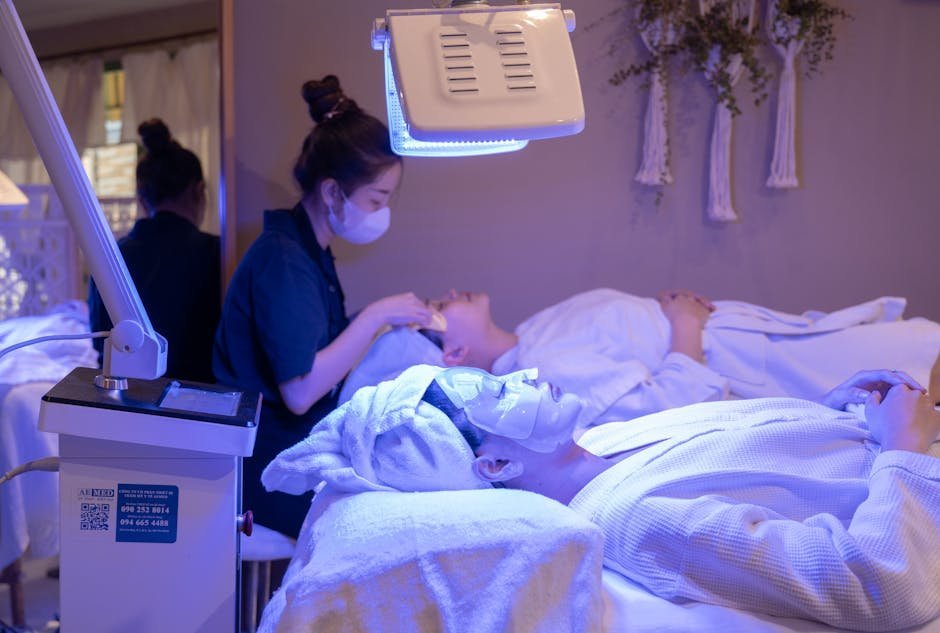
The clinical literature on light therapy SAD treatment has been remarkably stable for thirty years. The basic protocol works, the side effect profile is manageable, and the patient population most likely to benefit is well characterized. The challenges are mostly practical. People buy the wrong devices, they use them at the wrong time of day, they discontinue too early in the season, and they confuse marketing language with the technical specifications that actually drive efficacy. Doing light therapy correctly is straightforward. Doing it the way most consumers approach it produces a meaningful amount of unnecessary failure.
SAD versus subsyndromal winter depression versus major depression with seasonal pattern
Three related but distinct entities show up in winter mood complaints. Major depressive disorder with seasonal pattern is the formal DSM-5 category, requiring full diagnostic criteria for major depression with a recurrent fall-winter pattern over at least two years. Subsyndromal seasonal affective disorder, sometimes called winter blues, describes a milder version with mood, energy, and appetite changes that do not meet major depression thresholds but still impair quality of life. Seasonal worsening of an existing major depressive disorder represents a third pattern, where the underlying condition is present year-round and exacerbates during the dark months.
Light therapy is best studied in formal SAD, with strong response rates approaching those of SSRIs in head-to-head comparisons. Subsyndromal SAD also responds well, often with shorter daily exposures and less elaborate equipment requirements. Year-round depression with seasonal worsening is the most clinically complex case, where light therapy is usually adjunctive rather than primary, and where the underlying treatment plan continues year-round with light added during the dark months. Our piece on tapering off antidepressants covers some of the considerations for patients deciding whether to remain on year-round medication or use seasonal augmentation.
Light box specifications that actually matter
The phrase “10,000 lux” appears on most therapeutic light box marketing, and it is the right number, but the specification is more particular than a single bullet point suggests. The 10,000 lux must be measured at the distance at which the user actually sits, not at the surface of the lamp. Many lamps deliver 10,000 lux at 12 inches and only 2,500 lux at 24 inches. The user manual should specify both the lux value and the corresponding distance, and the user should sit at that distance during sessions. Some light boxes offer adjustable arms to position the light at the documented effective distance from the face.
Other specifications matter. Full-spectrum white light is the standard, with the blue-enriched alternatives being a separate research area that is not yet the consumer mainstream. The light should be UV-filtered, since therapeutic light boxes do not need ultraviolet wavelengths and unfiltered UV adds cumulative skin and eye risk without efficacy benefit. The light should be diffused rather than directional, since direct point-source lighting causes glare and discomfort. Reputable products list these specifications openly, while the cheapest products on the marketplace often omit lux distance, UV filtering, and other key parameters.
Morning timing and the circadian protocol
The standard protocol with the strongest evidence is morning light, used within one hour of habitual waking, for thirty minutes daily. Some patients require forty-five to sixty minutes, particularly with mid-strength devices or for severe symptoms. The morning timing is not arbitrary. Light therapy works in part by phase-advancing the circadian clock, a shift that is most efficient when light hits the retina shortly after waking, when the master clock is most responsive to light input. Evening light, by contrast, can delay the clock and worsen sleep, which is why “I’ll just use it before bed” is one of the most common protocol errors.
The session does not require staring at the lamp. The user should sit facing the lamp at the documented distance, with the lamp positioned at eye level or slightly above and angled so that the light reaches the eyes through normal forward-facing posture. Reading, eating breakfast, working at a laptop, or talking with family during the session is fine. Looking directly into the lamp is not necessary and should be avoided. The retinal exposure is what drives the effect, not visual attention to the source.
Evidence base and effect sizes
The clinical evidence for light therapy in SAD is among the strongest in seasonal psychiatry. Multiple randomized controlled trials have shown response rates in the 50 to 80 percent range with the standard 10,000 lux protocol, with effect sizes that compare favorably to selective serotonin reuptake inhibitors. The 2016 Lam trial in JAMA Psychiatry, comparing light therapy, fluoxetine, combination, and placebo for non-seasonal depression, also showed light therapy effects, suggesting the indication may extend beyond strictly seasonal patterns. Several large meta-analyses have replicated the basic finding that light therapy reduces depressive symptoms in SAD with a clinically meaningful magnitude.
The onset of effect is typically within two weeks, often within a few days for clear responders, which is faster than most antidepressants. Discontinuation effects are also fast. Patients who stop using the lamp during a winter typically see symptoms return within a week or two, which is why the protocol generally continues from early fall through early spring rather than being used only during the worst weeks.
Dawn simulation alarms as an alternative
Dawn simulators are devices that gradually increase bedside light intensity over the thirty to sixty minutes before the alarm time, simulating a natural sunrise. They are not 10,000 lux at face distance, and they do not use the same protocol as a morning bright light box. They have, however, accumulated their own evidence base for SAD and milder seasonal mood symptoms, with several trials showing response rates approaching those of bright light therapy in patients who tolerated dawn simulation but could not commit to a thirty-minute morning session.
For patients whose mornings are constrained by childcare, work commute, or sleep architecture issues, a dawn simulator can be the practical entry point. Some patients use both, a dawn simulator to ease waking and a 10,000 lux session at breakfast. The combination is reasonable, with the caveat that more is not always better and the standard protocol is well-validated as a complete intervention. Our piece on mental health wearables and tracking covers some of the related sleep and circadian monitoring tools that can complement seasonal light therapy.
When to combine light therapy with an SSRI
For mild to moderate SAD, light therapy alone is often sufficient. For moderate to severe SAD, particularly when symptoms include significant functional impairment, suicidal thoughts, or atypical features that are not fully responsive to light alone, combination treatment with an SSRI is reasonable and well-supported. Bupropion XL has an FDA-approved indication for prevention of seasonal depressive episodes when started in early fall and continued through spring, which represents a different model of use than starting medication after symptoms emerge.
Patients who have used light therapy successfully for years sometimes find that the protocol stops working, either because the season has worsened in some manner, because the device has aged and lux output has declined, or because non-seasonal depression has emerged underneath the seasonal pattern. Reassessment with a clinician at that point is appropriate, with attention to whether the underlying picture has shifted from pure seasonal to mixed seasonal and non-seasonal patterns. Our broader piece on non-medication options for depression places light therapy alongside the other intervention categories.

Side effects and bipolar mania risk
The most common side effects of light therapy are mild and self-limiting. Eye strain or visual fatigue, particularly in the first week of use, often resolves with adjustment of distance, angle, and session duration. Headaches, occasional nausea, and irritability appear in a small minority and usually respond to reducing the daily session length. Skin sensitivity is rare with UV-filtered devices and should prompt evaluation for medications that increase photosensitivity if it occurs.
The clinically important risk is mania induction in patients with bipolar disorder, particularly bipolar I. Light therapy can trigger hypomanic or manic episodes in susceptible patients, and the risk is meaningful enough that patients with bipolar disorder should not initiate light therapy without psychiatric supervision. Patients with previously undiagnosed bipolar disorder sometimes have their first manic episode triggered by light therapy initiated for what was thought to be unipolar SAD. A careful family history and screening for prior hypomanic episodes is part of the appropriate workup before starting light therapy in any patient with depression, not only those with established bipolar diagnoses.
Buying guide and trusted brands
Several brands have established reputations for clinically appropriate light therapy products. Carex Day-Light Classic Plus is a well-regarded option, with a tilting head, full-spectrum UV-filtered light, and documentation of 10,000 lux at 12 inches. Verilux HappyLight series offers a range of price points, with the higher-tier models meeting the standard specifications. Northern Light Technologies makes several research-grade options that have been used in clinical trials. Aurora LightPad and similar tablet-style devices are convenient for desk use and can deliver appropriate intensity at moderate distances when used as specified.
Price ranges run from about $50 for entry-level devices to several hundred dollars for full-size clinical-grade lamps. The cheapest devices on online marketplaces often fail to deliver the documented 10,000 lux at any reasonable distance, and the consumer should look for devices that publish the lux-distance relationship explicitly. The Center for Environmental Therapeutics maintains an independent informational resource on device specifications and protocols, and many psychiatrists familiar with SAD will recommend specific models based on local availability.
Insurance coverage and prescription pathways
Insurance coverage of light therapy devices in the United States is the exception rather than the rule, but it does happen. With a written prescription specifying the device as treatment for diagnosed seasonal affective disorder, some commercial plans will cover the device under durable medical equipment benefits. Health savings account and flexible spending account funds can be used for the purchase with appropriate documentation, which is the more common path for U.S. patients. Many psychiatrists who treat SAD regularly will write the prescription as a matter of course, since the device is genuine medical equipment.
The National Institute of Mental Health publishes a plain-language overview of seasonal affective disorder, including light therapy as first-line treatment, on its consumer information pages. The Centers for Disease Control and Prevention covers seasonal patterns of depression as part of its broader mental health resources at cdc.gov mental health pages, including practical guidance on recognizing and addressing winter mood changes.
Frequently asked questions
How soon will I notice the effect?
Many responders see a difference within three to seven days. Full effect typically establishes by two to three weeks. If there has been no change at four weeks of correct use, reassess protocol or consult a clinician.
Can I use the lamp in the evening instead of the morning?
Generally not. Evening exposure can delay the circadian clock and worsen sleep onset. The morning protocol is the validated approach. Some patients with delayed sleep phase patterns work with a clinician on alternative timing, which is not the typical case.
How long should I keep using it each season?
Most patients begin in early to mid fall, depending on latitude and personal pattern, and continue until late March or April. Stopping early, when symptoms have lifted but the season has not turned, often produces relapse within a week or two.
Is it safe for my eyes?
UV-filtered light boxes used at the documented distance and duration are generally safe for healthy eyes. Patients with macular degeneration, retinopathy, or other significant ocular pathology should consult their ophthalmologist before starting.
Will my insurance pay for the light box?
Sometimes, with a prescription documenting medical necessity. HSA and FSA funds are usually accepted for the purchase. Most patients pay out of pocket, with prices ranging from around fifty to several hundred dollars for clinical-grade devices.
The bottom line
Light therapy SAD treatment is one of the better-established interventions in seasonal psychiatry, with a protocol that is straightforward to execute correctly and effective for a substantial majority of properly diagnosed patients. The non-negotiable specifications are 10,000 lux at face distance, full-spectrum UV-filtered light, morning timing within an hour of waking, and thirty minutes of daily use across the dark months. The common reasons it fails are wrong device, wrong distance, wrong timing, and stopping too early in the season. Combine the protocol with a careful diagnosis, screening for bipolar history, attention to side effects, and integration with medication when appropriate, and the seasonal pattern that has shaped the patient’s winter for years can become a manageable part of the year rather than a dreaded one.
If you are in a crisis, call or text 988 to reach the Suicide and Crisis Lifeline. If you are not in immediate danger but recognize a recurring seasonal pattern in your mood, talk with your primary care clinician or a mental health professional about whether light therapy fits your situation, and how to integrate it with the rest of your treatment plan.
This article is for general information only and is not medical advice. Light therapy should be discussed with a clinician, particularly if you have a history of bipolar disorder, retinal disease, photosensitive medication exposure, or current significant depressive symptoms. Individual response varies, and proper protocol matters as much as device selection.