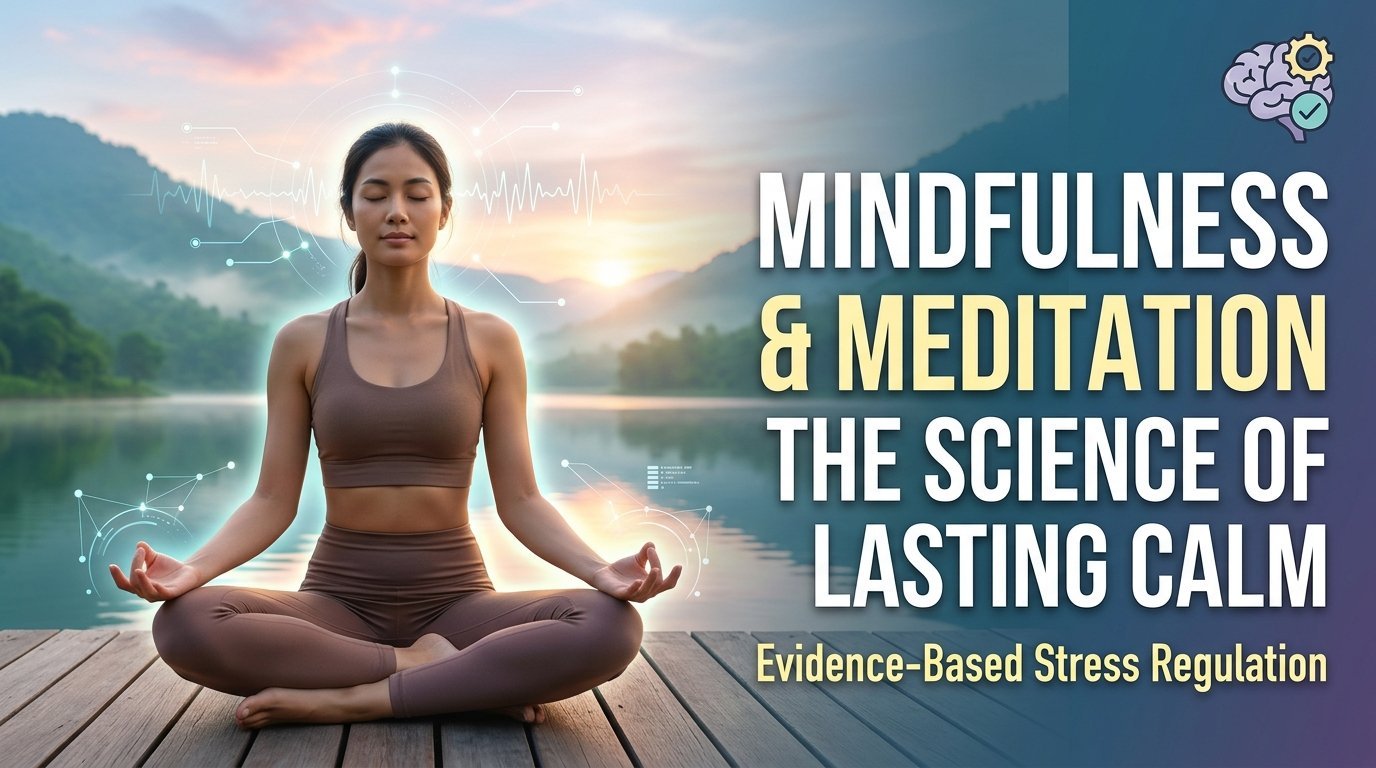
Mindfulness as a Mental Health Tool, Not a Lifestyle Trend
The cultural visibility of mindfulness and meditation has grown so much in recent years that the techniques are now associated more with corporate wellness programs and Instagram influencers than with their actual evidence base. The truth underneath the cultural noise is that mindfulness, when practised with reasonable consistency, is one of the most studied and well-supported interventions in modern mental health care. The research has produced specific findings about what works, for whom, and at what dose.
This guide describes what mindfulness and meditation actually do, what the research shows about their effects on depression, anxiety, stress, and several other conditions, and how to build a practice that produces measurable benefits over the long term. The aim is to separate the genuinely useful from the marketing claims and to give patients a realistic framework for making mindfulness a part of their long-term mental health routine.
What Mindfulness Actually Is
Mindfulness, in the clinical sense, is the practice of paying deliberate, non-judgmental attention to present-moment experience. The practice can take many forms, including formal seated meditation, guided body scans, mindful walking, mindful eating, or brief check-in practices interspersed throughout the day. The core skill is the same across forms: noticing what is happening in your body, mind, and surroundings, without immediately reacting to it.
The skill matters for mental health because most distressing emotions, when examined directly with curiosity, change. Anxiety that is fought with often grows. Anxiety that is observed with mindful attention often softens. Depression that is reasoned with often deepens. Depression that is met with kind attention often loosens. The mechanism is not magic. It is the way the nervous system responds to stable, non-threatening attention as opposed to alarmed reaction.
The Research on Specific Conditions
The strongest evidence for mindfulness in mental health care exists for two specific applications. Mindfulness-Based Stress Reduction, often called MBSR, is an eight-week structured program developed by Jon Kabat-Zinn that has been studied extensively for stress, anxiety, and chronic pain. Mindfulness-Based Cognitive Therapy, often called MBCT, integrates mindfulness with cognitive therapy techniques and has the strongest evidence base for relapse prevention in recurrent depression. Patients who complete MBCT show meaningfully reduced rates of depressive recurrence compared with patients receiving treatment as usual.
Beyond these structured programs, less formal mindfulness practice has shown smaller but real effects across a wide range of conditions, including general anxiety, depression, PTSD, ADHD, eating disorders, and chronic pain. The effect sizes are usually modest but consistent. Mindfulness rarely transforms a condition on its own. It often improves the condition meaningfully when combined with other treatment.
The Dose-Response Relationship
The research has produced reasonably specific dose recommendations. Most studied protocols involve roughly twenty to forty-five minutes of practice per day, six days per week, for eight to twelve weeks before measurable effects appear. Shorter daily practice, in the ten to twenty minute range, also produces effects but more slowly. Very brief practice, under ten minutes per day, produces real but smaller benefits, and may be best treated as a starting point rather than a full intervention.
The consistency matters more than the duration. Twenty minutes a day for six months produces more measurable effect than two hours per day for three weeks followed by nothing. The mechanism appears to involve gradual neuroplastic changes that develop over time and require ongoing maintenance rather than intensive short bursts.
How to Start a Practice
The most useful starting point for most people is a structured eight-week program rather than independent practice. MBSR and MBCT programs are now widely available in person and online. Insurance coverage varies, with some plans covering MBSR and MBCT under behavioural health benefits, particularly when delivered by a licensed clinician. Several validated apps including Headspace, Calm, Insight Timer, and Ten Percent Happier offer guided programs that approximate MBSR and MBCT for patients without access to in-person versions.
For patients beginning independent practice, ten minutes a day of guided meditation through a reputable app, six days a week, is a reasonable starting dose. Many practitioners report meaningful effects within four to eight weeks of consistent practice. The key is to treat the practice as a fixed appointment with yourself, not as something to do when you have time.
Common Obstacles and How to Handle Them
Most people who try meditation report similar early difficulties. The mind wanders constantly. Sitting still feels uncomfortable. Twenty minutes feels like an eternity. Negative emotions surface that the practice does not seem to make easier. These experiences are not evidence that meditation is failing. They are part of the practice itself. The skill being developed is the noticing of these experiences without abandoning the practice.
For patients with significant trauma history, mindfulness practice can occasionally surface intrusive material that benefits from professional support to process. Trauma-sensitive mindfulness, a specific approach developed by clinicians like David Treleaven, modifies traditional practices to reduce the risk of retraumatisation. Patients with significant trauma history should consider working with a clinician familiar with these adaptations, particularly during the first months of practice.
For patients with active psychotic symptoms, severe untreated bipolar disorder, or active substance use, intensive meditation practice may not be appropriate without clinical oversight. The general rule is that mindfulness is most useful as a complement to mental health care, not as a replacement for it, particularly during periods of acute symptoms.
Long-Term Stress Regulation
Beyond specific clinical applications, mindfulness practice over years produces gradual changes in baseline stress regulation. Long-term practitioners often report reduced reactivity to ordinary stressors, faster recovery from emotional disturbance, and a different relationship with their own thoughts and emotions. The changes are not always dramatic. They are usually quiet and accumulating, the way most lasting psychological change is.
For patients in long-term mental health care, regular mindfulness practice often makes other interventions work better. Therapy goes deeper. Medications become more effective. Relapse prevention becomes more reliable. The investment compounds over years rather than months, which is part of why the practice fits well into the longer arc of mental health maintenance rather than into shorter symptom-focused interventions.
A Realistic Expectation
Mindfulness will not cure depression. It will not eliminate anxiety. It will not transform a difficult life into an easy one. The popular framing of meditation as a path to constant happiness is misleading and sets up patients for disappointment when their practice does not produce that outcome.
What mindfulness can offer is a different relationship with the symptoms and stressors that are part of being alive. The change is real, the evidence is solid, and the investment is small once the practice becomes routine. For patients building a comprehensive long-term mental health care plan, mindfulness is one of the most cost-effective additions available, with no copays, no scheduling friction, and no clinical risk for most patients. The investment of fifteen minutes a day is one of the most consistently rewarded fifteen minutes in mental health.
This article is for educational purposes and does not constitute personalised medical advice. If you or someone you know is in crisis, call or text 988 in the United States.