Priya from Boston walked into a heated power yoga studio in Cambridge eight months after the assault, hoping the class would help her sleep. The teacher, well-meaning and certified through a 200-hour program that had spent maybe ninety minutes on trauma, walked the room with bare feet and a strong adjusting hand. He pressed her hips down in pigeon pose without asking. He said the word “surrender” twice during savasana. He used the phrase “let go of whatever you are holding” while gently pressing her shoulders into the mat. Priya kept it together until the parking lot, where she sat in her car shaking for forty-five minutes before she could drive home. She did not return to yoga for two years. When she finally did, it was through a TCTSY-trained facilitator at a community trauma center, who began the first class by saying, “If it feels okay, you might choose to come to the front of your mat.” That sentence, with its conditional and its choice, was the entire difference.
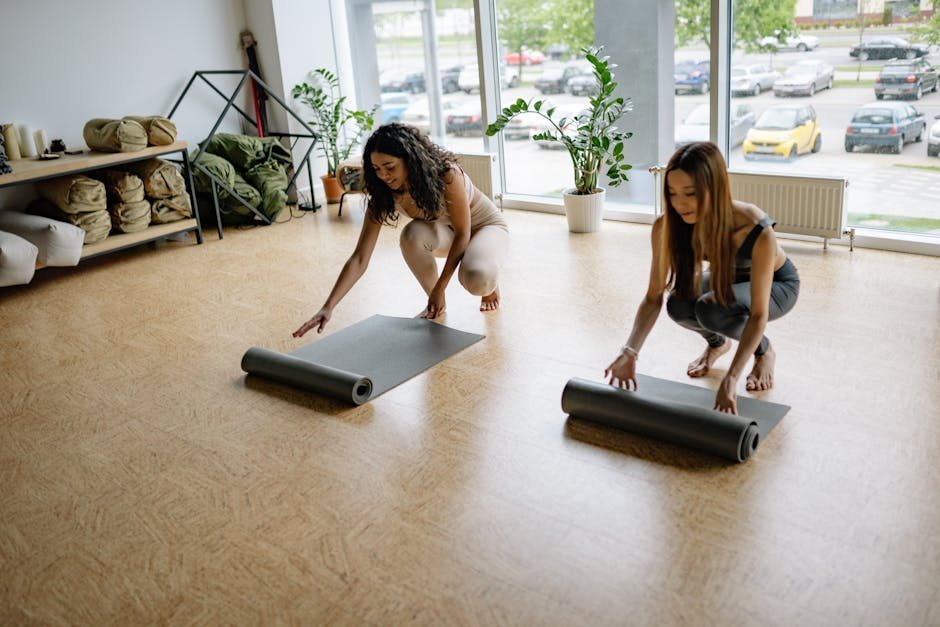
The story of trauma sensitive yoga begins with the recognition that ordinary yoga, taught the way most yoga is taught, can re-traumatize survivors. The studio environment assumes a body that is comfortable being looked at, a nervous system that responds to slow breathing with calm rather than panic, and a relationship with instruction that welcomes physical adjustment. Trauma survivors often have none of those things. The injury is not the yoga. The injury is the gap between what trauma survivors need and what regular yoga teacher training prepares teachers to provide.
How regular yoga can re-traumatize
Three failure modes show up most often. The first is forced poses, where the teacher has a fixed sequence and a fixed expectation that students will move into each shape. A survivor of childhood physical abuse who freezes when told what to do with her body is now being instructed, in the present moment, what to do with her body, and the freeze response activates exactly when the class is supposed to be calming. The second failure mode is loaded language. Words such as “surrender,” “let go,” “open your hips,” “release whatever you are holding” carry no menace for most students and carry direct echoes of assault for sexual trauma survivors. The third failure mode is hands-on adjustment. A teacher who circulates through the room with adjusting hands, even with the best of intentions, is delivering uninvited touch to people whose primary historical injury was uninvited touch.
None of this is the teacher’s fault in a moral sense. It is a structural mismatch. The traditional yoga studio model emphasizes a unified class experience. Trauma-informed practice emphasizes the survivor’s autonomous experience. The two models are not compatible at the level of basic class design.
The TCTSY model and David Emerson
Trauma Center Trauma-Sensitive Yoga, abbreviated TCTSY, was developed at the Trauma Center in Brookline, Massachusetts, the clinical and research center founded by Bessel van der Kolk. David Emerson led the yoga program there for many years and co-authored the foundational text, “Overcoming Trauma Through Yoga,” with Elizabeth Hopper. The model emerged from a specific clinical question. Could a body-based practice help patients with complex trauma who had not responded to talk therapy alone? The answer was yes, but only when the practice was redesigned from the ground up.
The TCTSY framework rests on five core themes. Invitational language, choice making, present-moment experience, non-coercion, and shared authentic experience. None of those phrases is decorative. Each one shapes how a class is conducted. The teacher, called a facilitator in TCTSY language, does not demonstrate poses for students to copy. The facilitator offers forms and invites students to explore the form in whatever way feels possible in the moment. There are no adjustments. There is no music. The pace is slow enough that the survivor’s nervous system can register what is actually happening in the body, which is the entire therapeutic mechanism. Our overview of somatic therapy options for complex PTSD places TCTSY in the broader landscape of body-based interventions.
Certification and finding TCTSY-F practitioners
TCTSY-F is the credential. The F stands for facilitator, and the credential requires completion of a 300-hour training that includes coursework, practicum, and case consultation, all administered through the Center for Trauma and Embodiment, the successor organization that continues the original Trauma Center yoga program after its institutional restructuring. The directory of certified facilitators is maintained on the center’s website, organized by city and state, with notes on whether the facilitator works with individuals, groups, or both, and whether sessions are offered in person, by video, or both.
A 200-hour or 500-hour Yoga Alliance registration is not a trauma credential. Many sincere and skilled yoga teachers have completed weekend workshops on trauma-informed teaching, and the additional knowledge is real, but the depth of training behind TCTSY-F is in a different category. Survivors with complex trauma histories, particularly those in active treatment for PTSD, should look for the TCTSY-F credential when the alternative is a teacher whose trauma exposure is a single weekend.
The choice-based language and why it works
The signature linguistic move in TCTSY is the conditional invitation. “If it feels okay, you might choose to…” or “When you are ready, you might explore…” or “Notice what happens if you decide to…” These constructions sound stilted at first. They become the actual therapy after a few sessions. The grammar of the invitation places authority in the survivor, not the facilitator. The survivor decides whether to move. The survivor decides how far. The survivor decides whether to stop. For trauma survivors whose injury occurred in the absence of consent, the daily rehearsal of consent in the form of choosing to move or not move a knee is not a small thing. It is the rebuilding of the self as the agent of one’s own body.
The other linguistic principle is the avoidance of trigger words. Surrender, release, open, let go, soften into, melt, dissolve, all standard yoga vocabulary, all problematic for survivors. TCTSY substitutes neutral descriptive language. Notice the breath. Feel the contact with the mat. Explore what happens when the foot moves. The interior life of the survivor is approached without metaphors that imply giving up control.
Evidence for PTSD through the Trauma Center research
The original randomized controlled trial published in the Journal of Clinical Psychiatry in 2014 enrolled women with chronic, treatment-resistant PTSD and compared a ten-week TCTSY program against a women’s health education comparison. The yoga group showed significant reductions in PTSD symptom severity, including in patients who had not responded to multiple prior treatments. Subsequent open trials, smaller randomized studies, and qualitative work have replicated and extended the finding, with consistent reports of reduced dissociation, improved interoceptive awareness, and decreased reactivity to body-based trauma cues.
The evidence is strongest as an adjunct to other PTSD treatment, not as a standalone. Patients in trauma-focused therapy, processing memories and beliefs in talk therapy, often find that TCTSY gives them a complementary track for working with the body, where the talk therapy alone could not reach. Our coverage of EMDR therapy and what to expect from sessions walks through the most common adjunctive talk-therapy pairing.
Y12SR and trauma in addiction recovery
Yoga of 12-Step Recovery, abbreviated Y12SR, sits in a different lineage than TCTSY but addresses an overlapping population. Founded by Nikki Myers, Y12SR combines a structured discussion in 12-step format with a trauma-informed yoga practice, on the premise that addiction is often a response to underlying trauma and that recovery requires the body to be addressed alongside the mind. Y12SR meetings are widely available, often free or by donation, and are listed through the program’s website.
The Y12SR practice is gentler than TCTSY in some ways and more directive in others. It uses some traditional yoga vocabulary, and the discussion component centers recovery rather than trauma per se. For survivors whose trauma is heavily entangled with substance use, Y12SR can be the right entry point. For survivors whose primary work is processing the trauma itself, TCTSY is usually the more focused choice. Many people use both at different stages.
What to ask before signing up for any yoga in a trauma context
Before committing to a class, studio, or teacher training, the questions worth asking are direct. What is the teacher’s specific trauma training, including hours, organization, and whether case supervision was part of it? Are physical adjustments offered, and can they be opted out of without explanation? Is the language style invitational, with conditional phrasing, or directive? Is the studio temperature, lighting, music, and door policy stable from week to week? Will arrivals after the start time be ushered into the room behind seated students, or seated near the door? Each of these decisions affects whether the class can hold a survivor’s nervous system safely.
For yoga teacher trainings that bill themselves as “trauma-informed,” the same scrutiny applies. Total hours dedicated specifically to trauma work, the credentials of the lead instructors, whether the training includes practicum with actual survivor populations under supervision, and whether the curriculum covers vicarious trauma and self-care for facilitators, are all reasonable to ask about up front. Weekend trauma certificates are not bad and can be useful in a general teaching practice. They do not equip a teacher to lead a class for clinically diagnosed PTSD.
Virtual options and home practice
Several TCTSY-F practitioners offer virtual sessions, individual or in small groups, which can be the right format for survivors whose nervous system cannot tolerate the studio environment in early recovery. The on-demand library at the Center for Trauma and Embodiment includes recorded practices led by certified facilitators, intended for solo home use, that follow the TCTSY framework. For some survivors, especially those without local TCTSY-F access, the recorded practices are the practical entry point.
Home practice also avoids the practical barriers of class enrollment. There is no commute, no studio environment, no other students, no instructor in the room. The trade-off is the absence of a real-time facilitator who can read the survivor’s nervous system and pace the class accordingly. Most clinicians who refer to TCTSY recommend live sessions, even virtual live sessions, as the starting point, with home practice added later. Our piece on trauma-focused residential treatment covers the higher level of care that some survivors need before any yoga practice is feasible.
The U.S. Department of Veterans Affairs maintains a clinician and patient resource on complementary and integrative interventions for PTSD, including yoga, on its National Center for PTSD website. The National Institutes of Health has reviewed the broader yoga and mental health evidence base through its consumer health information resources, including notes on safety considerations for survivors of trauma.
Frequently asked questions
Will trauma-sensitive yoga retraumatize me?
The TCTSY framework is specifically designed to minimize that risk through invitational language, no physical adjustment, and survivor-controlled pacing. No method is risk-free, and a skilled facilitator will help you titrate exposure carefully. If a session activates intense distress, stop and discuss with your treatment team.
Can I do TCTSY without being in therapy?
It is possible, and many facilitators will work with you, but most clinicians recommend an active relationship with a trauma-informed therapist, particularly during the first months of practice when material can surface unexpectedly.
Is TCTSY covered by insurance?
Rarely as a standalone service. Some integrated trauma programs bill it under group therapy or psychotherapy with adjunct movement when the facilitator also holds a clinical license. Out-of-pocket rates vary widely; sliding-scale and community-funded options exist in larger cities.
How is TCTSY different from yin or restorative yoga?
Yin and restorative are pose styles. TCTSY is a pedagogical and clinical framework that can be applied to many pose styles. The differences are language, adjustment policy, environmental control, and facilitator training, not which shapes are used.
What if I can’t find a TCTSY-F facilitator nearby?
Many facilitators offer secure video sessions. The Center for Trauma and Embodiment directory filters by virtual availability. As an alternative entry, look for clinicians or yoga therapists with Yoga Alliance-Continuing Education trauma training plus mental health licensure.
The bottom line
Trauma sensitive yoga is not a softer version of regular yoga. It is a different framework, built for survivors, by clinicians and yoga teachers who understood that the standard studio model can re-injure people. TCTSY is the most rigorously developed branch, with research support, a credentialing process, and a clear set of principles around invitational language, choice, and the absence of physical adjustment. Y12SR addresses the trauma and addiction overlap. Both work best alongside trauma-focused talk therapy and a treatment team that knows what each modality contributes. The work of finding the right facilitator is itself part of the recovery, because choosing safely is the practice that trauma made impossible and that healing makes possible again.
If you are in a crisis, call or text 988 to reach the Suicide and Crisis Lifeline. The Lifeline serves all callers, including trauma survivors who may not be in immediate danger but need to talk with someone trained to listen.
This article is for general information only and is not a substitute for clinical care. Decisions about trauma treatment, including whether and when to add a body-based practice, should be made with a qualified mental health professional who knows your history. Practices described here can surface intense emotional or physical responses; please proceed at the pace that is right for you.