It was 11 p.m. on a Tuesday in Manhattan when Daniel’s wife called 911. He had been awake for three nights, convinced the upstairs neighbors had installed a listening device, and he had just emptied a kitchen drawer trying to find proof. The paramedics took him to Bellevue Hospital. Daniel’s wife, Iris, expected the kind of medical waiting room where she could sit beside him with magazines and lukewarm coffee. Instead, she was shown to a separate family lounge while Daniel went through a separate door marked Comprehensive Psychiatric Emergency Program. He was searched, changed into paper scrubs, medically cleared, then evaluated by a psychiatrist around 1 a.m. The hospital admitted him by 4 a.m., but he stayed in the psych ED for another 19 hours waiting for an inpatient bed to open. Iris learned that night that the part of the hospital her husband entered was not the same as a regular ER. It had its own rules, its own staff, its own pace, and its own crisis arithmetic.
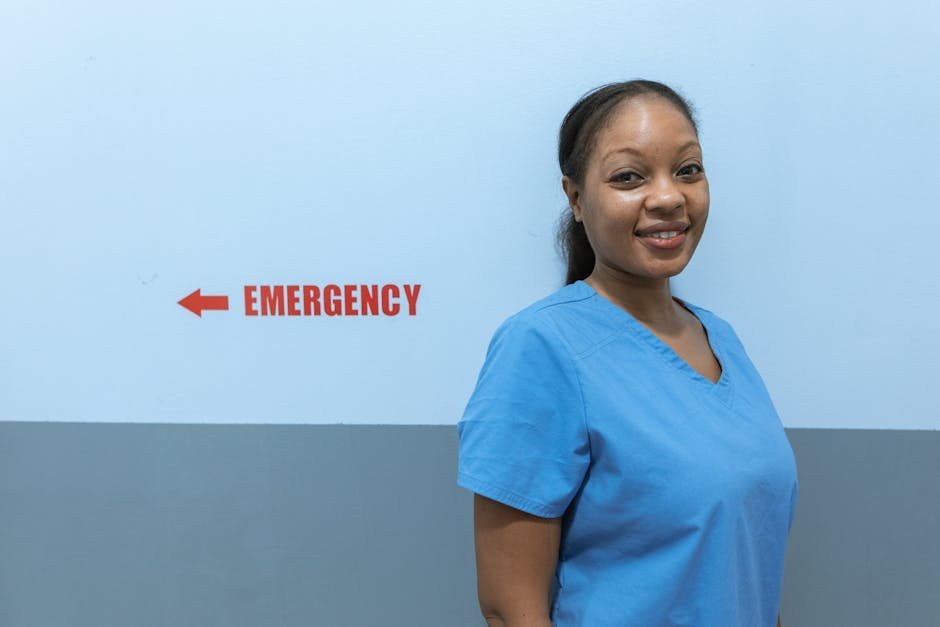
The hospital department Daniel went into is technically called a psychiatric emergency department, sometimes shortened to PED or PES (psychiatric emergency services). For families navigating an acute mental health crisis, understanding the difference between a dedicated psychiatric emergency department and a regular medical ER with a psych consult is one of the most useful things you can learn. The two settings produce very different experiences, very different wait times, and very different transition options. This guide walks through what these departments are, what to expect when you arrive, and what your rights are while a loved one is being held inside.
What a psychiatric emergency department actually is
A dedicated psychiatric emergency department is a 24/7 hospital-based unit staffed primarily by psychiatrists, psychiatric nurses, and crisis social workers. It has its own intake space, often a separate door from the medical ER, and it is licensed and accredited to provide evaluation, stabilization, and admission decisions for people in psychiatric crisis. The treatment rooms are designed for safety, with limited ligature points, secured furniture, and medication administration capacity for emergency injections.
This stands in contrast to the more common arrangement where a person in psychiatric crisis arrives at a general medical ER and is held there until a psychiatric consultation team can evaluate them, sometimes with a several-hour wait for the consult itself. The dedicated PED model concentrates expertise in one place. Bellevue Hospital in New York runs the country’s most-cited Comprehensive Psychiatric Emergency Program. Stanford Hospital, Massachusetts General Hospital, Vanderbilt University Medical Center, Henry Ford Health, and Allegheny General all operate well-known dedicated psych EDs. Some are physically separate buildings; others are wings within the larger ER complex.
The boarding crisis
The single biggest issue families encounter at a psychiatric emergency department is psychiatric boarding. A patient is medically cleared and a psychiatrist has decided they need an inpatient psychiatric bed, but no bed is available anywhere in the region. The patient waits in the ED, sometimes for 12 hours, sometimes for 4 days, sometimes longer. National surveys put the average psychiatric ED boarding time at well over 12 hours, several times longer than for medical admissions.
The Joint Commission has flagged the boarding crisis as a patient safety concern, and you can review their position statements at jointcommission.org. Boarding is worse for adolescents than for adults, worse in rural areas, and worse for patients with dual medical and psychiatric needs. Some hospitals have responded by building more inpatient beds. Others, working under the Crisis Now framework promoted by SAMHSA, have built crisis stabilization units and 23-hour observation beds to hold patients downstream of the PED while they await inpatient placement. You can read more about that downstream model in our 23-hour crisis bed guide and our crisis stabilization unit guide.
What to expect when you arrive at a psych ED
Arrival at a psychiatric emergency department is more controlled than a medical ER. There is usually a single locked entrance, a metal detector or security wand, and a search of bags and personal effects. Items considered ligature or weapon risks are removed, including belts, shoelaces, headphones, and sometimes phones. Patients change into hospital scrubs or paper gowns. Visitors usually wait in a separate family area.
The clinical sequence is medical clearance first, psychiatric assessment second. Medical clearance means a brief physical exam, vitals, blood work, urine drug screen, and sometimes a head CT if there are signs of medical contribution to symptoms. The point is to rule out causes that would change the treatment plan, like an infection, a head injury, or an overdose still being absorbed. Once medically cleared, the patient is evaluated by a psychiatric clinician, typically a psychiatrist or a psychiatric advanced practice provider, with a social worker contributing to the disposition decision.

The disposition decision
Disposition is the term for what happens next. The PED clinician will reach one of four conclusions.
- Discharge home with outpatient follow-up, if symptoms can be safely managed in the community.
- Transfer to a less acute level, such as a crisis stabilization unit, partial hospitalization program, or intensive outpatient program.
- Inpatient psychiatric admission, voluntary or involuntary depending on the patient’s status and state law.
- Transfer to another hospital, if the current hospital does not have an open inpatient bed in the right unit (adult, adolescent, geriatric, dual-diagnosis).
The choice between voluntary and involuntary admission depends on whether the patient is willing to sign in and whether they meet civil commitment criteria for the state. In New York, the criteria are governed by Mental Hygiene Law sections 9.39 and 9.27. In California, the relevant statute is the 5150 hold. Each state has its own threshold, but they generally require evidence of dangerousness to self or others, or grave disability.
Insurance coverage
A visit to a psychiatric emergency department is billed under hospital emergency department codes, the same family of codes used by a medical ER. That means the cost-sharing is the same as your medical ER cost-sharing. Most commercial plans charge an ER copay between $150 and $500 if the patient is not admitted, waived if the patient is admitted to inpatient. Medicare covers ER visits at 80% of allowed charges after the Part B deductible. Medicaid usually has zero or very low cost-sharing for ER visits.
Federal mental health parity rules, summarized at samhsa.gov, require commercial plans to cover psychiatric emergency care at terms no less favorable than medical emergency care. If your insurer tries to deny a PED visit because the diagnosis was psychiatric, that is almost certainly a parity violation and worth appealing. Parity rules also apply to the inpatient stay that follows admission, including the length-of-stay decisions.
Family rights and visitation
Psychiatric emergency departments operate under the same HIPAA rules as the rest of the hospital, but they enforce them more visibly. If your adult loved one has not signed a release of information, the staff cannot legally tell you their diagnosis, treatment plan, or even confirm their presence. They can listen to information you offer, which may be valuable to the assessment. Many families find this asymmetry painful in the moment.
Visitation in a psych ED is more limited than in a medical ER. Most units allow brief visits with screening, in a separate visitation room rather than the patient’s bay, and only after medical clearance and initial assessment. Some hospitals restrict visitation entirely until the patient is in stable condition. Children under 18 are usually not permitted to visit psychiatric emergency areas. If your loved one is a minor, you have the right to be present for parts of their evaluation, though staff may step out for portions of the assessment to give the patient privacy.

Length of stay and what happens after
Average length of stay in a dedicated PED ranges widely. Patients who are discharged home after stabilization typically spend 4 to 12 hours in the unit. Patients waiting for inpatient transfer may board for 12 to 72 hours, sometimes longer. Patients who are admitted to the same hospital’s inpatient unit move quickly once a bed opens. Patients who need transfer to another hospital wait for accepting facility approval, transport coordination, and sometimes ambulance availability.
After discharge from a PED, the standard recommendation is follow-up with a mental health provider within 7 days. Hospitals are increasingly running their own bridge clinics or post-discharge phone calls within 48 hours. The discharge paperwork should include a written safety plan, a list of medications with dosages, the diagnosis or working impression, and the date and time of a scheduled follow-up. If the discharge instructions do not include those four items, ask before you leave. Our guide to the days after a psychiatric ER visit walks through what aftercare should look like at home.
Frequently asked questions
How do I know if my hospital has a dedicated psych ED?
Call the hospital main line and ask if they have a Comprehensive Psychiatric Emergency Program or psychiatric emergency services. If they say no, the medical ER will have a psychiatric consult team available, but the experience will be different.
Can I refuse to be admitted from a psychiatric emergency department?
You can refuse voluntary admission, but if the clinician determines you meet involuntary commitment criteria, they can place a hold and admit you against your will. Each state has appeal procedures. A patient rights advocate or attorney can help.
Will my insurance cover a transfer to another hospital?
Yes, if the transfer is medically necessary. Federal EMTALA rules require the originating hospital to stabilize and transfer when their facility cannot provide the necessary level of care, and insurers must cover medically necessary transfers.
What is the difference between a 5150 and an inpatient admission?
A 5150 in California is a 72-hour involuntary hold for evaluation. It is the legal vehicle that brings someone into the psychiatric system involuntarily. Inpatient admission is the actual placement on a psychiatric unit, which can be voluntary or involuntary, and lasts as long as clinically needed.
Can I bring food, books, or a phone to my loved one in the PED?
Most PEDs allow soft books and food brought from outside, after a search. Phones are usually held by staff and returned during scheduled visiting times. Cords, headphones, and chargers are typically not allowed in the patient area.
The bottom line
A psychiatric emergency department is the right setting for someone in active psychiatric crisis, particularly with suicidality, psychosis, or dangerous agitation. Knowing whether your hospital has a dedicated PED, what to expect at the door, what your rights are during the hold, and what discharge planning should look like will make a difficult day less disorienting. The boarding crisis is real and painful, but it is being met by an expanding network of crisis stabilization centers, 23-hour beds, and behavioral health urgent care clinics that take pressure off the PED. The fact that the system has these multiple tiers, even imperfectly, is better than the era when there was only the ER and the inpatient bed.
988 and crisis resources
If you or someone you love is in suicidal crisis, call or text 988 to reach the Suicide and Crisis Lifeline, available 24/7 across the United States. The 988 counselor can also help you decide whether a psychiatric emergency department, a behavioral health urgent care, or another level of care is the right next step.
This article is for informational purposes only and is not a substitute for professional medical advice, diagnosis, or treatment. Always seek the advice of a qualified mental health provider with any questions you may have regarding your condition. If you are experiencing a psychiatric emergency, call 988 or go to your nearest emergency department.