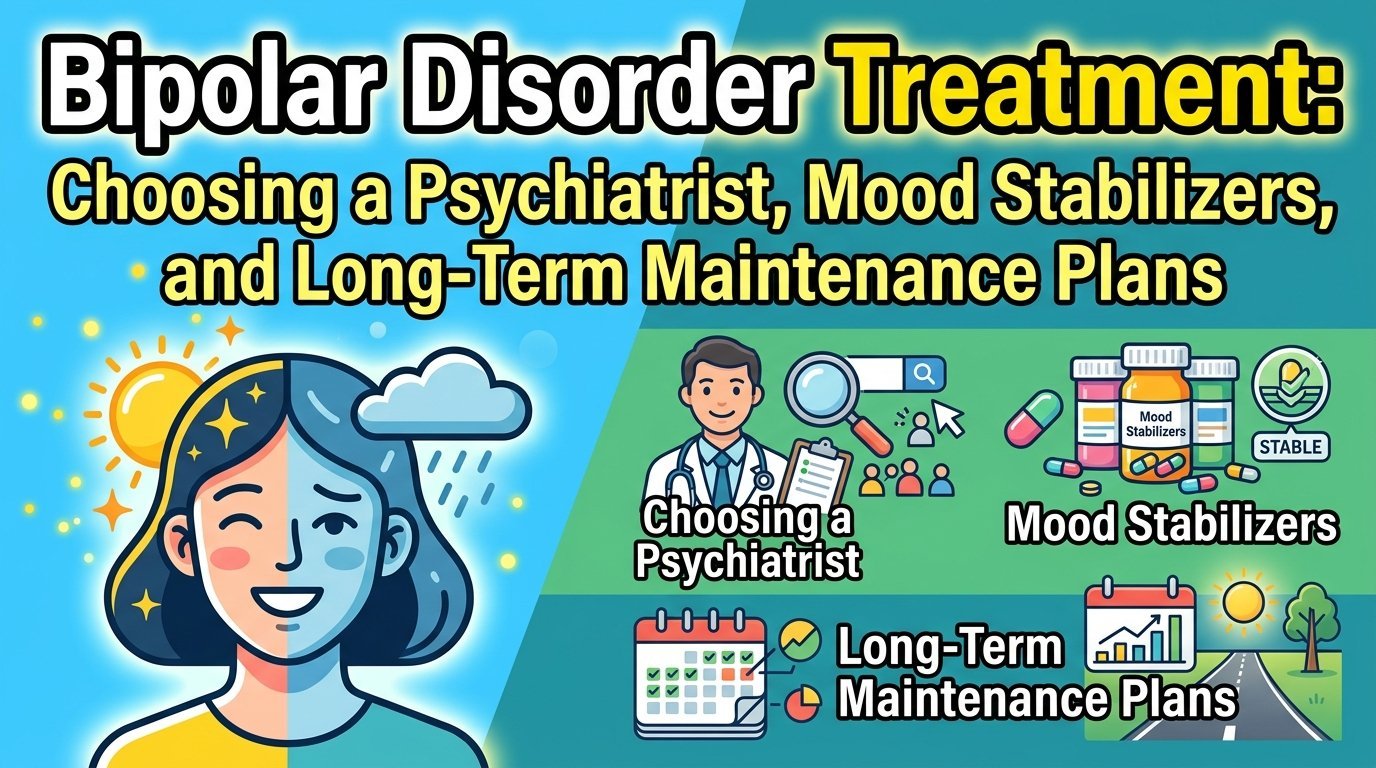
Bipolar disorder affects an estimated 2.8 percent of American adults in any given year. It is also one of the most misdiagnosed conditions in psychiatry—on average, people wait nearly a decade between symptom onset and accurate diagnosis, often after multiple unsuccessful trials of antidepressants that may have actually worsened their illness. Effective bipolar treatment requires the right diagnosis, the right medication regimen, the right kind of therapy, and a long-term maintenance plan that takes the cyclical nature of the illness seriously.
This guide explains how bipolar disorder is treated in 2026: choosing a psychiatrist who actually specializes in mood disorders, understanding the major medication classes, building therapy and lifestyle scaffolding, and recognizing when a higher level of care is needed.
Bipolar I, Bipolar II, and Beyond
The bipolar spectrum includes:
- Bipolar I disorder—at least one full manic episode, often with depressive episodes
- Bipolar II disorder—at least one hypomanic episode plus major depressive episodes; never a full mania
- Cyclothymic disorder—chronic mood swings less severe than full bipolar episodes, lasting at least two years
- Other Specified Bipolar and Related Disorder—symptoms that do not fit the strict criteria but are clinically significant
The distinction matters because Bipolar II often masquerades as treatment-resistant depression. Patients who get worse on antidepressants—more agitated, less sleep, racing thoughts, irritability—may actually be experiencing antidepressant-induced hypomania, a strong clue that the underlying diagnosis is bipolar.
Choosing the Right Psychiatrist
For bipolar disorder more than almost any other diagnosis, the prescriber matters enormously. Look for:
- A board-certified psychiatrist (MD or DO) rather than a primary care physician for medication management
- Substantial experience with mood disorders specifically
- Comfort prescribing lithium, anticonvulsants, and atypical antipsychotics—the actual evidence-based bipolar medications
- Willingness to coordinate with a therapist, primary care provider, and any specialty consultants
- Familiarity with academic mood disorder programs at Johns Hopkins, Tufts, Massachusetts General, Stanford, the University of Michigan, and others, for second opinions on complex cases
If your psychiatrist treats bipolar primarily with antidepressants, consider a second opinion. Antidepressant monotherapy is no longer the standard of care for bipolar disorder.
Mood Stabilizers: The Foundation
Lithium
Lithium remains one of the most evidence-supported treatments for bipolar I disorder. It is uniquely associated with reduced suicide risk and long-term neuroprotection. Lithium requires regular blood level monitoring, kidney and thyroid function tests, and careful attention to hydration and sodium intake. For many people who tolerate it, lithium is a life-changing medication.
Anticonvulsant Mood Stabilizers
Valproate (Depakote) is effective for acute mania and maintenance, especially in mixed episodes. Lamotrigine is highly effective for bipolar depression and maintenance but requires very slow titration to avoid serious skin reactions. Carbamazepine and oxcarbazepine are second-line options.
Atypical Antipsychotics
Quetiapine, olanzapine, lurasidone, cariprazine, aripiprazole, and others have FDA indications across various phases of bipolar disorder. Lurasidone and quetiapine are particularly useful for bipolar depression. Each has its own metabolic and movement side-effect profile, which a knowledgeable psychiatrist will discuss in detail.
Antidepressants
Antidepressants are used cautiously in bipolar disorder, generally only in combination with a mood stabilizer and only when depression is the predominant pole. SSRIs and bupropion are typically preferred over SNRIs and tricyclics. Risk of inducing mania, mixed states, or rapid cycling must always be weighed.
Therapy That Actually Helps
Medication alone is rarely enough. Evidence-based therapies for bipolar disorder include:
- Interpersonal and Social Rhythm Therapy (IPSRT)—stabilizes daily routines, sleep, and social rhythms, which directly affects mood stability
- Cognitive Behavioral Therapy for bipolar (CBT-BP)—identifies prodromal warning signs, builds early-intervention plans, and addresses unhelpful thinking around mood episodes
- Family-Focused Therapy (FFT)—reduces relapse rates by improving communication and stress in the home
- Psychoeducation—structured group programs that teach the science of bipolar, medication adherence, and relapse prevention
Generic supportive therapy is helpful for many things, but for bipolar disorder specifically, ask whether your therapist has experience with these structured modalities.
Lifestyle as Treatment
Few illnesses are as sensitive to lifestyle as bipolar disorder. Critical foundations include:
- Consistent sleep—the same bedtime and wake time every day, including weekends. Sleep loss is one of the most reliable triggers for mania
- Stable daylight exposure—morning bright light and evening reduced light support circadian rhythm stability
- Reduced or eliminated alcohol—alcohol disrupts sleep and worsens mood instability
- Regular exercise—moderate aerobic activity has mood-stabilizing effects
- Stress management—mindfulness, structured time off, predictable schedules
Mood Tracking and Early Warning Signs
Most people with bipolar disorder learn to recognize their personal warning signs of an impending episode. Common early signs include reduced sleep need, increased spending or risk-taking, racing thoughts, unusual irritability, withdrawal, or sudden creative bursts. A simple daily mood chart, paper or digital, helps you and your psychiatrist see patterns. Apps like eMoods, Daylio, or T2 Mood Tracker can simplify the practice.
When Outpatient Care Is Not Enough
Higher levels of care become appropriate when episodes are severe, frequent, or include suicidal thoughts or psychosis:
- Intensive Outpatient (IOP)—structured group programming several days a week
- Partial Hospitalization (PHP)—full days of programming for stabilization
- Inpatient psychiatric hospitalization—for severe mania, severe depression, psychosis, or active suicidality
- Specialty mood disorder programs—McLean Hospital, Sheppard Pratt, the Menninger Clinic, and others offer extended-stay tertiary evaluation for treatment-resistant cases
For treatment-resistant depression in bipolar disorder, options like ECT, ketamine, esketamine, and transcranial magnetic stimulation (TMS) are increasingly accessible.
Insurance and Costs
Bipolar treatment is covered under federal mental health parity rules. ACA-compliant plans, Medicaid, Medicare, and most employer plans cover psychiatry visits, therapy, hospitalization, and medications. Brand-name atypical antipsychotics and lurasidone may have higher copays; manufacturer copay cards and patient assistance programs can reduce costs significantly.
A Final Note
Bipolar disorder is a lifelong condition, but with accurate diagnosis, evidence-based medication, structured therapy, and steady lifestyle scaffolding, the great majority of people living with bipolar achieve long stretches of stability and meaningful work, relationships, and creativity. The key is finding a psychiatrist who knows the territory—and committing to the maintenance work even when you feel fine.
This article is for informational purposes only and is not medical advice. Bipolar disorder requires individualized care from a qualified psychiatrist; do not start, stop, or change medication without consulting your prescriber.