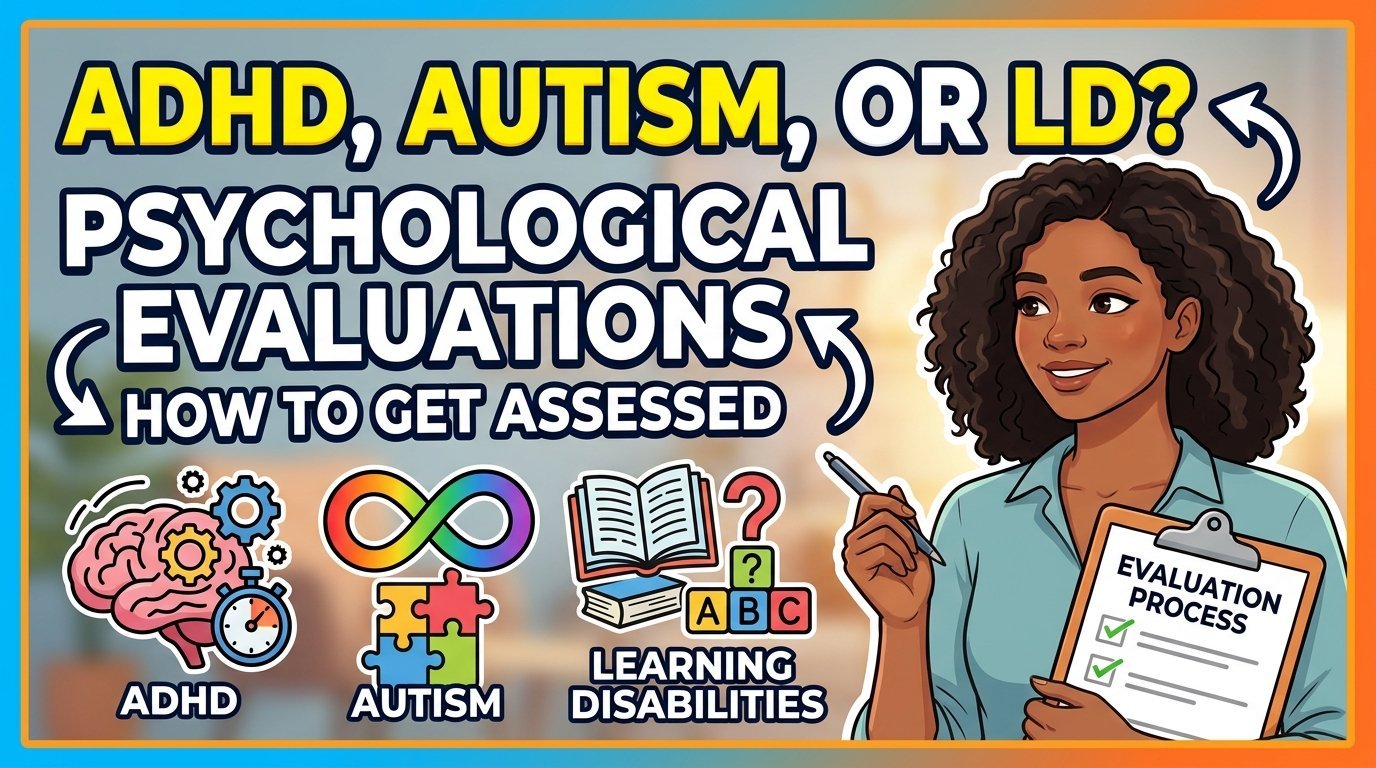
The line between a difficult month and a diagnosable condition is rarely obvious. Adults who have spent years suspecting they have ADHD, autism spectrum disorder, a learning disability, or a personality disorder often discover that the answer requires more than a 30-minute appointment. Psychological testing—sometimes called a neuropsychological evaluation or psychoeducational assessment—is the structured process by which a licensed psychologist uses standardized instruments to clarify the diagnosis, document the functional impact, and recommend treatment.
This guide explains who needs testing, what the process actually looks like, what insurance is required to cover, what self-pay testing costs in 2026, and how to find a qualified psychologist who will produce a report you can actually use.
When Psychological Testing Is Worth It
Consider a comprehensive evaluation when:
- You suspect adult ADHD but a primary care or telehealth visit was too brief to make a confident diagnosis
- You suspect autism spectrum disorder and want a formal documented diagnosis for accommodations or self-understanding
- You are struggling at school or work and want to clarify whether a learning disability, processing speed issue, or executive function deficit is involved
- You have been bounced between diagnoses (depression, anxiety, bipolar, ADHD) and want a clearer picture
- You need documentation for academic accommodations, workplace accommodations, disability claims, or court
- A previous head injury, stroke, or concussion has left lingering cognitive symptoms
- A family member or clinician suspects early cognitive decline and wants a baseline
Who Conducts Testing
Comprehensive psychological testing in the United States is performed by:
- Licensed psychologists (PhD or PsyD) with training in psychometric assessment
- Neuropsychologists—psychologists with specialized fellowship training in brain-behavior relationships, useful for concussion, stroke, dementia, ADHD, and complex differential diagnoses
- School psychologists—for K-12 students seeking IEP/504 evaluations through public schools
Master’s-level therapists, psychiatric nurse practitioners, and primary care providers cannot administer most standardized tests. Brief screeners (PHQ-9, GAD-7, ASRS) used in shorter visits are not equivalent to a full battery.
What the Process Looks Like
A complete evaluation typically involves:
- Intake interview—developmental history, school records, current symptoms, medical and psychiatric history, family history
- Testing sessions—usually 4 to 12 hours of structured tasks spread across one to several visits
- Collateral information—questionnaires from a partner or parent, school report cards, performance reviews
- Scoring and interpretation—the psychologist analyzes results against age- and education-based norms
- Feedback session—you sit with the psychologist while they explain findings and recommendations
- Written report—a 10 to 30 page document with diagnoses, supporting data, and treatment recommendations
For an ADHD evaluation, expect tests of attention, working memory, processing speed, and executive function (Conners CPT, IVA-2, Wechsler subtests). For autism evaluations, expect ADOS-2 administration, ADI-R parent or partner interview, and questionnaires like the AQ and SRS-2. For learning disabilities, expect IQ testing (WAIS-IV or WISC-V), academic achievement testing (Woodcock-Johnson), and reading or writing process assessments.
Cost and Insurance Coverage
Self-pay rates vary significantly:
- Brief diagnostic clarification—$500 to $1,500
- Comprehensive ADHD or learning disability evaluation—$1,500 to $3,500
- Comprehensive autism evaluation—$2,000 to $4,500
- Full neuropsychological evaluation—$3,000 to $6,000+
Most insurance plans, Medicare, and Medicaid cover medically necessary psychological testing under behavioral health benefits. Common CPT codes include 96130, 96131, 96136, 96137, 96138, and 96139. Coverage usually requires:
- A referral or pre-authorization with documented medical necessity
- An in-network psychologist (or out-of-network reimbursement if you have OON benefits)
- A current behavioral health diagnosis or symptoms warranting evaluation
Insurance is more likely to cover ADHD and learning disability evaluations than developmental autism evaluations of adults, because some plans treat adult autism as “not medically necessary.” Parity rules require coverage when the evaluation will guide medical or psychiatric treatment, and parity complaints have successfully reversed many of these denials.
Testing for Children and Adolescents
For school-age children, the cheapest path is a free school-based evaluation through the special education process. Submit a written request to the school district for a special education evaluation under IDEA. The district has 60 days (varies by state) to complete it. If the school evaluation is inadequate, you can request an Independent Educational Evaluation (IEE) at district expense, or pursue private evaluation outside the school.
For developmental autism evaluations of children, university-based developmental clinics, children’s hospitals, and Medicaid-funded developmental evaluation centers are often more affordable than private practices and typically have appropriate clinical training. Wait times can be long—6 to 18 months in many regions.
How to Choose a Psychologist
Ask before scheduling:
- What is your specific training in evaluating my concern (ADHD, autism, LD, head injury)?
- What instruments do you use?
- Do you administer the tests yourself or use a technician (both are acceptable, but ask)?
- What does the final report look like? May I see a redacted sample?
- Will you provide accommodation documentation usable by my employer or school?
- Do you accept my insurance, and what is the typical out-of-pocket cost?
Avoid online services that promise an autism diagnosis or ADHD diagnosis after a single video questionnaire—the report will rarely hold up for accommodations or specialty care.
Using the Report Productively
Once you have the report, the recommendations section is where most of the practical value lies. Take it to:
- Your psychiatrist for medication decisions
- Your therapist for treatment focus
- Your employer’s HR or accommodations office for ADA accommodations
- Your school’s disability services office for academic accommodations
- The Social Security Administration for disability claims
- Your primary care provider to update your medical record
A Final Note
A formal psychological evaluation is one of the most effective ways to move from years of uncertainty about “what is wrong with me” into actionable answers, accommodations, and treatment. The cost and time commitment are real but rarely regretted. For many adults, the report becomes a turning point—not because the diagnosis itself is the goal, but because the language and documentation finally enable the right kind of help.
This article is for informational purposes only and is not medical advice. Psychological testing should be done by a licensed clinician in your state.